
Fall 2026 Issue
Get all the latest news on everything NAMS.
NAMS in the News is the perfect place to stay updated on everything happening at our school, all in one place. Stay connected and never miss out on what’s happening in the NAMS community!
September 2025 - September 2026
Highlights
I knew something was up': Nearly 30 juvenile sharks found dead on New Jersey beach
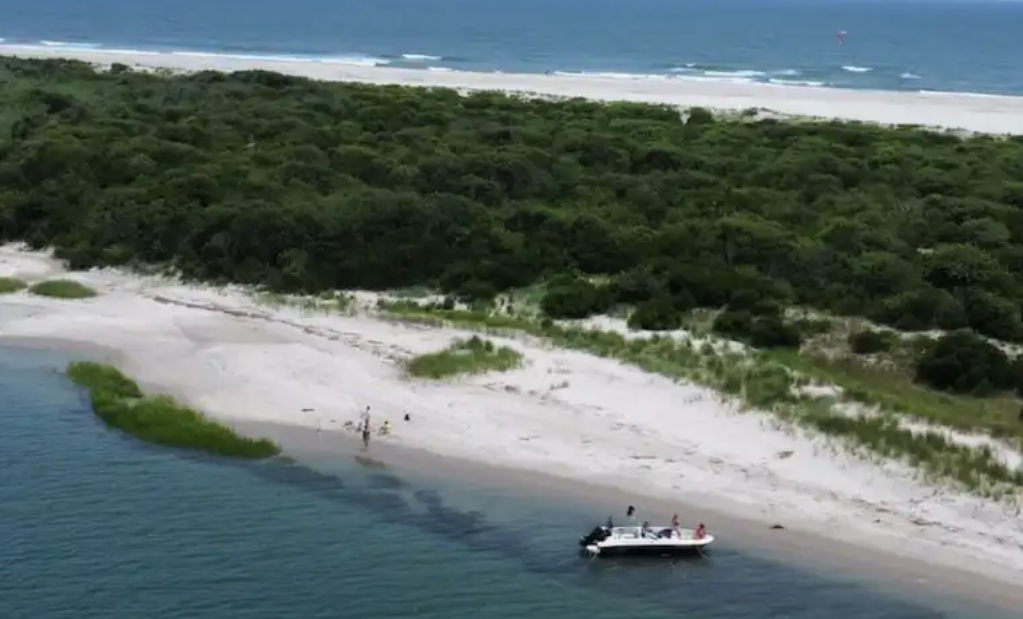
Read more in The Cool Down by Curtis Deacon
3rd Annual Moth Night Brings Students to Get in Touch with Nocturnal Nature
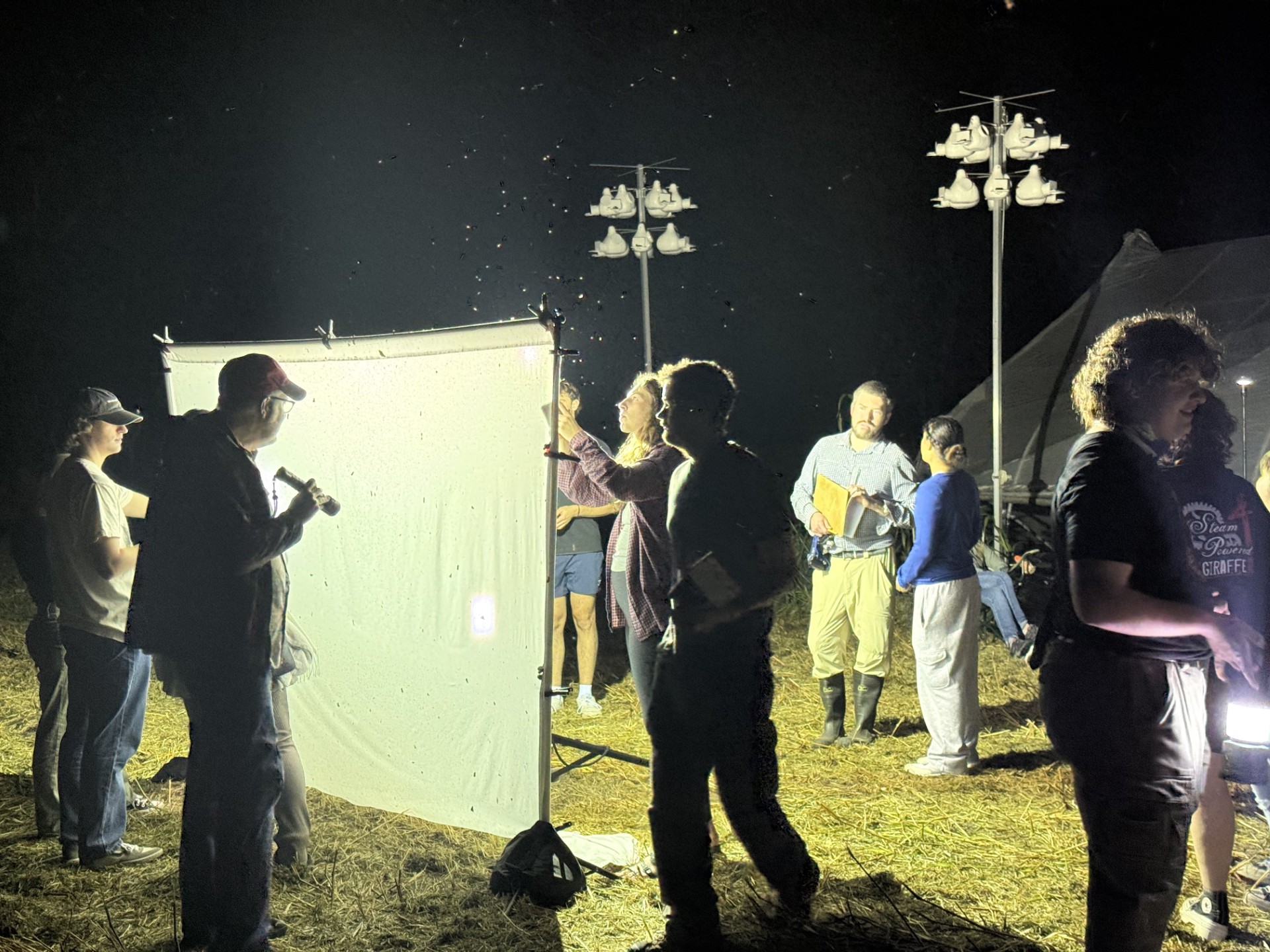
Read more in the Stockton Argo.
Ospreys are starving at the Jersey Shore, study says: Here’s why
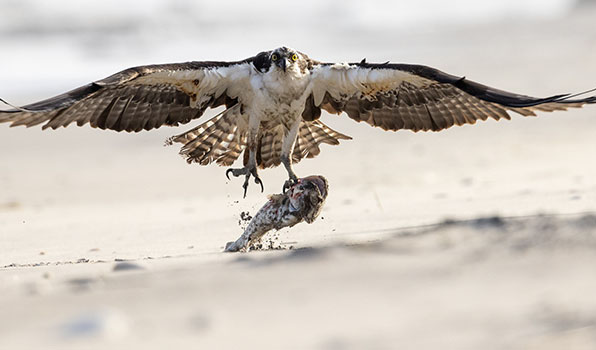
Read more at MyBeachRadio.com
Expansion of international programs opens new doors to learning for Stockton students, faculty, and staff.

Read more on snj-today-newsletter
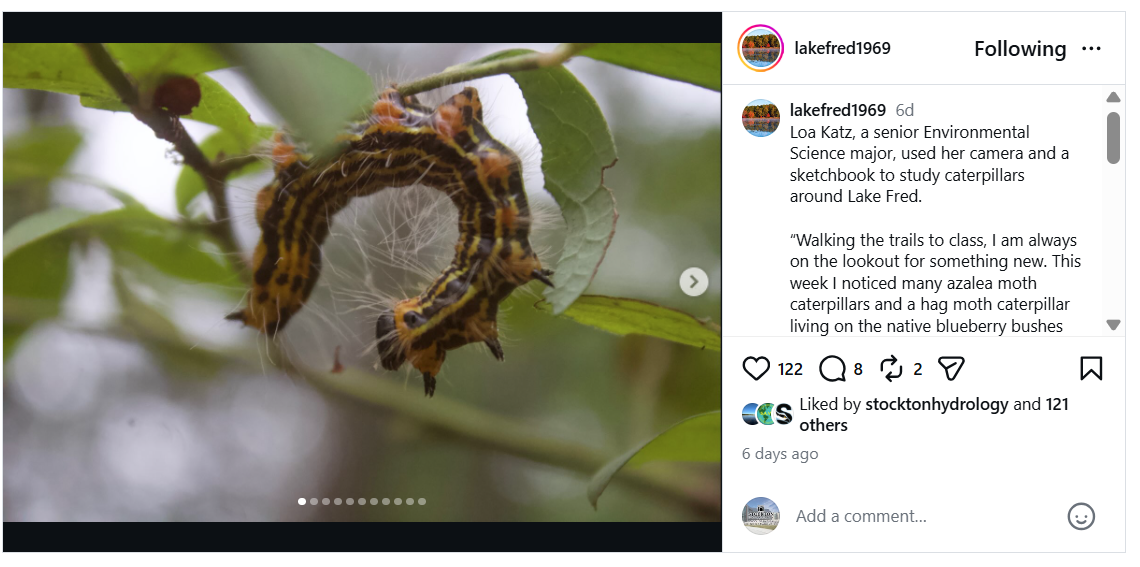
Loa Katz, a senior Environmental Science major, used her camera and a sketchbook to study caterpillars around Lake Fred. Instagram
Ospreys Study Marsh-Nesting Shorebirds
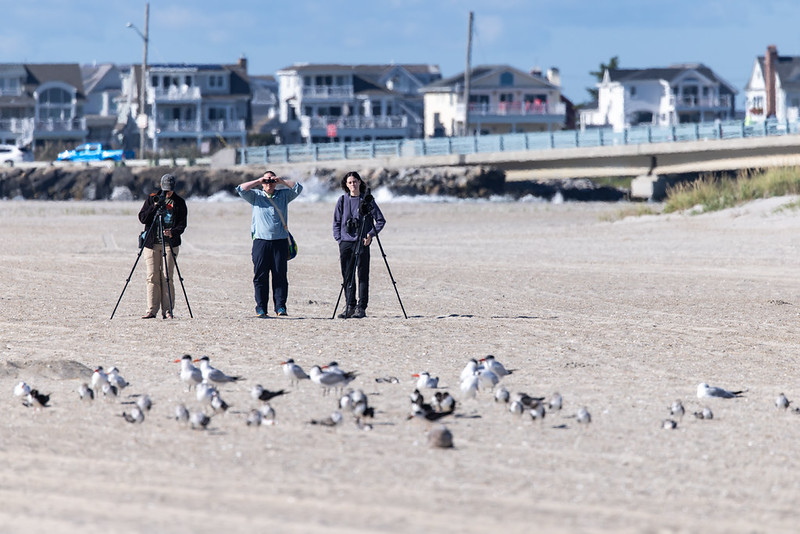
On a September morning with the temperature holding tight to summer, Alyssa Schlauberg, a junior Environmental Science major, stood on Townsends Inlet beach looking through a spotting scope zoomed in on an American oystercatcher.
Schlauberg is one of six interns working with The Wetlands Institute on a pilot study aimed at understanding how oystercatchers utilize saltmarsh habitats. Beach-nesting oystercatchers have been studied since 2003, but as climate change and coastal development alter available oceanfront habitat, the birds are utilizing saltmarsh along the bay.
The Wetlands Institute was awarded a grant from the National Fish and Wildlife Foundation’s Atlantic Flyway Shorebird Initiative to support research on determining where oystercatchers are selecting marsh nesting territories and the size of the population.
The Science of Life Club Hosts a Women in STEM event
Read more on StocktonArgo.com
Meet Our New Faculty: Part 2
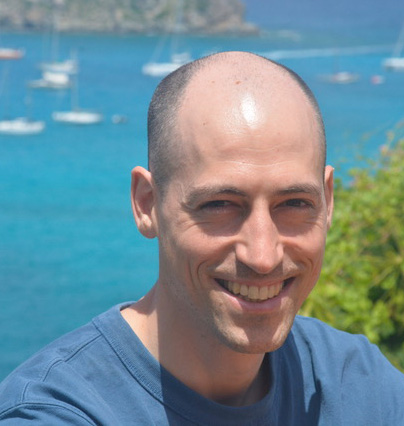
Each week, we’ll highlight faculty members beginning new roles at Stockton, sharing details about their work on campus and interests beyond it. Today, we spotlight Christophe Vieira, assistant professor of Marine Science.
What courses or subjects will you be teaching at Stockton?
Vieira: This semester, I’m teaching Scientific Exploration (GNM 2165) and running labs for Biodiversity and Evolution (BIOL 1405). Next semester, I’ll be teaching Marine Botany, my field of expertise.
What is your area of research or professional specialty?
Vieira: I’m a marine biologist on a mission to map out the hidden diversity of the ocean’s marine flora. My work is at the crossroads of species discovery, evolution, biodiversity and biogeography. I use molecular tools and fieldwork to understand how macroalgae, or seaweeds, evolve and spread across the globe.
What drew you to Stockton?
Vieira: It was a combination of Stockton’s strong emphasis on undergraduate teaching and the fantastic Marine Science (MARS) program, with the Marine Field Station right at our doorstep. Having that level of immediate access to coastal systems is incredible, both for bringing students into the field and for driving my own research forward. The welcoming atmosphere across the School of Natural Sciences and Mathematics was icing on the cake.
What’s on your Kindle or nightstand right now?
Vieira: Robert Sapolsky’s "Behave: The Biology of Humans at Our Best and Worst." It’s a great read if you’re curious about why we do the things we do, looking at human behavior through neuroscience and evolutionary biology.
What’s one fun fact about you that students or colleagues might be surprised to learn?
Vieira: When naming new species of seaweeds, I love linking science with human history by paying tribute to coastal cultures and historic seafaring traditions. Over the years, I’ve named species in honor of everything from Polynesian navigation heritage and 18th-century exploration vessels, such as HMS Endeavour, to the legendary Haenyeo free-diving women of South Korea!
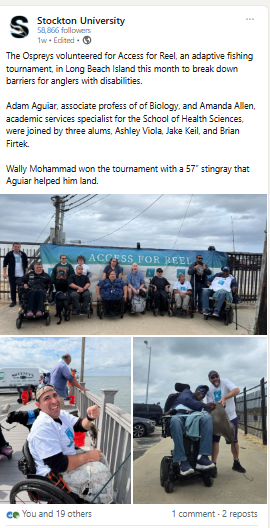
The Ospreys volunteered for Access for Reel, an adaptive fishing tournament, in Long Beach Island this month to break down barriers for anglers with disabilities. LinkedIn
Nest Cams Help Stockton Study Declining Osprey Nest Productivity
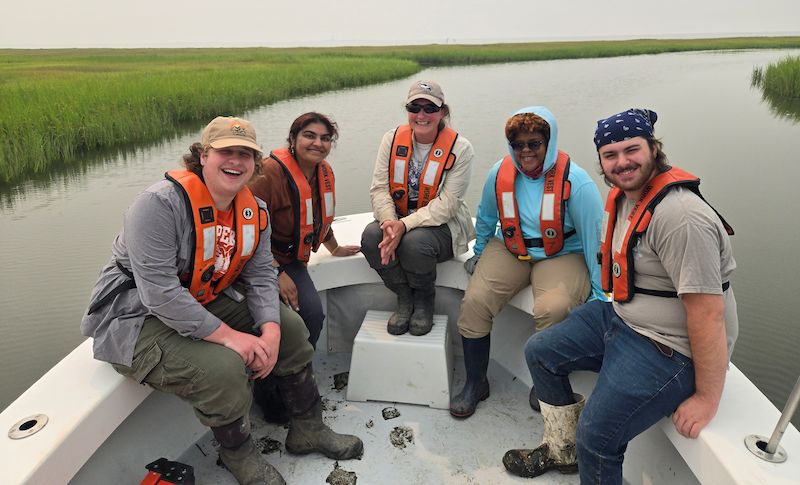
Melanie Schroer, an instructor of Biology at Stockton, monitors 27 osprey nests along the Mullica River and Great Bay and installed wildlife cameras on 10 of the nest platforms. She also works with the Stockton Marine Field Station to bring students to the nesting platforms to monitor with a long selfie stick that can peek into nests to document egg and chick activity.
In May, during the first nest survey, there were 54 eggs and three chicks. By the end of June, there were 25 chicks and one egg that was unlikely to hatch. On July 17, there were 14 chicks. The final survey in August counted nine fledged chicks.
The 85 percent loss of chicks for the nest sites this season is sounding an alarm.
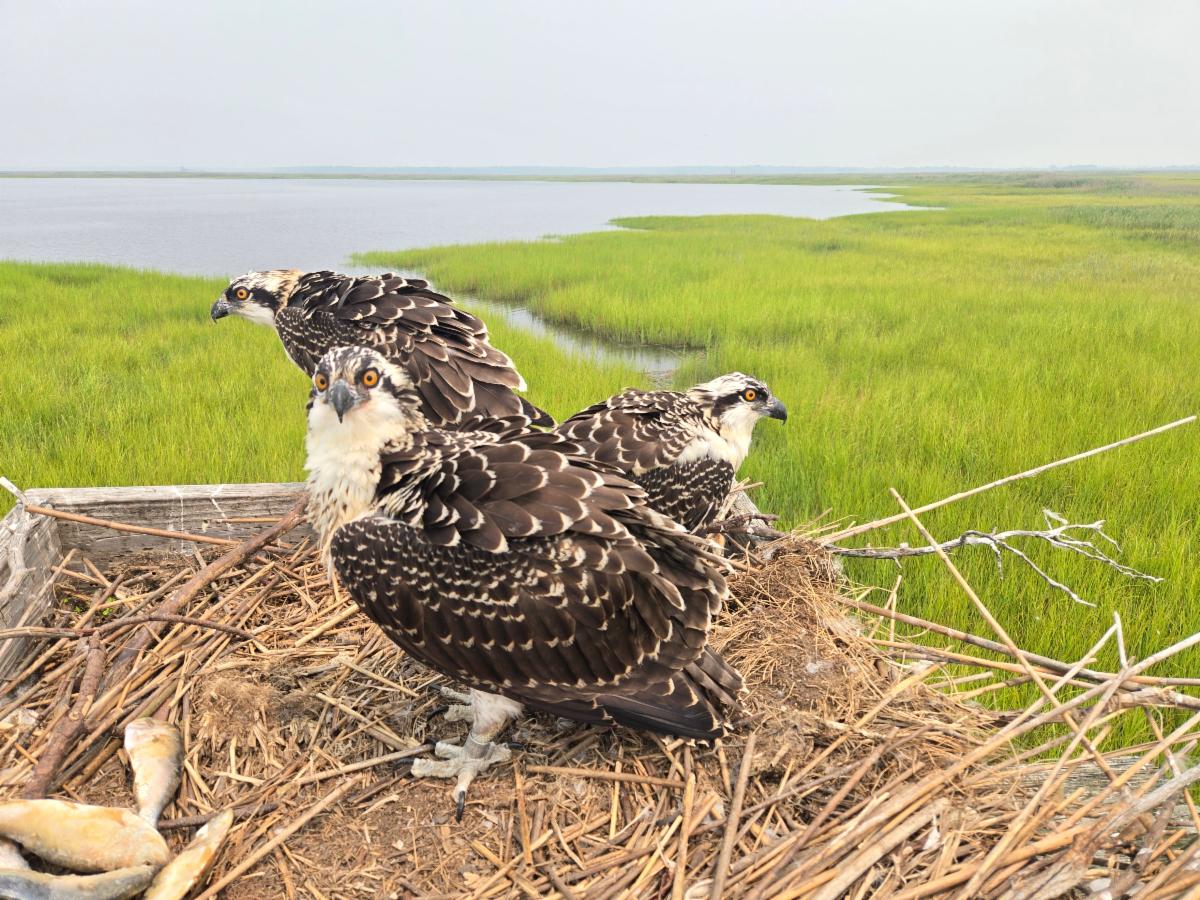
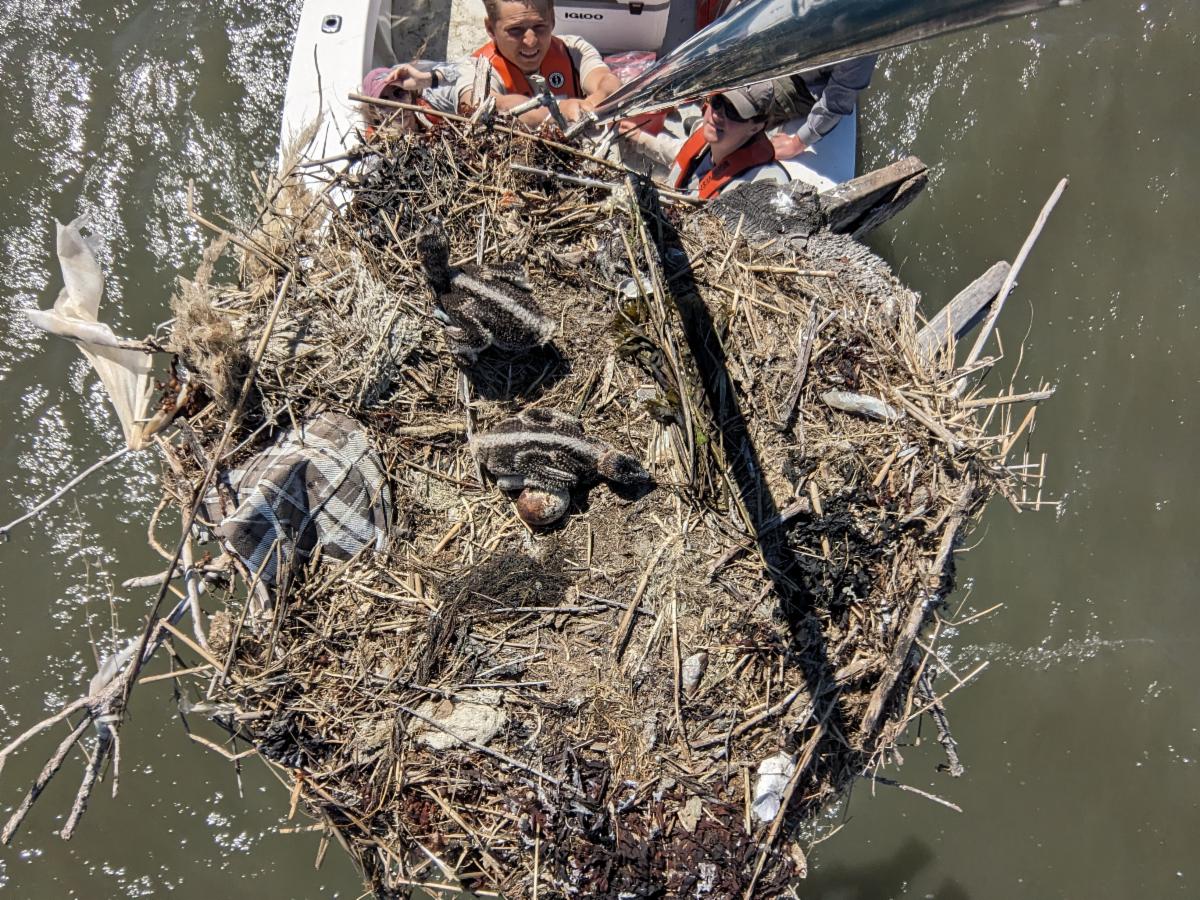
“The broader context here is that osprey nest productivity is declining. Nesting success has taken a huge hit, not only in my little part of the world, but also New Jersey, and much of the East Coast, and so, of course, everyone wants to figure out what's going on. This population has been recovering for 50 years, and it's been doing great, and then just the last handful of years, not so much anymore,” she said.
Students Make Waves on Florida Marine Science Cruise
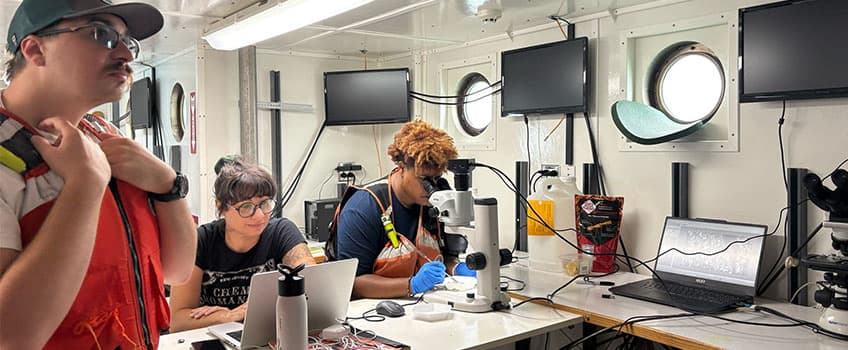
Dylan Meier spent four years working on a fishing boat out of Point Pleasant. Tatiana Anderson served nine years aboard a U.S. Navy aircraft carrier. Both Stockton students have always been fascinated by the ocean but wanted to know more about what lies beneath.
“The ultimate dream is to do anything with cephalopods, you know, octopus and squid,” said Anderson, a senior from Riverside.
“I absolutely love being at sea,” said Meier, of Brick Township, who graduated in May.
That brought them to Stockton’s Marine Science program and a rare opportunity this summer to spend three nights on the R/V Hogarth, a 78-foot research vessel in the Gulf of Mexico off the coast of Florida.
The two Marine Science majors joined junior Hannah Elliott, of Bridgewater, and Stockton Assistant Professor of Biology Lauren Seyler as part of the Peerside program at the Florida Institute of Oceanography in St. Petersburg, Florida. The program is designed to train the next generation of marine scientists and technicians.
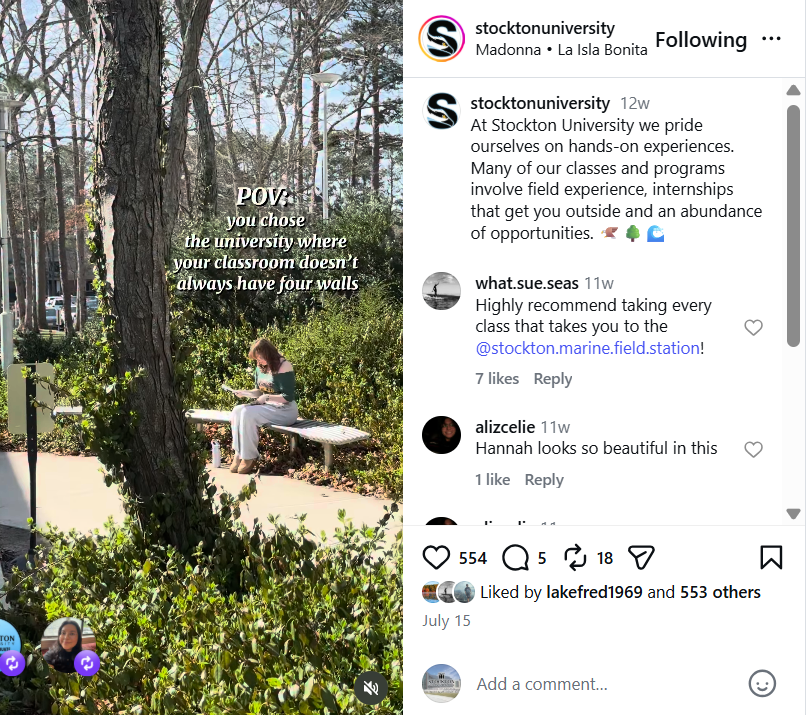
POV: You chose the university where your classroom doesn't always have four walls. ☑️it out on Instagram
Tech Trek Brings Future STEM Leaders to Stockton
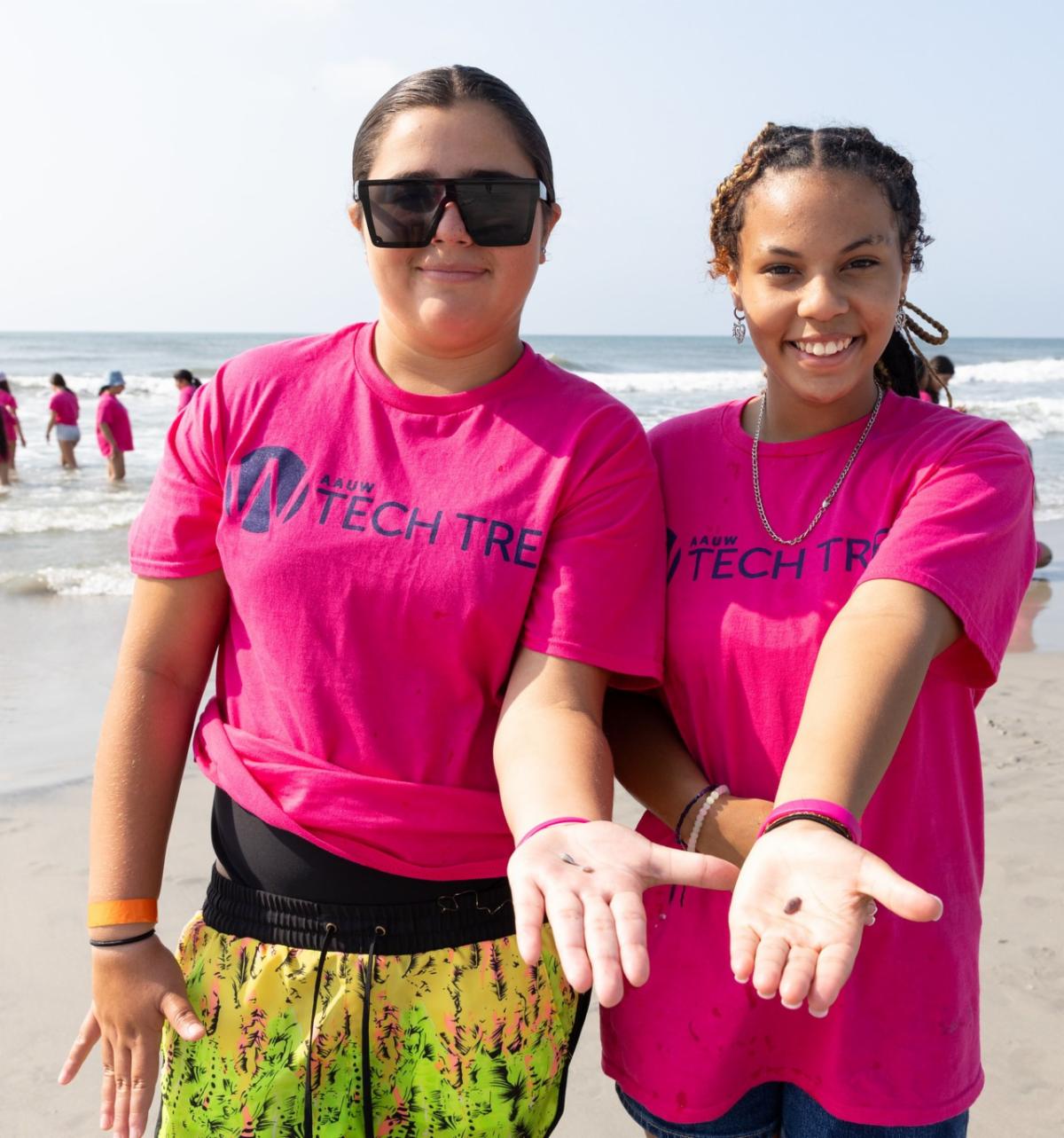
Women make up just 27% of the workforce for jobs in science, technology, engineering and mathematics, according to statistics from the U.S. Department of Labor.
That’s why events like Stockton University’s annual Tech Trek summer camp are so important, according to Claudine Keenan, a professor of Instructional Technology and Tech Trek organizer. The weeklong camp brought 42 eighth-grade students to the university’s Galloway campus this week to immerse themselves in Stockton’s state-of-the-art facilities. The young women from 20 of New Jersey’s 21 counties stayed on campus in residence halls.
“Our partnership with the American Association of University Women brings more young women interested in STEM to Stockton’s cutting-edge facilities where they can work with mentors like Elizabeth Pollock in Chemistry, Jennifer Martin in Biology and Demetrios Roubos in Information Technology,” Keenan said. “Each year, we strengthen our network of connections to empower young women in STEM.”
New to the program in its 11th year is the ability for campers to design their own custom “core STEM class” for the week. Students choose from 10 different options to build their four-day experience, including astronautics, artificial intelligence, medicine, robotics and coding.
📸View more photos on Flickr.
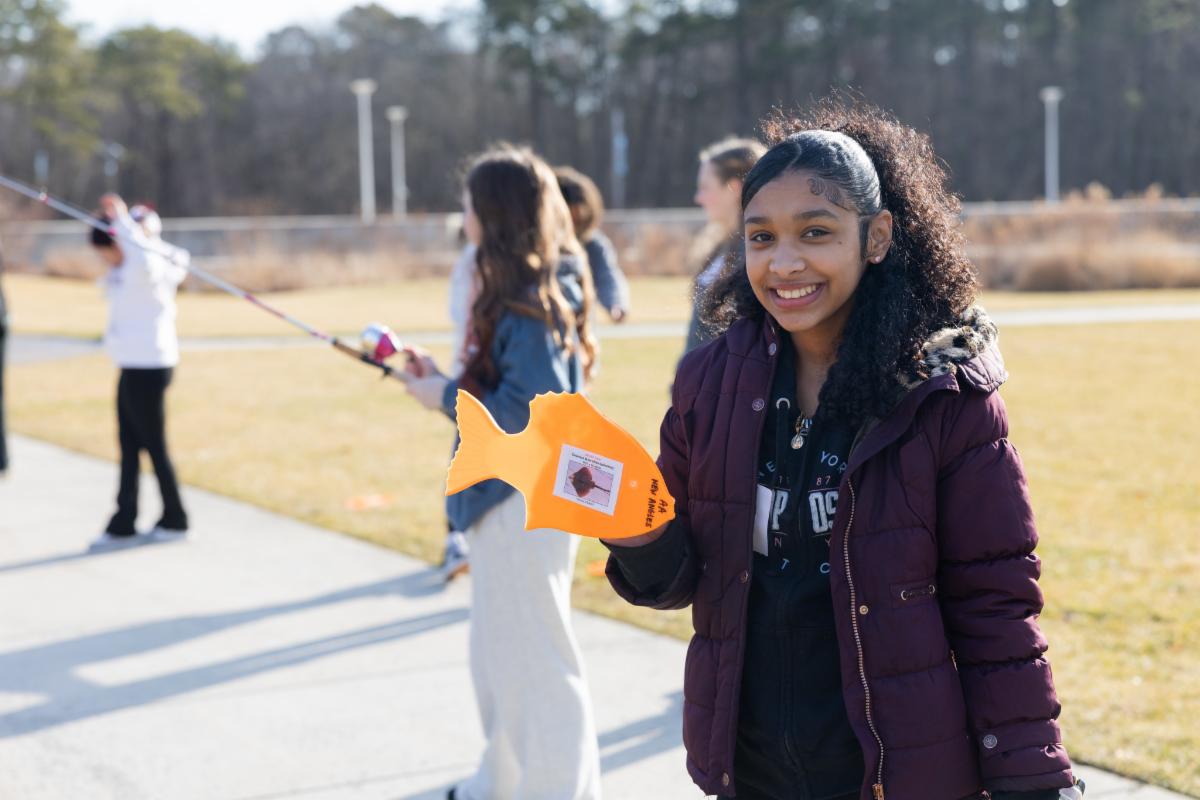
Robots and Using AI Responsibly Headline Tween Tech
Using artificial intelligence tools responsibly and learning how to program a robot were just some of the new seminars offered at the annual Tween Tech event on Jan. 9 at Stockton.
About 150 girls from six South Jersey middle schools participated in the day-long event to engage girls in fields in science, technology, engineering and mathematics (STEM).
Claudine Keenan, the former dean of Stockton’s School of Education and now a professor of Instructional Technology, has organized the event since its inception in 2017 with the Atlantic and Cape May county branches of the American Association of University Women.
“Each year, hosting Tween Tech affirms Stockton’s commitment to opening STEM pathways for South Jersey girls right at the age when they are deciding what is possible for their futures,” Keenan said. “By welcoming these middle school students into our laboratories and classrooms, we help them see themselves as scientists, engineers and problem-solvers, and many of them later return to Stockton as college students to continue that journey.”
📸View more photos from the day on Flickr.
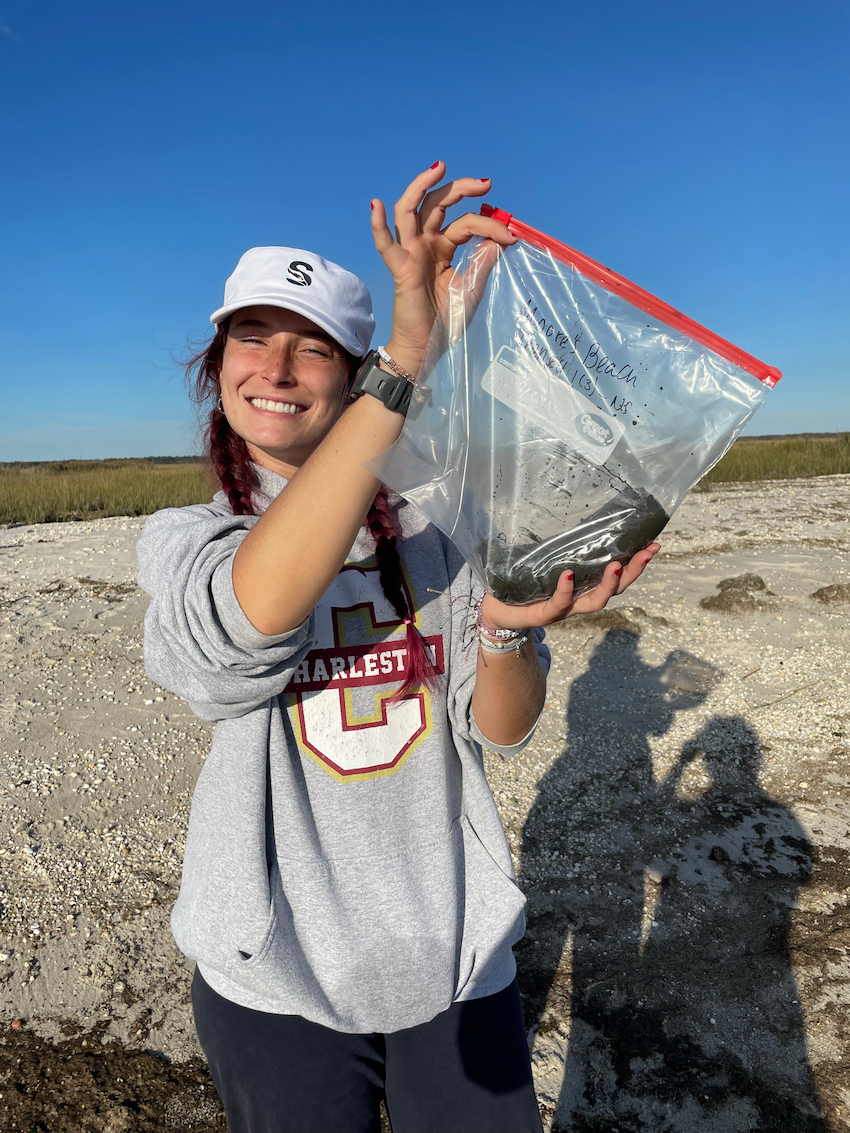
Can Horseshoe Crabs Survive Sea Level Rise?
The Atlantic horseshoe crab outlived dinosaurs, but how long can they outlive rising sea level?
Paige Baney, of Brick, grew up seeing horseshoe crabs spawning on small segments of sandy beach along the Barnegat Bay during spring tides under full and new moons.
As a Stockton University Coastal Zone Management master’s student and 2023 Marine Science graduate, they inspired her research project that created a habitat suitability index for horseshoe crabs at five Delaware Bay beaches.
The largest population of spawning horseshoe crabs in the world bury their eggs in the sand along New Jersey’s 52 miles and Delaware’s 50 miles of Delaware Bay coastline.
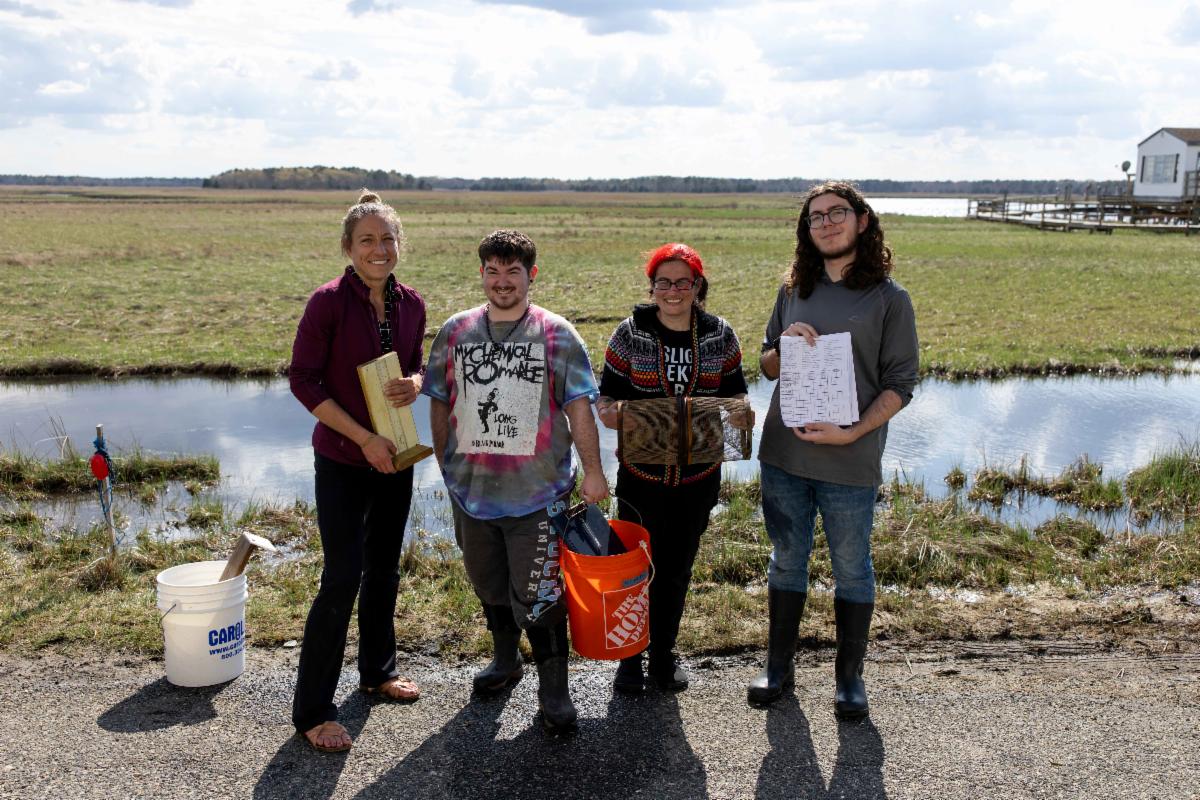
Fish Monitoring Study Gives Students Data to Explore
A school of killifish swam in a ribbon formation through the shallow water of the boat basin at the Stockton University Marine Field Station on Nacote Creek.
The afternoon sun cast their tiny shadows on the muddy bottom.
Iridescent shimmers flashed as dozens of killifish swam inside a fish trap resting in water just deep enough to cover the trap.
Dana Christensen, an adjunct professor in Stockton’s School of Natural Sciences and Mathematics, is working with students to conduct a long-term fish monitoring survey on the creek to describe small-bodied fish assemblages local to the Field Station using a series of minnow traps.
“We want to identify where the fish are now and how that changes over time. We can look at the size of the fish, the number of species that we get, the potential age classes of the fish, look at different micro habitats and see which ones are preferred,” she explained.
Christensen, still dressed from teaching science at Jackson Township High School, and her team gathered fish measuring boards, buckets, dip nets and a measuring tape and made their way to the dock to begin checking traps.
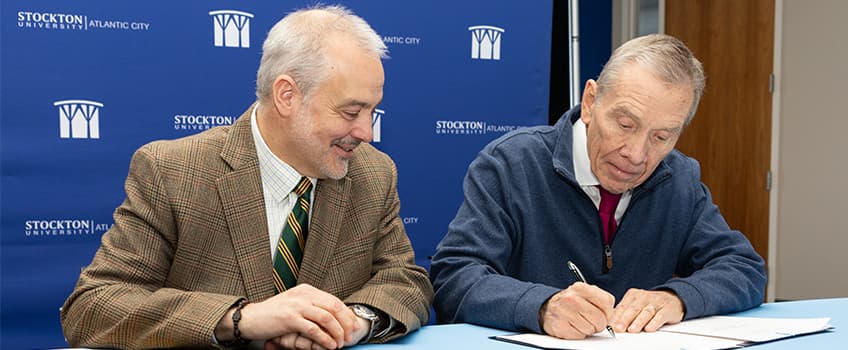
$2 Million Gift to Create STEM Scholars Program at Stockton
Stockton, in partnership with the Levine and Gormley Family Foundations, announced Friday, Jan. 30, the launch of a new $2 million initiative to expand access to high-quality STEM education for Atlantic County students.
The pledge from the two foundations will create the Levine-Gormley STEM Scholars Pathway Program that will provide scholarships and other support for Atlantic County students interested in science, technology, engineering and mathematics degree programs at Stockton. Eligible students may receive up to $10,000 per year in scholarships renewable for up to four years.
“This is the kind of giving that lifts students, fuels dreams and ripples outward to strengthen the entire region. Today, we’re celebrating a gift that goes far beyond dollars. It’s about believing in our students, investing in their potential and building a future we can all be proud of. It’s a partnership rooted in care and vision, one that will open doors for generations to come,” said President Joe Bertolino.
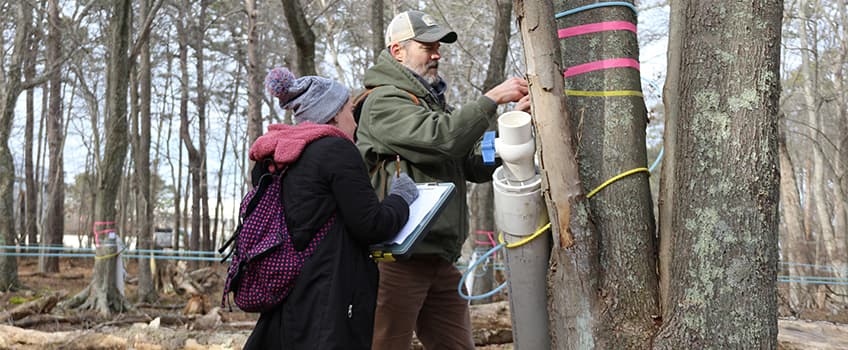
Stockton’s Maple Project Yields More Than Syrup
Now in its sixth year, the Stockton Maple Project continues to grow, not just in how much maple syrup it produces, but in how it involves Stockton University students in the process.
The project recently received a $273,000 grant from the United States Department of Agriculture’s Acer Access and Development program, and a portion of that funding strengthens student research and involvement.
“The program supports projects that strengthen the domestic maple syrup industry through research, education, natural resource sustainability, marketing and maple-sugaring activities,” said Mariam Majd, associate professor of Economics, who explained that Acer is the Latin name for the maple tree genus.
Majd said each year the project has at least 10 students working in Stockton’s maple grove — just off Vera King Farris Drive on campus — to tap trees, collect sap, and help bottle and label the syrup. Students have also been hired through the grant to promote the project and help with educational and community engagement efforts. There are also several active student research projects that the grant helps fund.
In the News: PHL17 Philadelphia
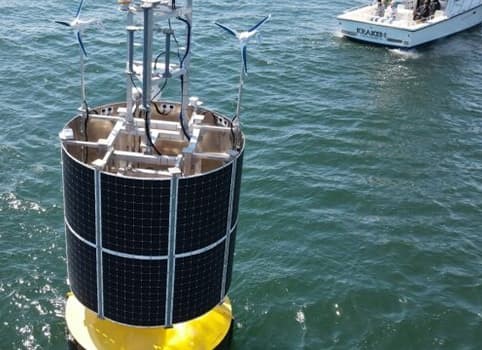
New Partnership Will Revitalize Ocean Research Off Jersey Shore
A new partnership between Stockton, Rutgers University, the New Jersey Economic Development Authority and marine technology company Ocean Power Technologies Inc. will bring new life to a historic ocean research program off the Jersey Shore.
The collaboration is expected to deliver significant economic and innovation benefits for New Jersey. By combining cutting-edge marine technology with academic research, the project will create opportunities for workforce training, attract investment in ocean science and position the state as a leader in sustainable marine innovation. A critical component will be providing infrastructure and support for startups and inventors driving the ocean economy, fostering an environment where innovators can develop solutions that advance marine sustainability and growth.
The first step in the effort will be the deployment of a high-tech research buoy in early 2026 about three miles off the coast of the Rutgers Marine Field Station in Tuckerton.
The buoy, called the PowerBuoy® (pictured), will be anchored at the Long-Term Ecosystem observatory (LEO) site. Once in place, it will begin collecting real-time data on ocean conditions and provide additional ports for scientists and educators to connect their own instruments.
New Endowment Honors Life of Former Volleyball Coach
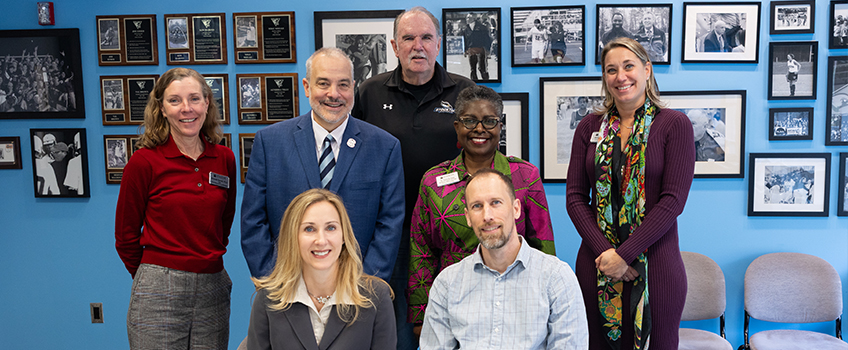
Family and friends of a former Stockton coach honored his legacy by establishing the Eric Illjes Memorial Endowed Scholarship this week.
Illjes was instrumental in building the Stockton women’s volleyball program, first as an assistant coach from 1993-1999, then as head coach until 2005, shepherding the team to its first NCAA tournament in 1999 and first tournament victory in 2000.
The $30,000 endowment was supported by Illjes’ niece Jennifer Illjes and her husband, Jerry Hall, his brother and sister-in-law Theodore and Carolyn Illjes, and longtime assistant coach and friend Greg Langan.
“His life was guided by the principle of service, whether to his country, his community, his students, or those in need around the world. This scholarship supports Stockton students who embody Eric’s dedication to excellence, resilience and service, ensuring his spirit continues to inspire future generations,” said Dan Nugent, vice president for University Advancement and executive director of the Stockton University Foundation.
Named a 2025 Chemical Communications Pioneering Investigator
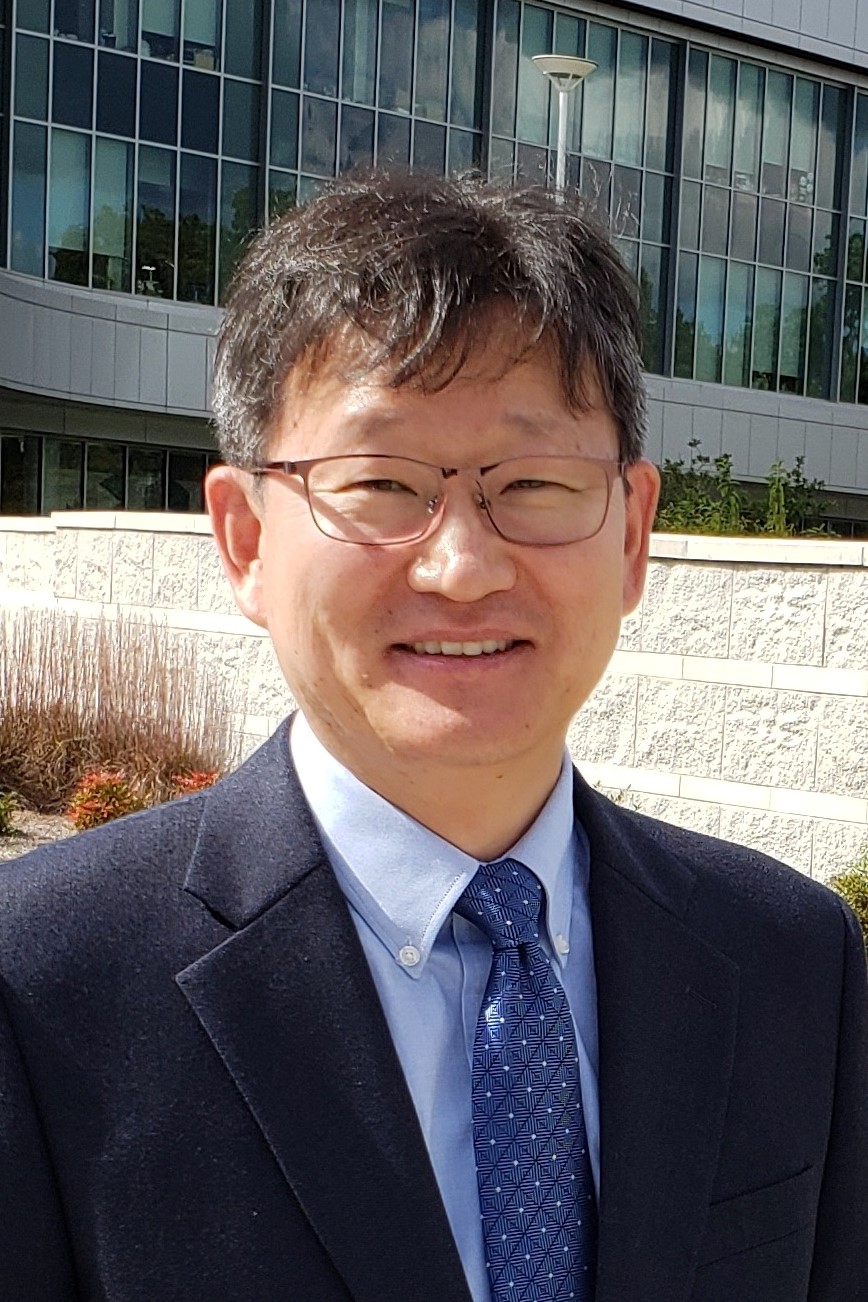
Daniel Ki, associate professor of Chemistry at Stockton, was recently selected as a 2025 Chemical Communications Pioneering Investigator by the Royal Society of Chemistry (RSC). This international honor recognizes early-career researchers who have made significant contributions to the field of chemistry.
Ki, who has been part of the university since 2016, said it was deeply gratifying to see his research, “Aggregation-induced emission-active indium complex as fluorescent turn-off chemosensor for perfluoroalkyl substances,” recognized by a leading chemistry journal.
Check out more stories and highlights on our socials!