Stockton Interns Help The Wetlands Institute Study Marsh-Nesting Shorebirds
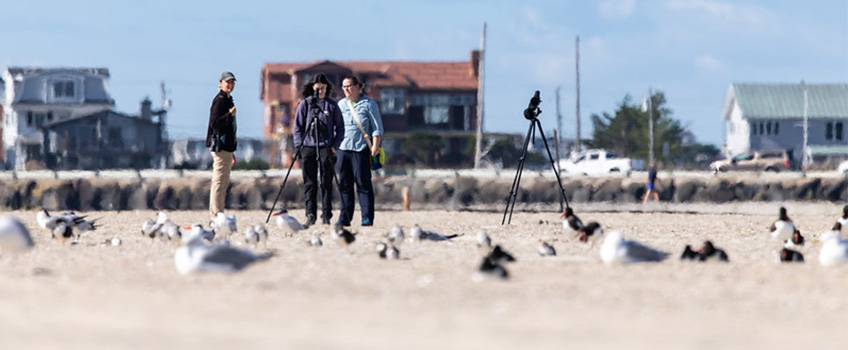
Sea Isle City, N.J. - On a September morning with the temperature holding tight to summer, Alyssa Schlauberg, a junior Environmental Science major, stood on Townsends Inlet beach looking through a spotting scope zoomed in on an American oystercatcher.
Schlauberg is one of six interns working with The Wetlands Institute on a pilot study aimed at understanding how oystercatchers utilize saltmarsh habitats. Beach-nesting oystercatchers have been studied since 2003, but as climate change and coastal development alter available oceanfront habitat, the birds are utilizing saltmarsh along the bay.
The Wetlands Institute was awarded a grant from the National Fish and Wildlife Foundation’s Atlantic Flyway Shorebird Initiative to support research on determining where oystercatchers are selecting marsh nesting territories and the size of the population.
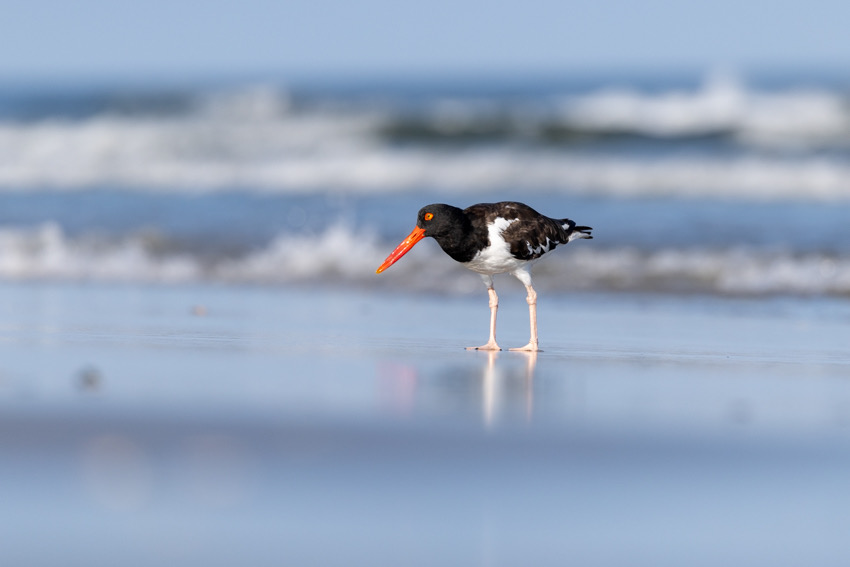
The black and white bird with light pink legs pecked at the sand with its bill and fidgeted with a piece of reed to practice prying open its food source of clams, mussels and oysters.
“Notice how the bill looks like it was dipped in mud,” said Samantha Collins, a research scientist for The Wetlands Institute in Stone Harbor.
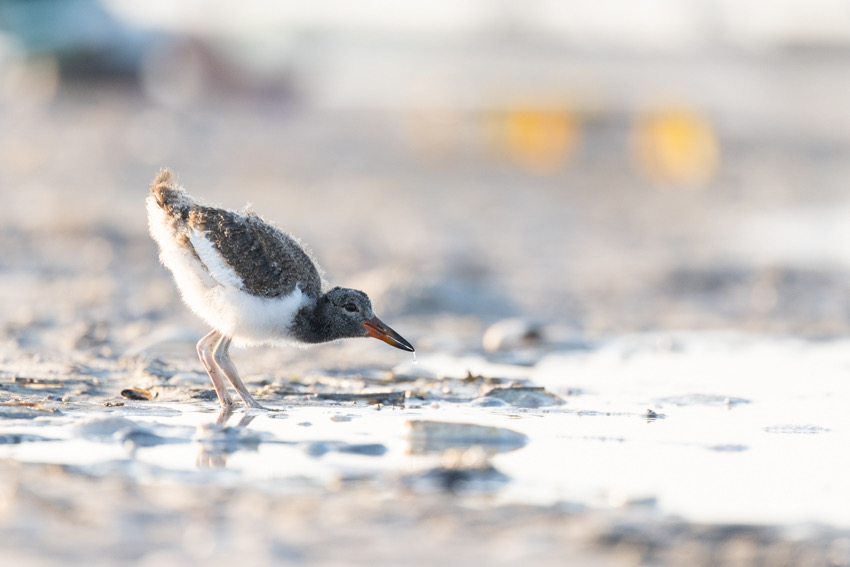
A dull orange bill with a darker tip identifies the bird as a juvenile as well as darker eyes and quirky behavior. Adults by contrast have a bright, solid orange bill and piercing yellow eyes.
The young bird was hanging out in a flock with about 75 other oystercatchers, a couple black skimmers, terns and gulls. A second flock huddled together on the beach in the distance.
Once the nesting seasons ends, territorial mating pairs and young-of-the-year offspring gather in flocks to stage for migration. Some birds will fly south, and others will overwinter in New Jersey.
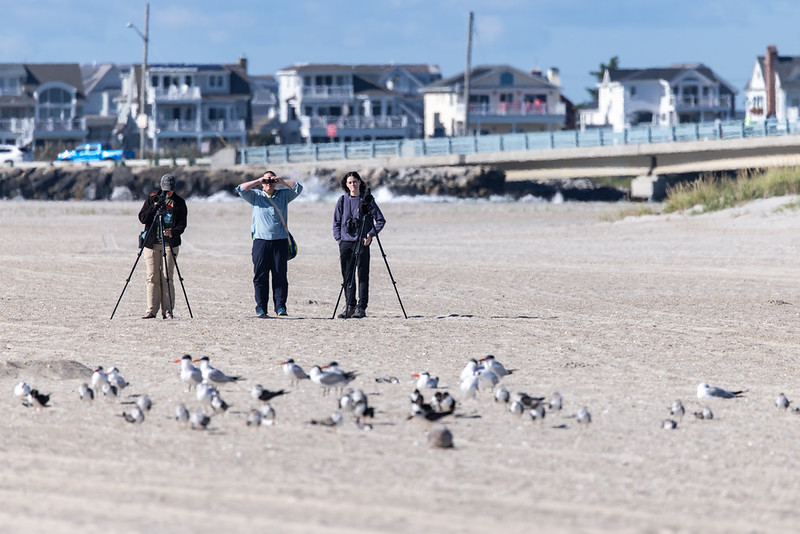
Emma Witt, a professor of Environmental Science who oversees the internship collaboration, helped count the flock sizes and looked for bands on the birds’ legs.
Each resighting of a banded bird gives scientists another dot on the map to illustrate bird movement and survival. Scientists, photographers and citizens can all contribute data by entering band codes along with dates and locations to ReportBand.gov.
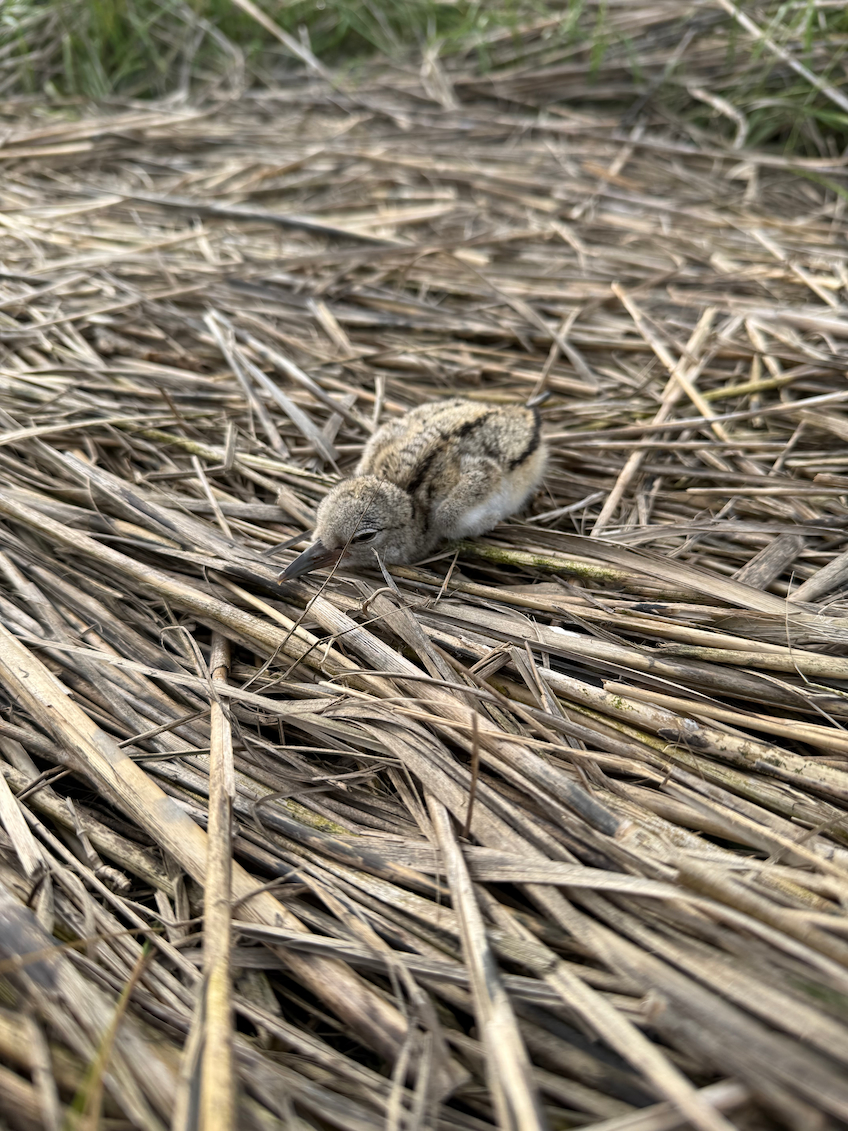
“Some of these birds we haven't seen for years because they might be nesting in the marshes. They're banded as chicks on the beaches, and then they go and nest in the marshes, and we don't see them unless we happen to catch them on these staging areas,” Collins said.
When banded birds are resighted, they have a story to tell.
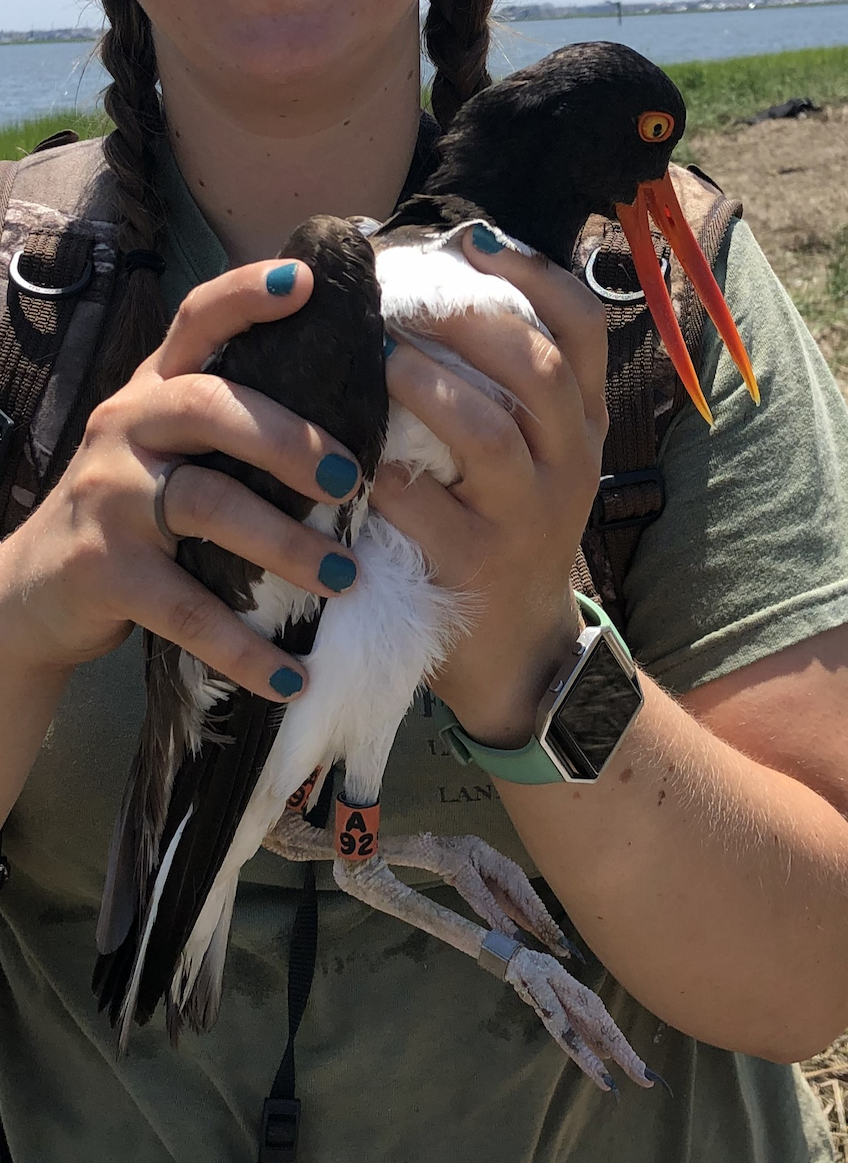
An adult oystercatcher wearing an orange band with code A92 was one of seven banded birds seen during the survey with a juvenile following it. Samantha Collins captured A92 as an adult nesting in the saltmarsh on Sturgeon Island, owned and monitored by The Wetlands Institute, in June of 2019.
"This bird was documented returning to the same island to nest during the 2020-2024 breeding seasons, but we did not observe it nesting in 2025. We were monitoring the island extensively during this time for a project focusing on Black-crowned Night-herons that also nest on the island, so we actually know that mammalian predator activity was high during the 2025 nesting season and nesting by both wading birds and oystercatchers was limited last year for that reason. Luckily, predator activity was lower this year and birds returned to nest, including A92," Collins said.
This year, A92 fledged a chick. "They are doing something right in being very secretive about their nesting habits," Collins said.
The students are contributing to the project by scouring public records of American oystercatcher sightings, as well as whimbrel and red knot sightings, using eBird and Motus tower data.
Motus is an international collaborative research network that uses automated radio telemetry to track the movement and behavior of small animals, like birds, bats and insects. Stockton’s Atlantic City campus and The Wetlands Institute house Motus towers on the roof to capture data from tagged migratory species.
Students map sighting locations for each species and overlay key habitat features using R, an open-source programming language used for statistical computing, data analysis and data visualization.
The study is focused on marsh in Ocean County and marsh surrounding The Wetlands Institute in Cape May County.
“It's been interesting to see the difference between sites. We're already seeing the birds in the northern area nesting on the ground or directly in the vegetation. There's different vegetation that they're nesting in, whereas in the south, they're either on placement areas, or they really like big wrack mounds made up of the dead vegetation that washes up and gets trapped on the marsh. They nest on top of that because it does provide a little bit of a buffer when it floods. That wrack can rise and fall,” said Collins.
Placement areas refer to restored saltmarsh where dredge spoils help to build up drowning marsh.
Students also participated in three survey trips by boat to look for oystercatchers in the marshes on Barnegat Bay.
“The folks at the Stockton Marine Field Station were invaluable in making sure students were comfortable and safe on the research boats,” Witt said.
Schlauberg grew up in Garwood, far from any beach-nesting birds, so the internship is introducing her to the world of birding and giving her the chance to apply what she’s learning to real world science.
Campus Environment Invites Research
The shorebird monitoring internship offers students fieldwork opportunities on the beach and bay.
She found out about The Wetlands Institute internship opportunity while taking Witt’s Physical Geography course that covers Geographic Information Systems (GIS) and R.
“We had just started doing data entry in R and then Emma sent out the email about the internship, and I was like, ‘Wow, that's literally everything we just did in class.’ It sounded like an opportunity where I could learn more about all the things I just learned. It was perfect timing,” she said.
Watching and hearing the flocks up close brought the data points to life for her.
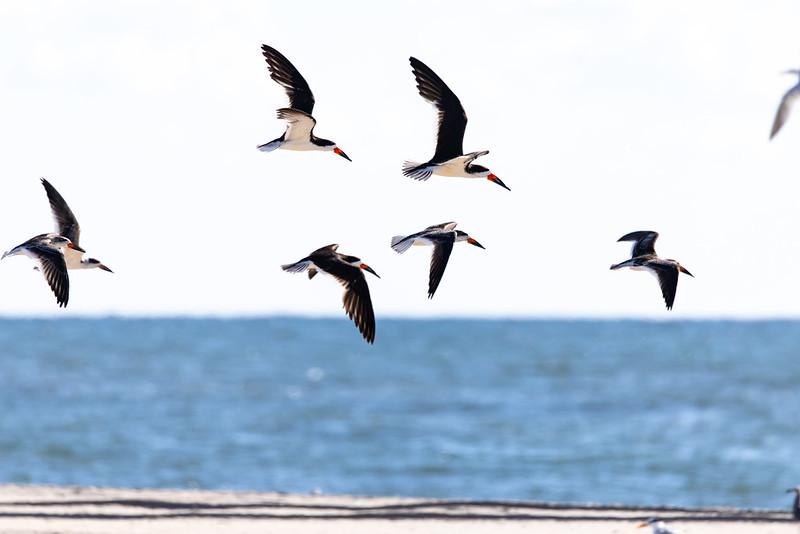
Black Skimmers
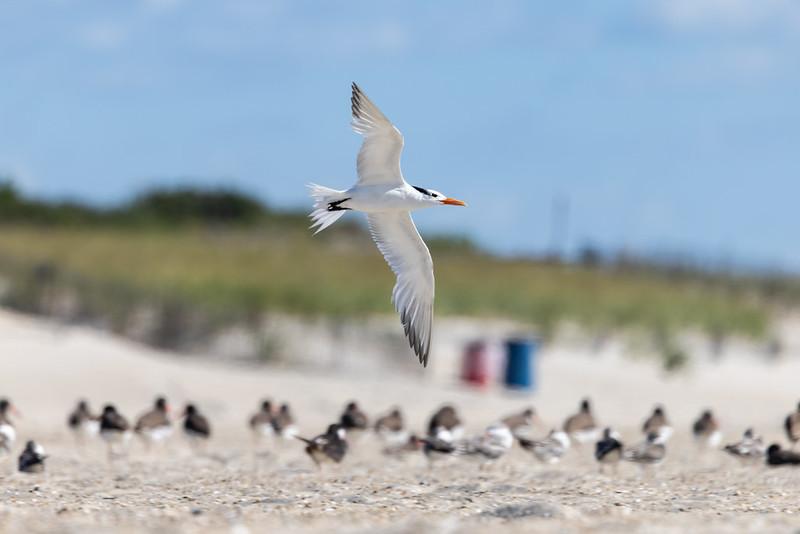
Royal Tern
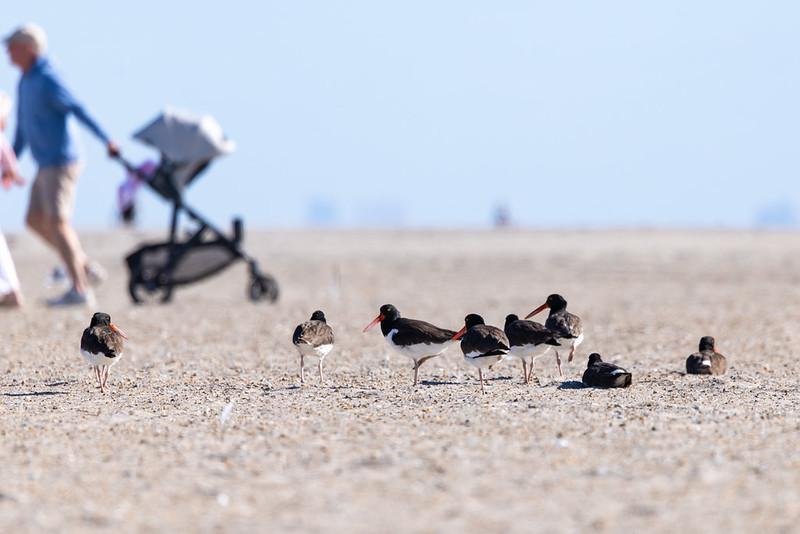
American Oystercatchers
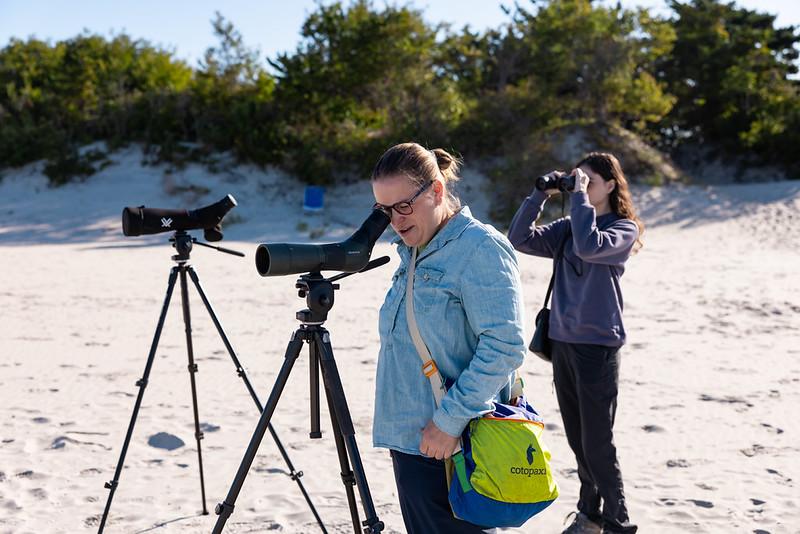
Emma Witt looking through a scope
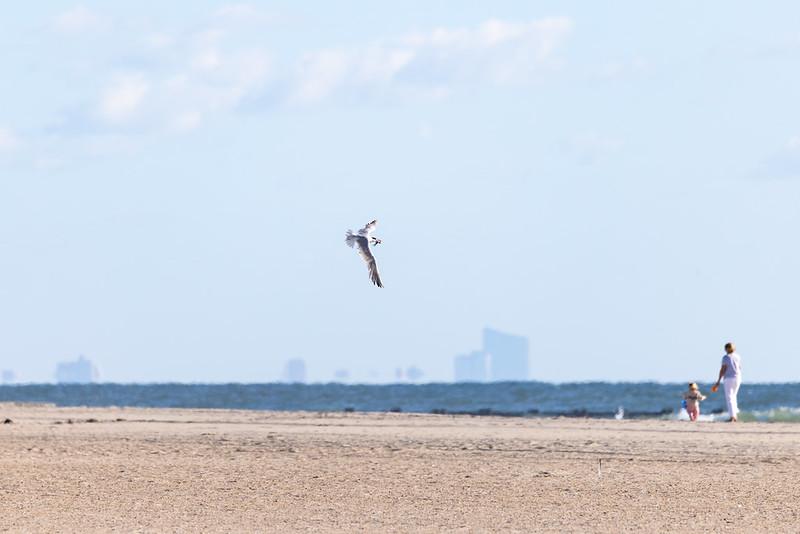
A tern in flight
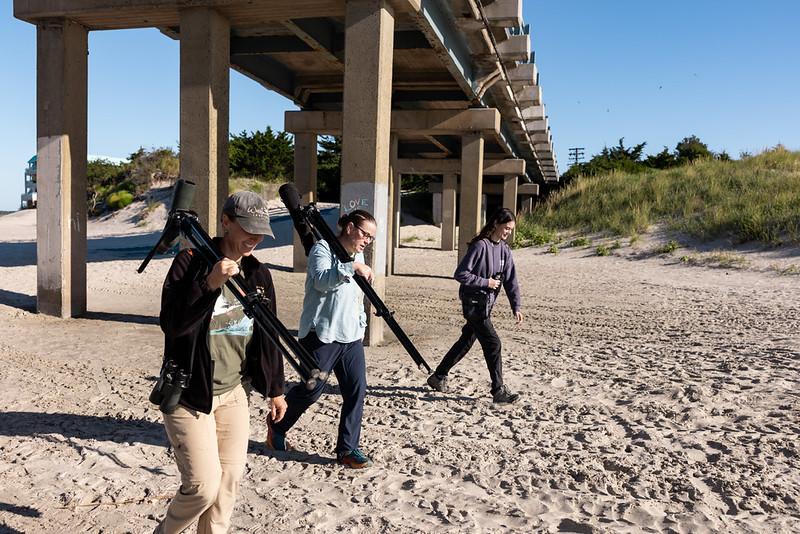
Researchers at Townsends Inlet
“It's estimated that 75% of our population here in New Jersey might be nesting in the marshes. So, it's kind of a big miss that we don't know as much about the threats in these areas and what the population and success rates are,” Collins said.
Witt was excited for the collaboration to help students learn monitoring techniques from professionals and put their classroom skills to work to summarize data for a stakeholder.
Students will continue processing the data to map a better picture of how oystercatchers are adapting as habitat changes.
Reporting and photos by Susan Allen