Spotlight On: Desislava Hristova-Tosheva
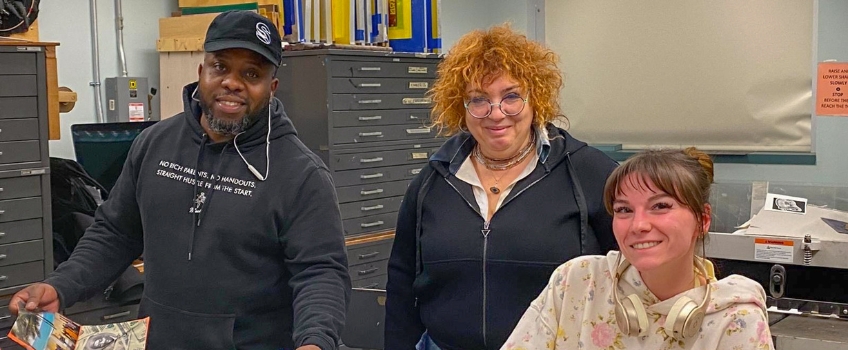
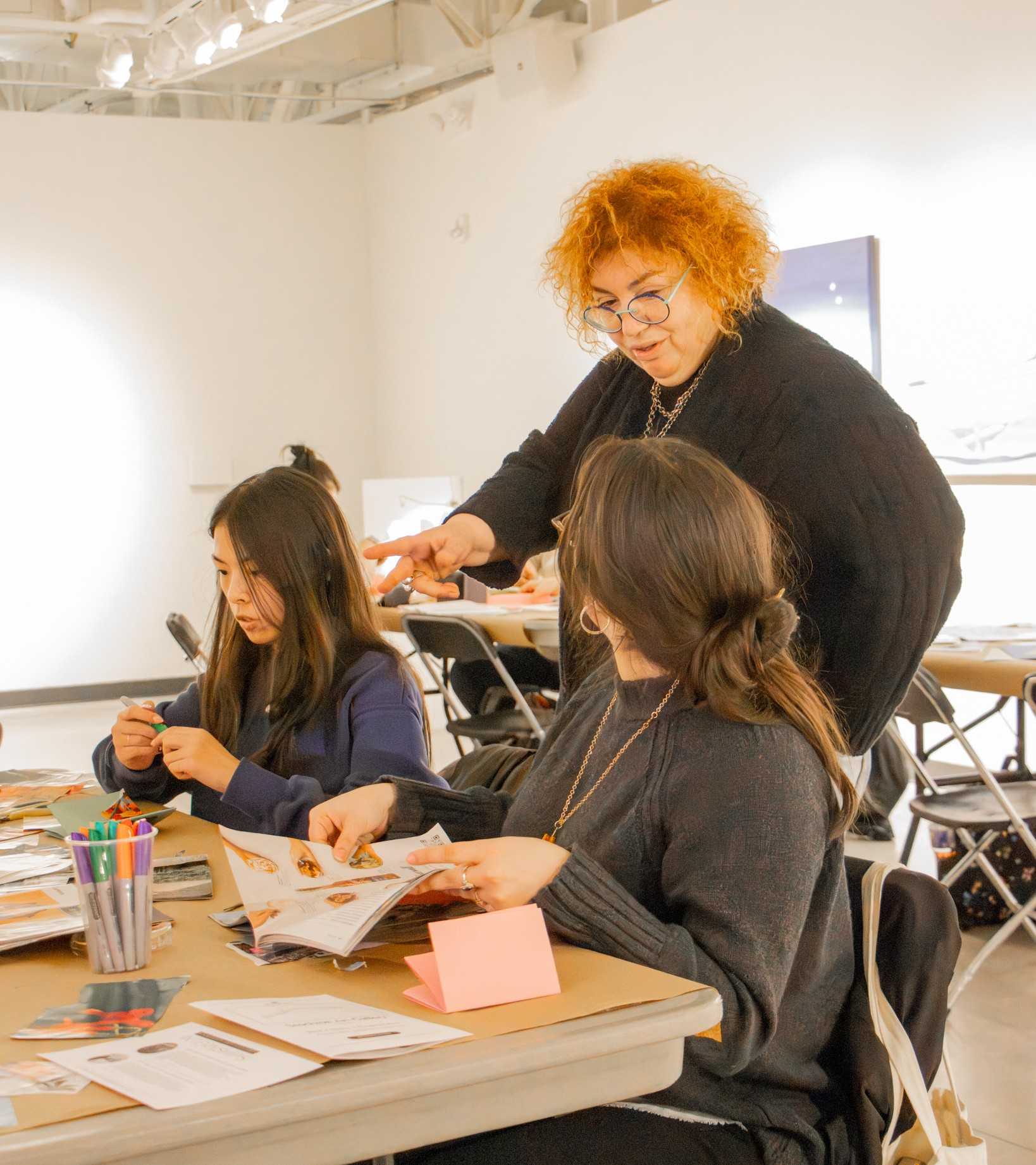
Fulbright Scholar Desislava Hristova-Tosheva, center, with Stockton students Najee Brown, left, and Breanna Cieslak during her Book Art and Contemporary Culture course.
Galloway, N.J. — When Desislava Hristova-Tosheva met Mariana Smith, associate professor of Art at Stockton, during a printmaking workshop in Xi’an, China, neither could have predicted that their shared interest in experimental techniques would one day lead to a Fulbright opportunity in South Jersey. This spring semester, Hristova-Tosheva, a professor at the National Academy of Art in Sofia, arrived at Stockton as a Fulbright Scholar-in-Residence (S-I-R). She is the first Bulgarian scholar to participate in the S-I-R Program since 1993, bringing her expertise in contemporary printmaking and cross-cultural dialogue to the campus community.
A graduate of the National High School of Fine Arts “Ilia Petrov” in Sofia, she later earned a master’s degree in Printmaking from the National Academy of Art in 1994, a period marked by profound political and cultural change in Eastern Europe.
“I was a first-year student when the Berlin Wall fell, and democracy arrived. My father was a well-known printmaker, and I inherited my love for printmaking from him, as well as the smell of ink, which I literally grew up with,” Hristova-Tosheva shared.
In the following Q&A, Hristova-Tosheva reflects on her background, her Fulbright experience and her ambitious array of projects while at Stockton.
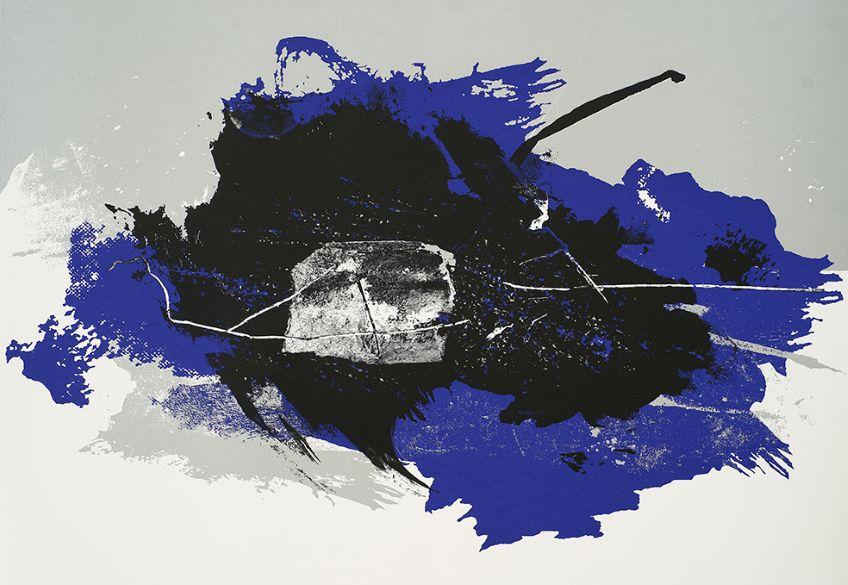
Art by Desislava Hristova-Tosheva1
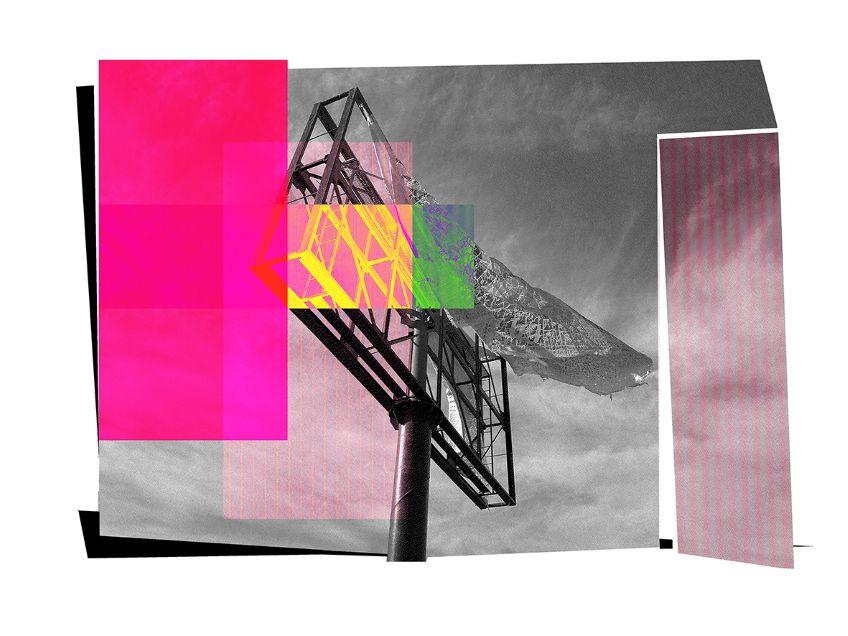
Art by Desislava Hristova-Tosheva2
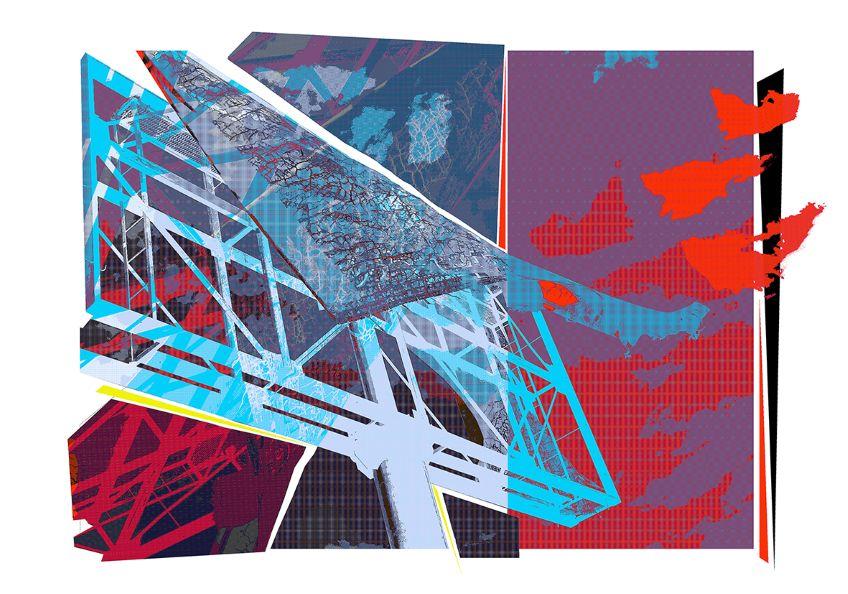
Art by Desislava Hristova-Tosheva3
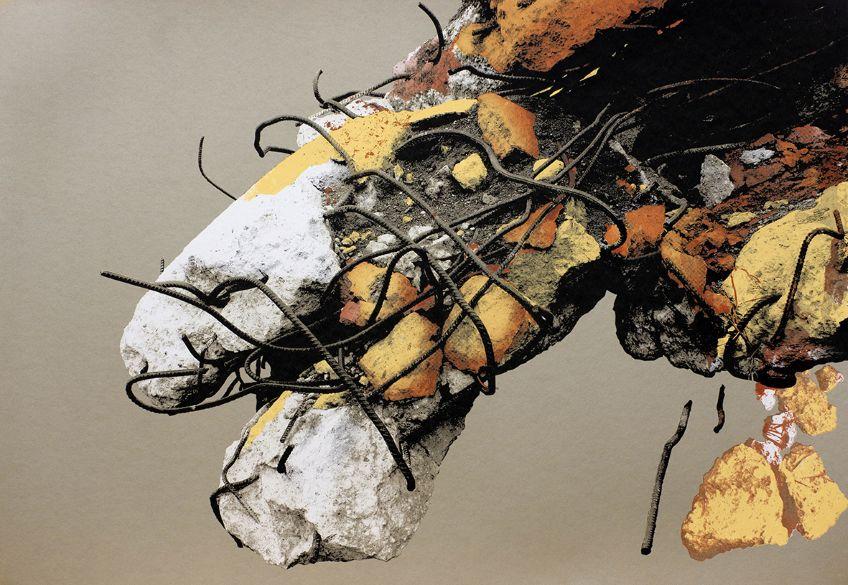
Art by Desislava Hristova-Tosheva4
Artwork by Fulbright Scholar Desislava Hristova-Tosheva.
Can you tell us about your academic background and work at the National Academy of Art in Sofia?
After graduating, I developed a strong interest in researching contemporary printmaking techniques and experimental methods, building upon and expanding traditional graphic techniques. This was influenced by my experiments with stone photolithography in a lithography studio in Sofia and by the fact that I grew up and studied in a socialist country where many innovations were inaccessible to us. Our education system is classical, focused on realistic drawing and traditional printmaking techniques, but I have always been drawn to newer technologies in art.
In 2004, I began my doctoral research on photo-transfer techniques in contemporary printmaking, exploring innovations in this field. Honestly, I never imagined I would pursue an academic career, but after defending my doctorate, I became a full-time lecturer in the Printmaking Department (2009), later an associate professor and then a professor. I am also Secretary of the “Printmaking and Illustration” Section of the Union of Bulgarian Artists (UBA).
What drew you to apply for the Fulbright Scholar-in-Residence program, and what does this opportunity mean to you personally and professionally?
My first encounter with the Fulbright Program was through scholar Judith Michelle Hill from Parsons School of Design in New York, who taught in the Textile Department of the National Academy of Art in 2008. Her exhibition “Orpheus Dreaming,” inspired by her stay in Bulgaria, was opened at Gallery Arosita, where I was working at the time as a gallerist and curator. Her research focused on Orphism and ancient Thracian art, crafts, culture, and the religious beliefs associated with Orpheus. She described Bulgaria as a country and culture strategically located in a region preserved over the centuries not only by religious rituals, but also by ancient motifs that illustrate mythologies, narratives, and beliefs related to Thracian spirituality.
I was deeply impressed by how two completely different cultures – Bulgarian and American – could not only find common ground but also build meaningful friendships and mutually enriching cultural experiences.
Something similar happened to me years later. I had long considered applying for the Fulbright Scholar-in-Residence program, but my decision was strongly reinforced by my meeting with Professor Smith in 2013. We first met at a printmaking workshop in Xi’an, China, and two years later again at Elam School of Fine Arts in Auckland, New Zealand. I was immediately impressed by the way she used photo-transfer techniques (solar plate) and classical etching, combining them with installation and video.
Later, Smith came to Bulgaria at the invitation of the Printmaking Section of the Union of Bulgarian Artists, where I serve as secretary, as a jury member of the 9th Sofia Printmaking Triennial. As part of the triennial’s cultural program, she opened her solo exhibition “Liminal” at Gallery Academia and conducted a solar plate workshop for students and faculty at the National Academy of Art.
Ultimately, through my interest in printmaking innovation and this professional friendship, I find myself here as a Fulbright scholar.
How does your work at Stockton connect to your teaching, research, and artistic practice in Bulgaria?
This connection is multilayered. I am also the curator of the exhibition “Her / Now / Elsewhere,” featuring 18 Bulgarian women artists based in Bulgaria and the United States, constantly moving through different cultural and social environments. This was a true challenge. I considered many possible themes, but this one attracted me the most.
I believe that Eastern European feminism is a topic that must be discussed. It is something I live daily. I am surrounded by people who often do not even see that there is a problem, and that is exactly why it is so important to give it visibility. Probably due to 45 years of socialism and the concept of “formal equality,” social divisions and inequalities are not perceived as clearly in society. Yes, Eastern and Western feminism differ in their historical contexts and development, but the refusal to acknowledge the problem’s existence motivates me to bring it forward honestly and visibly. My goal is not confrontation, but awareness, dialogue and response.
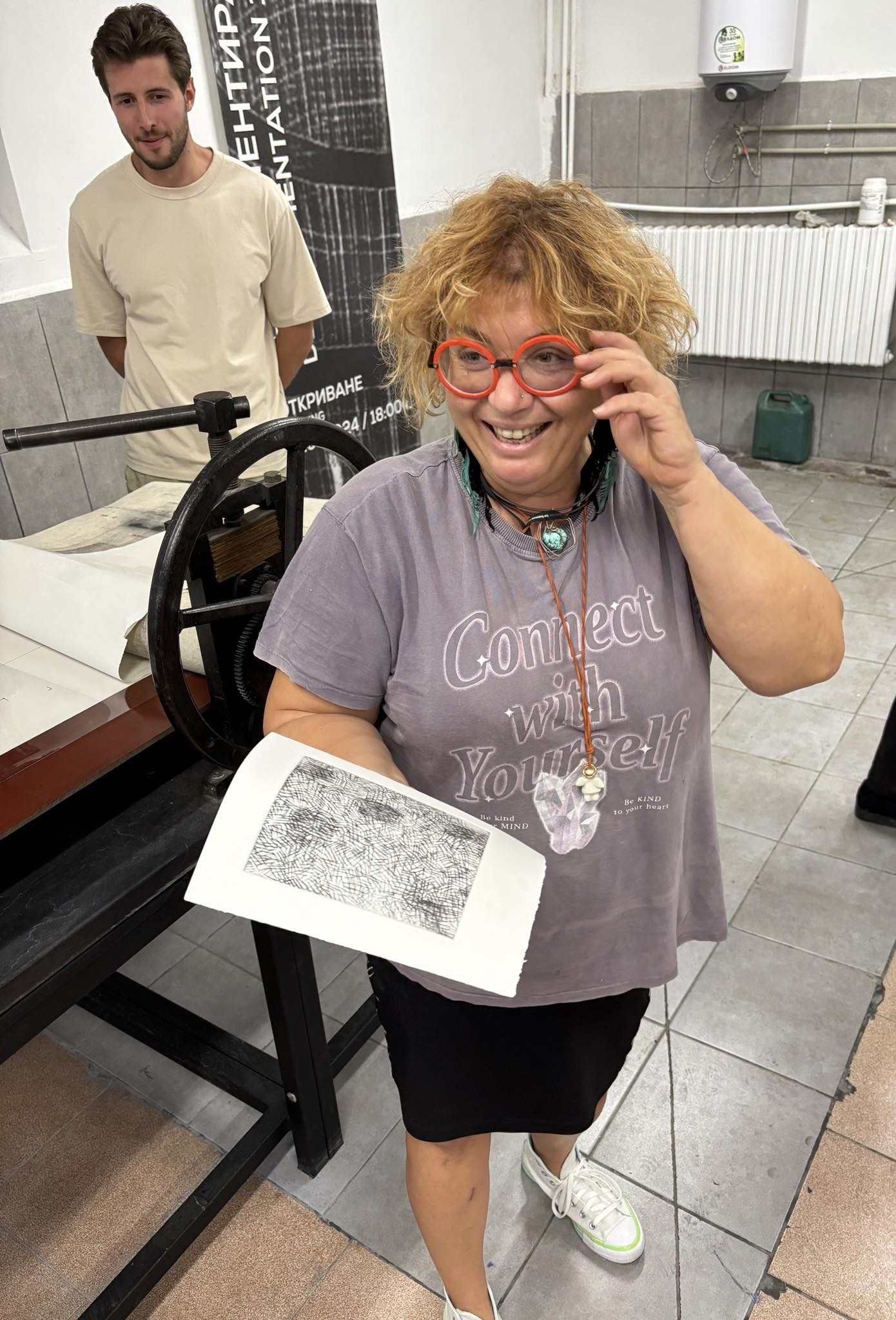
Desislava Hristova-Tosheva holds a print during a 2024 photoengraving workshop with artist Fatima Conesa.
I am also interested in comparing artists living in Bulgaria and those living abroad. Honestly, I see no essential difference between them — not in talent, thinking, sensitivity or artistic strength. They are all accomplished and successful, many with academic careers both in Bulgaria and abroad, and they are not afraid to take a position and express it clearly. This is why the exhibition is a platform for dialogue, encounter and the comparison of perspectives.
I am thrilled that on March 19, there will be an artist panel, where we will openly discuss these issues and compare perspectives on what it means to be a woman artist in Bulgaria and beyond.
This research is a direct continuation of my artistic and curatorial practices. It is not only artistic but also social. It is an observation and analysis of social attitudes, seeking connections, differences and tensions between these realities. I also plan to expand this exhibition and present it in Bulgaria.
It is an honor that this exhibition is presented here. I thank Ryann Casey and the entire gallery team for their professionalism and support. The gallery is wonderful, and I truly appreciate that students actively work there while learning. This practice is extremely valuable for them.
What will you be focusing on during your time at here, both in and outside the classroom?
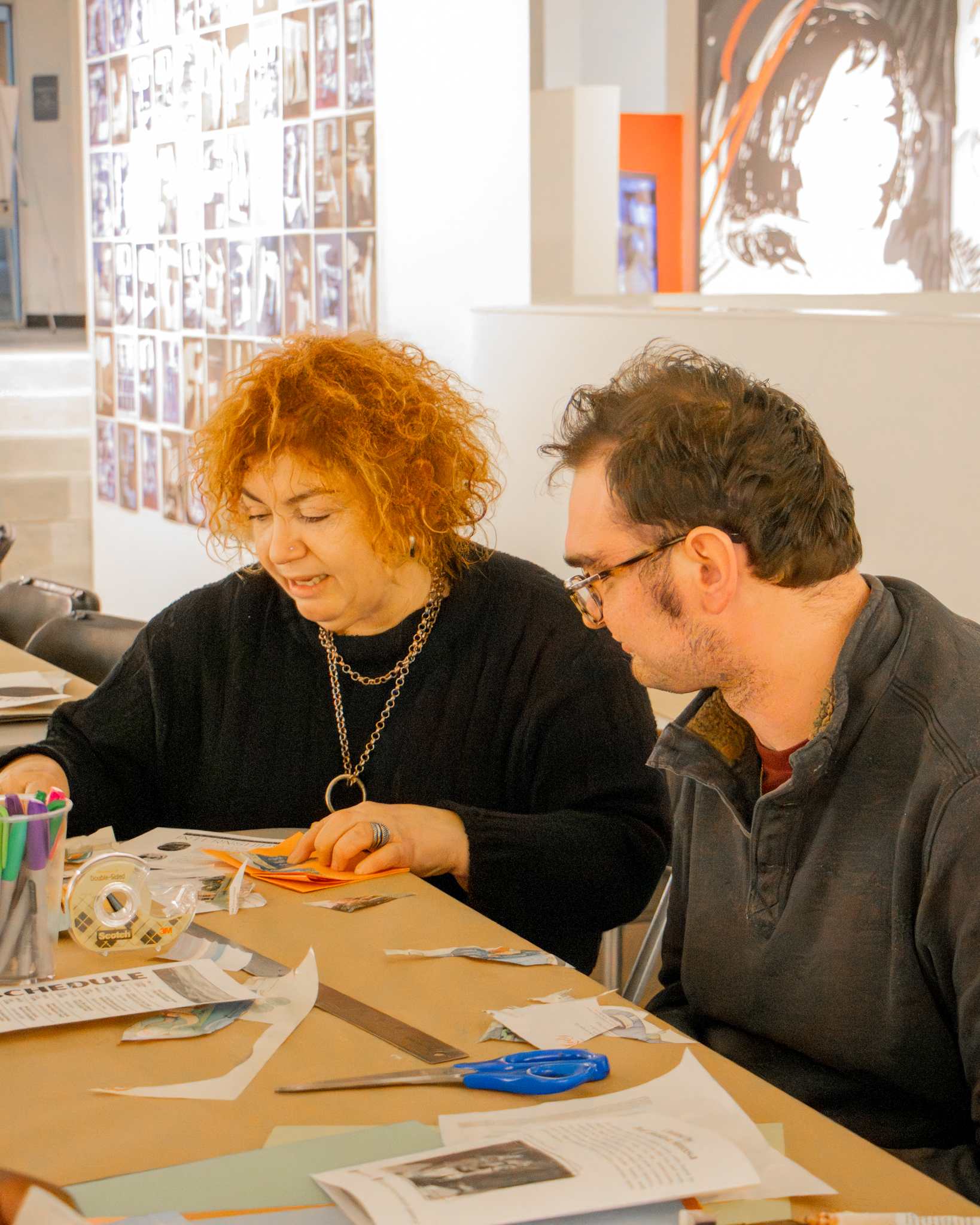
My program here includes teaching a class on Art Book and Contemporary Culture, a zine workshop, serving on an art panel on March 19, giving a lecture on globalization in April, and visiting classes. I have already met with senior art students for critiques.
For my art practice, I will also participate in a large woodblock workshop in May and plan to work with solar plate techniques. I discovered that Stockton has a laser engraving machine, which allows me to combine contemporary engraving methods with traditional printmaking techniques. I am also interested in cross-disciplinary practices. I hope to create several video works in collaboration with Stockton’s Marine Field Station, combining art with science. My focus here is on the interaction between different cultures and contemporary artistic techniques.
What have been your first impressions of Stockton and the campus community so far?
My first impression is that the American lifestyle and educational system are radically different. The campus and university function as a small city and offer an education system that differs fundamentally from the Bulgarian model. Life in a wooded campus and safety procedures such as background checks, ID cards, digital education systems, Blackboard access, etc., were all new to me.
Education here functions differently, with its advantages and disadvantages. In Bulgaria, universities are state-funded, with low tuition fees and entrance exams. The Bulgarian education system is historically inspired by Western European models (French and German), with strong influence from the Soviet centralized system after 1944. Today, Bulgarian higher education is gradually aligning with EU standards while preserving a strong cultural and academic identity.
What do you hope students will take away from learning with you during your time here?
I hope students learn how to create with freedom and ease, without fear or limitations – to step outside conventional thinking and their comfort zones. I want them to gain the courage to experiment, seeking multiple perspectives and multiple solutions. Not to give up, but to believe that everything is possible, that difficulties are obstacles that help us find new paths. To allow themselves to be who they are, to follow their dreams, and not to strive for perfection, because perfectionism is the fastest path to dissatisfaction and unhappiness. We grow through mistakes.
Is there anything you’re especially excited about sharing – whether related to your discipline, your culture, or your experiences as a Fulbright scholar?
I feel best when I have time for my own artistic practice. I believe art educators must be active creators, showing students how to live and work as professional artists. I love organizing art projects in different countries and developing new ideas. I want art to reach more people more easily.
📍 Where to Find Desislava Hristova-Tosheva
- Exhibit
Her / Now / Elsewhere
Upper Art Gallery
On display through March 28
- Artist & Scholar Panel
March 19 | 12:30 p.m.
Upper Art Gallery
- Global Studies Lecture Series
Desislava Hristova: The Role of Women Artists in Bulgaria and Eastern Europe from the Communist Regime to Contemporary Democracy
April 2 | 4:30 p.m. | Virtual | Register on Zoom.
A balance between teaching, personal life and creativity is essential. Without inspiration and motivation, there is nothing meaningful to pass on to students.
My sources of inspiration are travel, encounters with different cultures, exhibitions, sports, swimming, boats, and summers spent by the sea. The contrast between activity and rest, and diverse experiences, fuels creativity and energy. This combination of practice, contemplation, and active living allows me to show students that it is absolutely possible to follow their dreams – and that when they are authentic, they come true.
Beyond her teaching and creative work this semester, Hristova-Tosheva sees her Fulbright residency as the beginning of deeper institutional collaboration. She points to programs like Fulbright and Erasmus as vital bridges between cultures and hopes her time at Stockton will strengthen ties between the National Academy of Art and Stockton, opening the door for future student and faculty exchanges.
Reported by Mandee McCullough
Photos submitted; Stockton zine workshop image by Art Gallery intern Sydney Groen