Spotlight On: Faculty, Staff Publish Childhood Studies Textbook
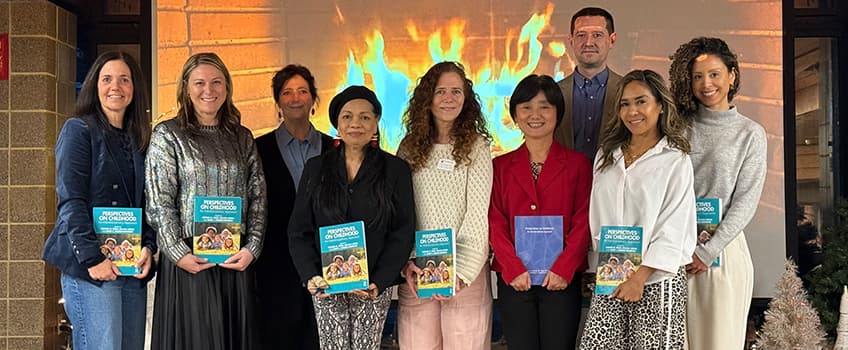
From left, Sara Martino, Megan Thompson, Helana Girgis, Guia Calicdan-Apostle, Elyse Richman Smith, Connie Tang, Kerrin Wolf, Allison Sinanan and Angela Gwathney gathered in the Lakeside Lodge on Feb. 17 to talk about their new book 'Perspectives on Childhood: An Interdisciplinary Approach.' In all, 12 Stockton faculty and staff contributed to the new textbook.
Galloway, N.J. — A new textbook authored and edited by Stockton University faculty is helping redefine how students and educators understand childhood as an academic field.
“Perspectives on Childhood: An Interdisciplinary Approach” brings together 12 scholars from across the behavioral sciences, health sciences, social sciences and humanities to examine childhood through multiple lenses, emphasizing that children’s lives are shaped by social systems, culture and lived experience.
A book signing and author talk was held on Feb. 17 at Stockton’s Lakeside Lodge to mark the publication. During the event, the authors reflected on their experiences developing the book. Stockton, through the School of Social and Behavioral Sciences, offers a minor in Childhood Studies.
Below, contributors Elyse Richman Smith, Mary L. Padden-Denmead and editor Connie M. Tang discuss in more detail their work, the collaboration process and what they hope readers take away from the project.
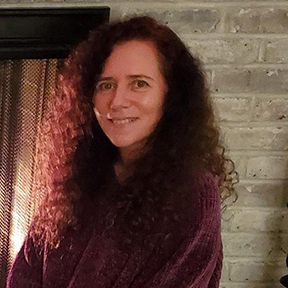
Elyse Richman Smith
Coordinator of Academic Internships and Community Experiences
Adjunct Professor
How would you summarize the central message of your chapter?
My chapter provides an overview of the education system in the United States from
1837 to today, with a focus on diversity, inclusivity and accountability, emphasizing
how these factors shape student experiences and outcomes in meaningful ways.
What real-world issues or experiences influenced the way you approached your topic?
My experience working with students who receive special services and collaborating
with IEP teams made me aware of the extensive coordination required to determine what
is best for each student.
Why is it important for students to study childhood as an academic field today?
While we have all been children, we often view childhood through an adult lens and
forget what being a child truly felt like. Studying childhood academically allows
us to reflect on and understand the complex experience of being a child.
How does your chapter challenge common assumptions about childhood?
My chapter challenges common assumptions about childhood by exploring diversity in
depth, with particular attention to the impact of gender identity and socioeconomic
factors in schools. It invites readers to see childhood as shaped by social context
rather than as a single universal experience.
What social issues affecting children today felt most urgent to address in your writing?
The social issues I felt most urgent to address were bullying and school shootings.
I explored these topics through case studies at the beginning of the chapter. In addition,
I wanted to explore social identity in a responsible way.
What conversations do you hope this book will start?
I hope the chapter will spark conversations among students and educators about how
schools can become safe havens for youth, places that inspire students and motivate
them to pursue their dreams. I hope these discussions encourage creative thinking
about ways education can focus more on real-world skills and meaningful learning.
What skills or perspectives do you think students gain from engaging with this material?
I hope students gain the perspective that education encompasses much more than pedagogy
and curriculum. Understanding the social, economic and cultural factors that shape
learning can help us become more thoughtful and effective educators, policymakers
or advocates.
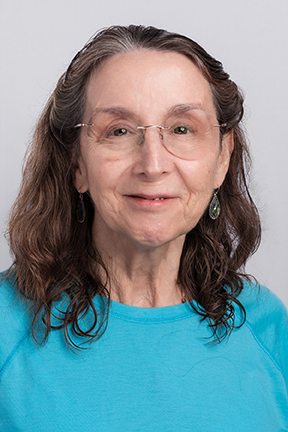
Mary L. Padden-Denmead
Co-chair, Undergraduate Nursing Track
Associate Professor of Nursing
How was the process of co-writing?
It was a good process. I’m not an education expert, so I learned some things about
education. I feel like I was able to contribute to some aspects, even though that’s
not my area of expertise. I felt like I could contribute to the chapter on culture
because you have to understand culture in nursing, so I felt like I could really contribute
to that.
Who might benefit from this book the most?
The target audience was undergraduate students in childhood studies. Personally, I
think anyone who cares about children could benefit from this textbook. Anyone who
cares and is an advocate. If we don’t take care of our children now, we won’t have
much of a future.
Did you touch on any social issues?
Yes. Every single chapter. In the chapter on child health, even though I am a nurse
and aware of what goes on in health care, this opened my eyes to the status of child
health care in the United States. Even in the richest country, we still have children
who do not get health care or immunizations or dental care, or are dealing with obesity
that affects them into adulthood. The lack of financial funding in impoverished areas
needing education affects outcomes overall. These things are interrelated. If you
don’t have a good education, research shows it is related to poor health care outcomes,
but you have to be in good health to learn in school.
The chapter on children’s rights opened my eyes to the condition of children not only in the United States, whose rights are being challenged, but also throughout the world — immigrant children, migrant children and refugee children. There are many children on the move who need to relocate, with and without their families. The social aspects and implications are discussed throughout this book.
What are you most proud of in the book?
I am most proud of the children’s rights chapter. I would like to write and publish
more on that topic because if we don’t take care of our children now, we don’t have
a future to look forward to. If we don’t promote safe places for children to grow,
we end up developing adults who don’t feel safe. They carry those adverse childhood
events with them for the rest of their lives, and it affects everything.
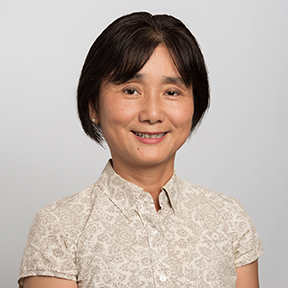
Connie M. Tang
Professor of Psychology
Editor, “Perspectives on Childhood”
What was your overall role in writing and editing?
Germinating the idea. The editors wrote sample chapters. There were two chapters we
co-wrote. I made sure to assign tasks to co-editors, and when they worked with their
authors for their chapters, there was a first line of defense to fix any issues. As
the editor, before we turn in the final proof, I also read everything from cover to
cover, trying to catch as many mistakes as possible. But I’m learning this semester
as I am using the book that there are still errors. So it’s a lesson that perfection
is an illusion.
How has using the textbook compared to past textbooks?
Our impetus for writing the book had to do with dissatisfaction after a few years
of teaching the course. We realized that all the textbooks were UK-based or from other
European countries, and they were five or more years old. We wanted a U.S.-based textbook
that students could relate to — a home base you can branch out from. I would say we
accomplished this goal despite the little mistakes I still see as I’m teaching from
the book.
What are you most proud of?
I would say the teamwork. We included as many interested and relevant co-workers as
possible. We were afraid it was going to be like herding cats, but somehow we pulled
it off. When it was done, and everyone listened to each other, that was the proudest
achievement. We learned that teamwork is the best work.
The other Stockton faculty and staff involved with the book are Helana Girgis, Sara Martino, Megan Thompson, Jacob Camacho, Maya Lewis, Allison Sinanan, Kerrin Wolf, Angela Gwathney and Guia Calicdan-Apostle
— Story and photos by Ella Johnson