Trip Immerses Africana Studies Students in Ghana’s Culture
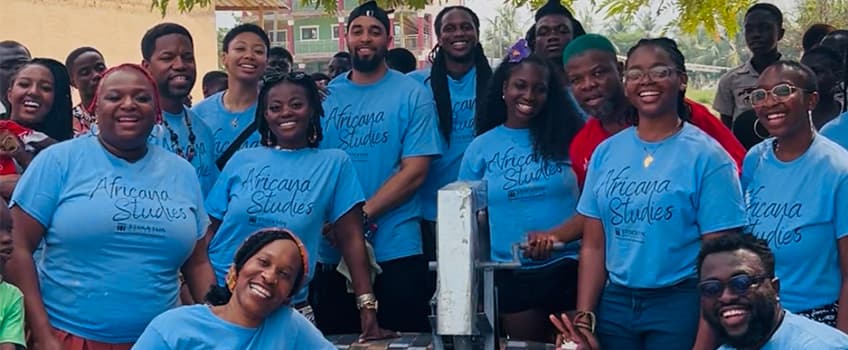
Stockton students and faculty gather at a community well in Ghana that was built with funds from Stockton staff, faculty and students. The students spent Dec. 29 to Jan. 11 in Ghana as part of a study-abroad trip.
Galloway, N.J. — A group of 10 Stockton University undergraduate students, two faculty members and one graduate student returned last month from a study-abroad trip to Ghana that blended academic study and cultural immersion.
The Africana Studies program led the trip from Dec. 29 to Jan. 11. Students had the opportunity not only to learn, but to live within the history, culture and everyday rhythms of the African country.
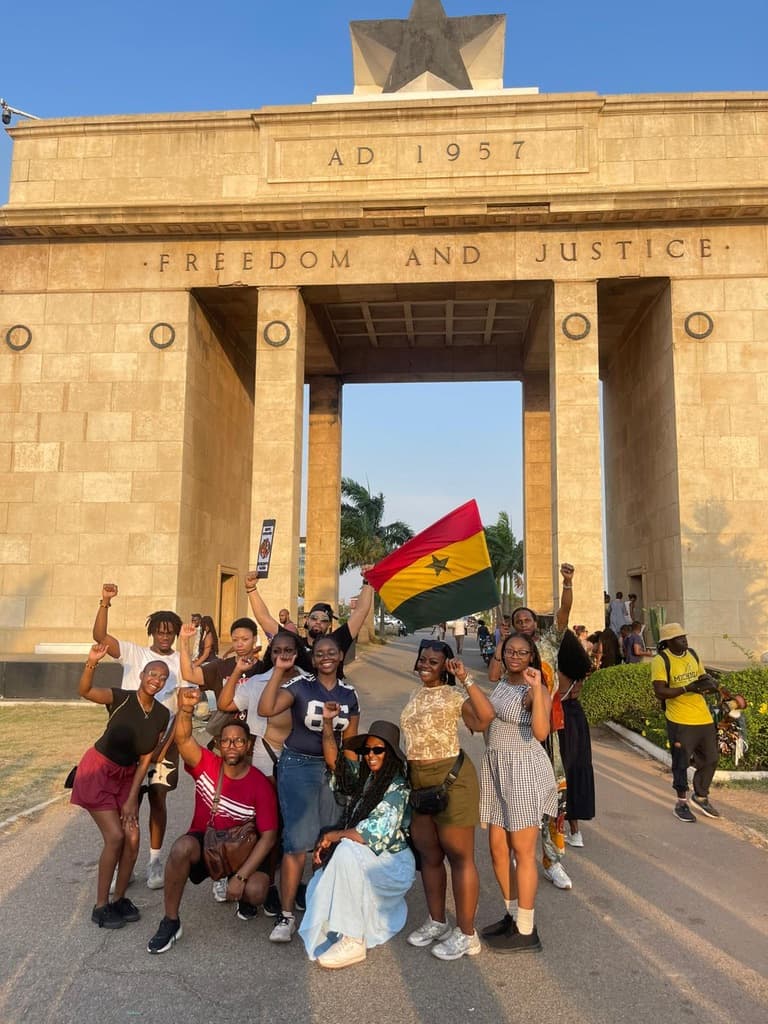
Stockton students gather at the Independence Arch in Accra, Ghana as part of their study-abroad trip to the African country.
For seven students, the trip fulfilled a major requirement, while others joined through Africana Studies minors or personal interest. Students described a shared excitement about experiencing what they had studied.
“The classroom can teach you facts, dates and systems, but Ghana taught me what those systems felt like,” said senior Africana Studies major My’Air Henry.
One of the most meaningful moments of the trip was visiting a community well built during a previous Ghana experience. The well, which cost just over $600 to construct, now provides clean water to local residents and stands as a symbol of collaboration. Professor Donnetrice Allison, who led the trip, described the visit as a “full circle moment,” capturing the joy of seeing planning, fundraising and partnership turn into something that directly supports daily life.
“This is something we don’t plan to stop at one trip,” said Allison, a professor of Africana Studies and Communication Studies. She emphasized that the project is part of a long-term relationship with the community rather than a single service effort.
The well was made possible through the work of a local Ghanaian facilitator and the generosity of donors, including Stockton staff, faculty and students, such as Executive Vice President & Chief of Staff Terricita Sass, Patricia Reid-Merritt, Distinguished Professor Emerita of Social Work and Africana Studies, adjunct faculty member Louise Gorham-Neblett, and Keisha Richards ’25, along with significant support from a Go Fund Me page.
Graduate student Lillian Nickens ’24, who traveled to Ghana for the second time, described her first visit as “soul reviving” and her most recent one as “soul strengthening.” While continuing her thesis on family systems in Ghana, Nickens was able to spend time observing everyday life, particularly among women and children, gaining insight through conversations, shared spaces and daily routines. She described the experience as both academically grounding and personally energizing, and she has committed to returning in the future.
Beyond coursework and service, students immersed themselves in Ghanaian culture through markets, music, food, conversation and community life. Many spoke about the joy of moving through spaces where Blackness was the norm rather than the exception, and the ease of feeling present and welcomed.
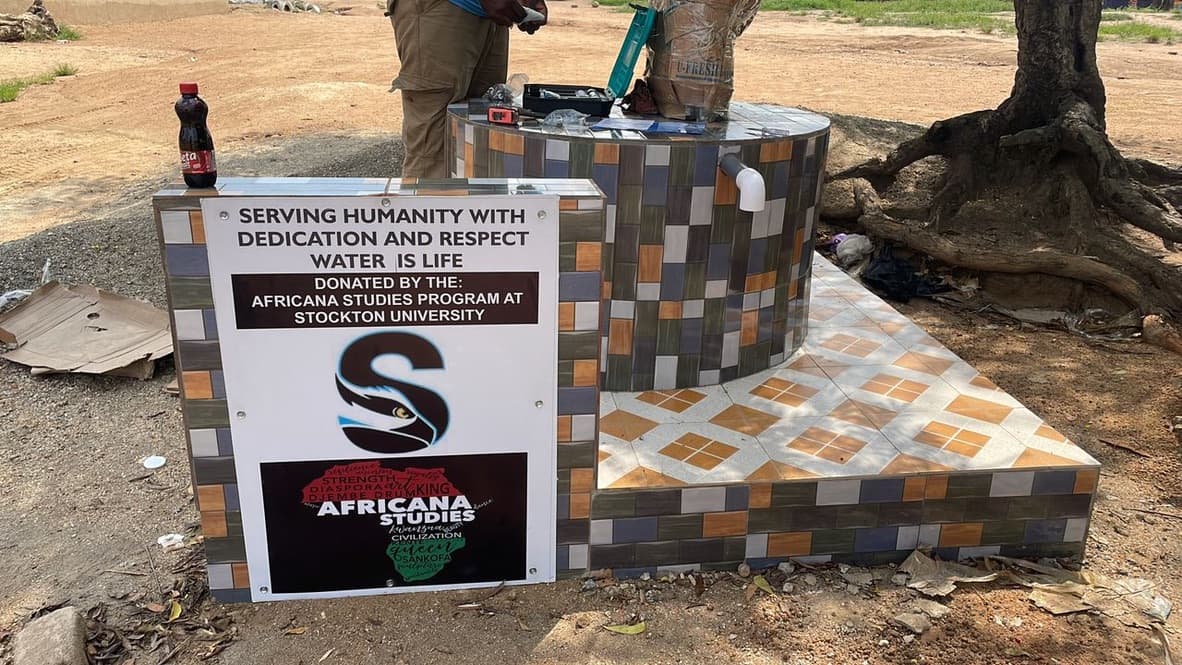
A community well that was built in Ghana from donors that included Stockton staff, faculty and students.
Several students participated in a traditional naming ceremony, receiving Ghanaian names that they continue to proudly use in classroom discussions. According to Allison, students have even begun “correcting” faculty when their Ghanaian names are forgotten — often with laughter.
For Henry, the trip brought a sense of comfort and belonging that was both unexpected and deeply affirming. Ghana, she said, felt familiar in ways she could not fully explain.
“It felt like being given back a piece of myself that had always been there,” she said.
Even in emotionally heavy spaces, such as historic slave sites, students balanced reflection with moments of connection, joy and gratitude for being able to witness history while engaging with living, vibrant communities.
“This experience taught me that history lives in places, in bodies, and in emotions,” Henry said. “It also showed me how much joy, strength and resilience exist alongside that history.”
Students noted that the trip reshaped how they think about service and responsibility. Seeing the impact of the well firsthand made the idea of clean water immediate and personal, while the warmth of the community reinforced the importance of showing up with intention and humility.
“You stop asking what you can get from the experience and start asking what you can do to help after seeing everything up close,” Henry said.
As the trip came to an end, many students expressed that leaving Ghana was difficult, describing a strong attachment to the people, places and shared experiences they had formed in just two weeks. The program plans to return to Ghana in two years, continuing both the academic program and the expansion of the well project.
— Story by Ella Johnson, photos by Donnetrice Allison