Spotlight On: Noel Criscione-Naylor
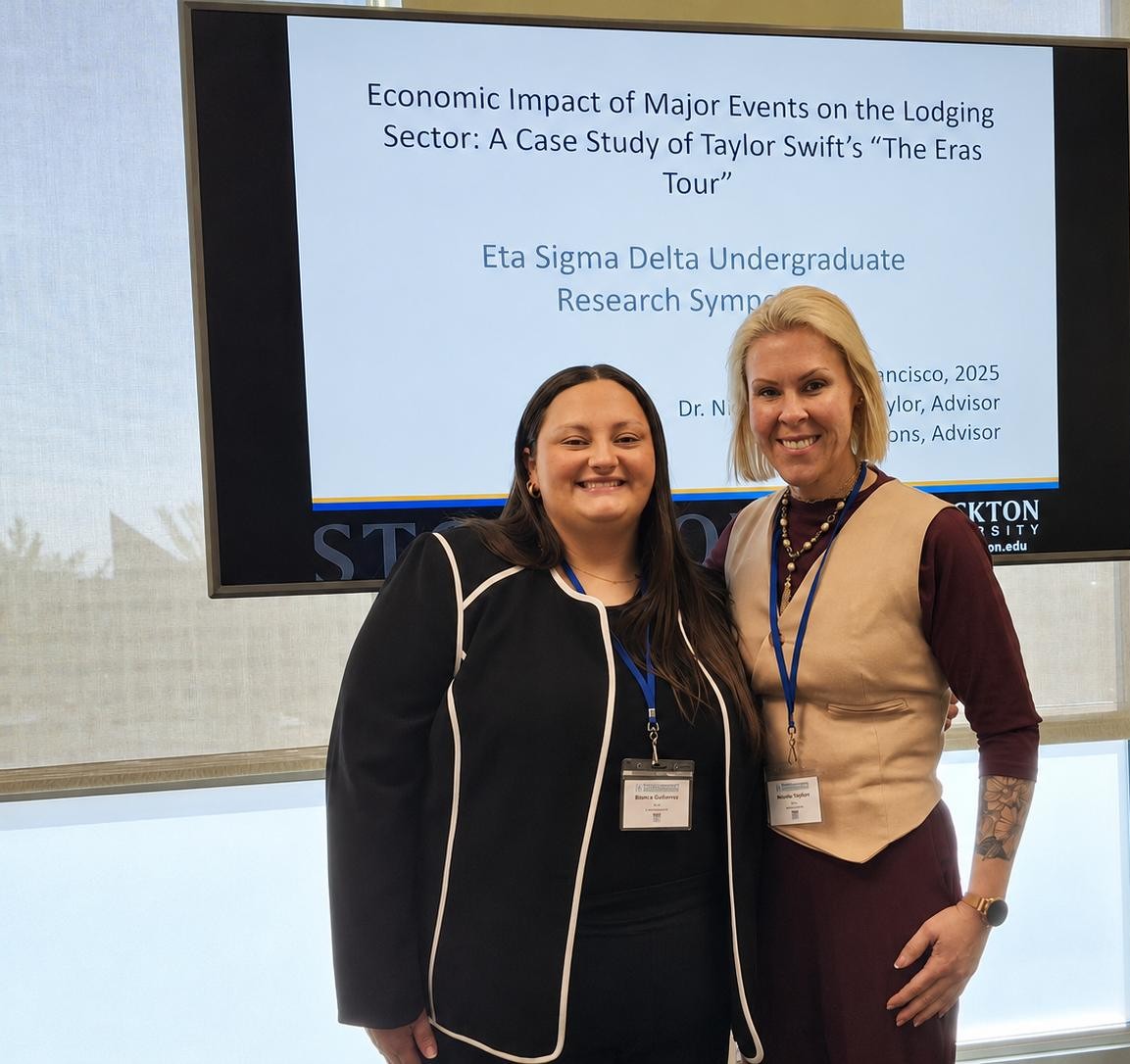
Professor Noel Criscione-Naylor, right, with student Gabriella DeFrancisco during the 2025 Eta Sigma Delta Undergraduate Research Symposium.
Galloway, N.J. — Hospitality is about more than a hotel stay, restaurant meal or special event. At its heart, the industry depends on meaningful service, human connection and professionals who understand how to create memorable experiences.
Noel Criscione-Naylor, professor of Hospitality & Tourism Management Studies, was recently named one of the International Hospitality Institute's Global 100 Influential Educators in Hospitality for 2026. Her continuous drive to learn and adapt as this field grows and changes is mirrored in her teaching philosophy and how her students succeed.
Criscione-Naylor was also named a 2026 NJBIZ Leading Women in Business honoree in June.
Below, she shares how her work continues to evolve, why hospitality graduates are prepared for careers across industries and where her teaching and research are heading next.
Since we last featured you, how has your work as an educator, researcher or mentor continued to evolve?
Over the past few years, my work has evolved from primarily preparing students for careers in hospitality, to helping to shape the future of hospitality education itself. While teaching remains at the center of what I do, I have become increasingly intentional about connecting classroom learning with industry, scholarship and institutional leadership. My research has expanded to explore topics such as workforce development, major event tourism, artificial intelligence, innovative teaching practices, and, more recently, how higher education evaluates faculty service and institutional impact. Although these may appear to be different areas of study, they are connected by a common question: How do organizations create value through people?
Recently completing AACSB’s dean leadership development program also broadened my perspective beyond the classroom. It challenged me to think more strategically about leadership, accreditation, faculty development, organizational change and the long-term role higher education plays in preparing future leaders. That experience reinforced my belief that educators have a responsibility not only to teach students, but also to continuously improve the systems that support learning and scholarship.
As a mentor, I've become increasingly focused on helping students build adaptable careers. Rather than preparing them for a single position, I want them to develop the curiosity, resilience and leadership skills that will allow them to succeed throughout an industry that continues to evolve.
What skills or perspectives do hospitality students develop that can create value across industries beyond hotels, restaurants, tourism and events?
Hospitality education develops business professionals who happen to specialize in hospitality. Students graduate with strong foundations in finance, marketing, operations, human resources, strategic management and data-informed decision-making.
However, what truly distinguishes hospitality graduates is their ability to lead through relationships. Hospitality professionals learn how to solve complex problems in real time, communicate with diverse stakeholders, anticipate customer needs, manage uncertainty and balance exceptional service with sound business performance.
Perhaps most importantly, hospitality teaches students to see every interaction through both a human and business lens. That perspective allows graduates to build organizations that are financially successful while remaining focused on people.
Hospitality is an industry rooted in human connection, community development and service. How do you help students understand that larger purpose while also preparing them for the business demands of the field?
Students must understand that meaningful service cannot exist without strong business fundamentals. We spend considerable time discussing financial management, revenue optimization, human resources, marketing, operations and strategic planning because organizations must remain financially sound to continue serving their employees, guests and communities. Rather than viewing service and profitability as competing priorities, I encourage students to recognize that they are deeply connected.
Organizations that invest in people, create memorable experiences and contribute positively to their communities often build stronger brands and greater long-term success. Helping students understand that balance is one of the most rewarding parts of teaching hospitality.
While I am deeply honored by this recognition personally, I truly see it as a reflection of the collective work happening within Stockton's Hospitality and Tourism Management Studies program. Our faculty are committed to combining academic rigor with meaningful experiential learning, industry engagement, applied research and student mentorship.Noel Criscione-Naylor
Professor of Hospitality & Tourism Management Studies
Are there any recent student projects, research collaborations or professional initiatives that reflect where your work is headed now?
One area of research has examined the economic impact of major entertainment events on hotel performance, helping destinations and hospitality organizations better understand how significant events influence lodging demand and revenue management strategies.
Another recent publication explored how higher education evaluates faculty service, encouraging institutions to recognize the broader impact faculty create through leadership, community engagement, industry collaboration and organizational service. While this research focuses on higher education, it also reflects my broader interest in how organizations recognize and develop human capital. Within the classroom, I am leading a HyFlex instructional pilot that examines how innovative teaching models influence student engagement, learning outcomes and sense of belonging while documenting best practices that can support future faculty implementation.
Professionally, I continue to serve in leadership roles with organizations including ICHRIE, Eta Sigma Delta and AACSB. These opportunities allow me to collaborate with educators and industry leaders worldwide, helping shape conversations about hospitality education, workforce development and student success.
How have your students influenced your own thinking about the future of hospitality and tourism?
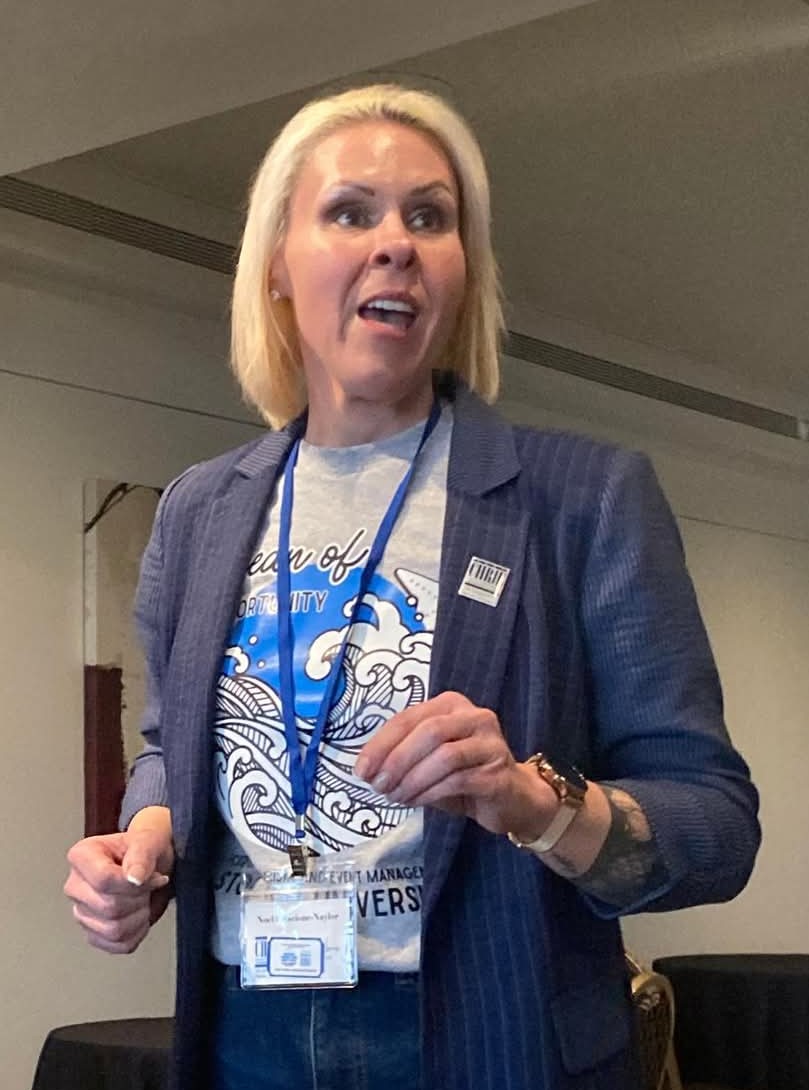
Criscione-Naylor speaks during a Hospitality & Tourism Management Studies event.
My students continually remind me that the future of hospitality will belong to organizations that embrace adaptability without losing sight of the human experience. They are entering an industry shaped by artificial intelligence, changing workforce expectations, sustainability and rapidly evolving technologies. They ask thoughtful questions about flexibility, purpose, work-life balance, ethics and innovation that challenge me to reconsider how we prepare future leaders.
They have also reinforced the importance of experiential learning. Students want opportunities to solve authentic problems, collaborate with industry professionals and understand how classroom concepts apply in practice. Those conversations have influenced both my teaching and my research, reminding me that education should evolve alongside the industry it serves.
What does this international recognition say about the work being done within Stockton's Hospitality and Tourism Management Studies program?
While I am deeply honored by this recognition personally, I truly see it as a reflection of the collective work happening within Stockton's Hospitality and Tourism Management Studies program. Our faculty are committed to combining academic rigor with meaningful experiential learning, industry engagement, applied research and student mentorship.
We intentionally create opportunities for students to work alongside industry professionals, participate in research, gain practical experience, and develop the leadership skills necessary for long-term career success.
Our advisory board, alumni, industry partners, and university leadership all contribute to creating an environment where innovation and collaboration are encouraged. That collaborative culture allows us to remain responsive to industry changes while continuing to prepare graduates who are ready to lead.
I hope this recognition also highlights the important role regional public universities like Stockton play in advancing hospitality education through scholarship, community partnerships and workforce development that extends well beyond our campus.
Who or what is currently challenging you to think differently as an educator?
The convergence of artificial intelligence, changing workforce expectations, and evolving models of higher education has fundamentally changed how I think about teaching.
Participating in AACSB's dean leadership development program challenged me to move beyond thinking about individual courses or even academic programs and instead consider broader institutional questions. How do universities demonstrate value? How should we recognize faculty contributions? How do we prepare graduates for careers that may not yet exist or that may evolve over time? And how do we ensure innovation strengthens rather than replaces meaningful human connection?
These questions have influenced both my leadership and my scholarship. They also reinforce something I believe deeply: The future of education is not simply about adopting new technology. It is about preparing graduates who can think critically, lead ethically, solve complex problems, and build meaningful relationships in an increasingly technology-driven world.
Reported by Mandee McCullough
Photos submitted