Spotlight On: Helen Wei
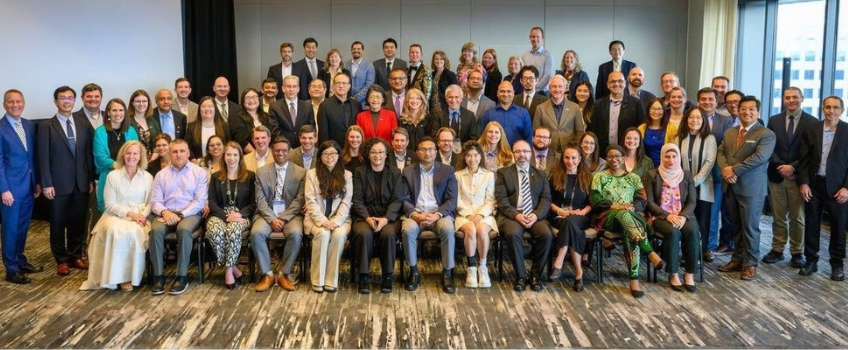
Helen Wei, professor of Computer Science at Stockton University, front row, fifth from left, joins the newest class of Fellows of AMIA during the 2026 Amplify Informatics Conference in Denver. Wei was officially inducted into the Fellows of AMIA Applied Informatics Recognition Program in May.
Galloway, N.J. — Helen Wei, professor of Computer Science, recently returned from the 2026 Amplify Informatics Conference in Denver, where she was officially inducted into the newest class of Fellows of AMIA, the Applied Informatics Recognition Program.
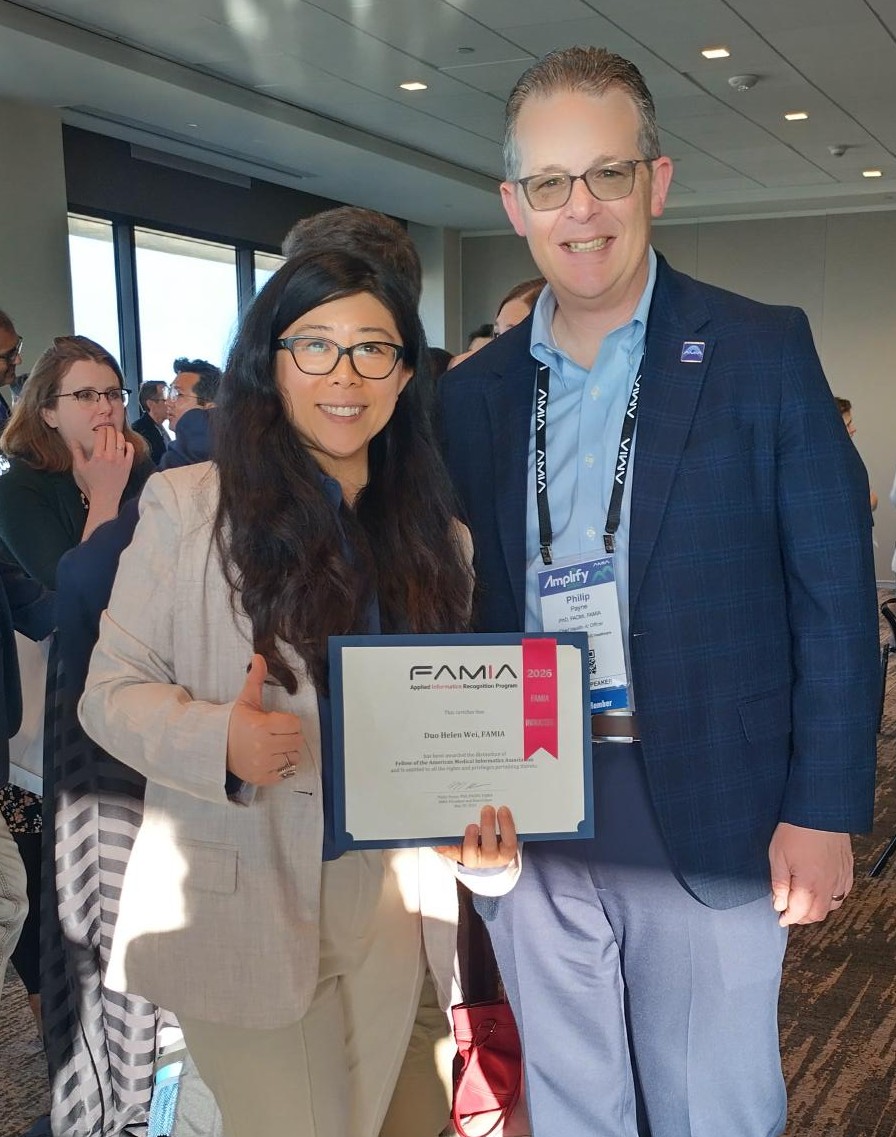
Fellows of AMIA (FAMIA) was established in 2018 as an inclusive recognition program balancing the needs of physicians, nurses, pharmacists and others working within clinical informatics settings, with the needs of professionals working in public health, clinical research, and other areas where informatics is applied to practice.
So, what is informatics? In healthcare, it is where data and technology meet to help improve patient care, research and decision-making.
Wei, who has worked in the field for more than 17 years, shared the significance of the national honor and how her research has evolved alongside technology.
What does being selected as a Fellow of the American Medical Informatics Association mean to you personally and professionally?
Personally, being named a FAMIA fellow is an important milestone that fills me with deep gratitude. I have been a member of AMIA since my days as a doctoral student, and over the past 17 years, this organization has truly become my professional home. I have grown so much through the guidance of exceptional mentors, peers and leaders in the field.
Reaching this point feels like the right moment to truly "pay it forward" by supporting the next generation of informatics professionals, much like I was supported.
Professionally, it is an incredibly humbling recognition from esteemed colleagues across the country, validating the impact of our work on a national scale.
What first drew you to this area of work?
During my doctoral studies, my research focused on quality assurance within biomedical terminology systems. I quickly realized that something as simple as a data entry error or an inconsistent medical code in a system could lead to severe clinical mistakes, directly jeopardizing patient safety.
Seeing that connection made me realize that medical informatics isn't just about computers and data points, it is a field that genuinely has the power to protect and save human lives.
Can you share a little about your research that contributed to this recognition?
My work over the past 17 years has focused on two main pillars: ensuring healthcare data systems can seamlessly talk to one another and using advanced analytics to improve healthcare.
A large part of my research involves auditing massive clinical data standards, like SNOMED CT, to ensure electronic health records are accurate and reliable.
More recently, my team and I have been combining data mining and artificial intelligence to analyze healthcare trends and uncover subtle risk factors for mental health and neurocognitive disorders, particularly among aging populations, through my work as a faculty associate for SCOSA.
What do you hope students understand about the future of healthcare, technology and data?
I want them to see just how promising and wide-open this frontier is. Every single second, an unimaginable volume of medical data is generated, from vital signs and MRI scans to electronic health records. Hidden within that data are the insights needed to solve some of medicine’s greatest mysteries.
While biomedical informatics research is traditionally associated with major medical centers, Stockton’s collaborative environment proves that meaningful scientific discovery and impactful professional service can flourish anywhere there is dedication and a strong community.Helen Wei
Professor of Computer Science
For students entering the workforce, learning to harness this data means they won't just be watching the future of healthcare unfold; they will be the ones actively reshaping it.
Is there anything else you would like the Stockton community to know about this honor or your work?
I want to emphasize that this honor belongs to the entire Stockton community. I am deeply grateful for the continuous support of my colleagues, our school, SCOSA, the grant office, the provost, the president, and above all, my dedicated students.
While biomedical informatics research is traditionally associated with major medical centers, Stockton’s collaborative environment proves that meaningful scientific discovery and impactful professional service can flourish anywhere there is dedication and a strong community.
Wei has been teaching at Stockton for 15 years, helping prepare students for a field where healthcare, data and technology continue to shape the future.
Reported by Mandee McCullough
Photos submitted