Spotlight On: Alyssa Maurice
Galloway, N.J. — Alyssa Maurice has always been drawn to political science and journalism, a path that now shapes her work as assistant director and head of research and polling at the William J. Hughes Center for Public Policy.
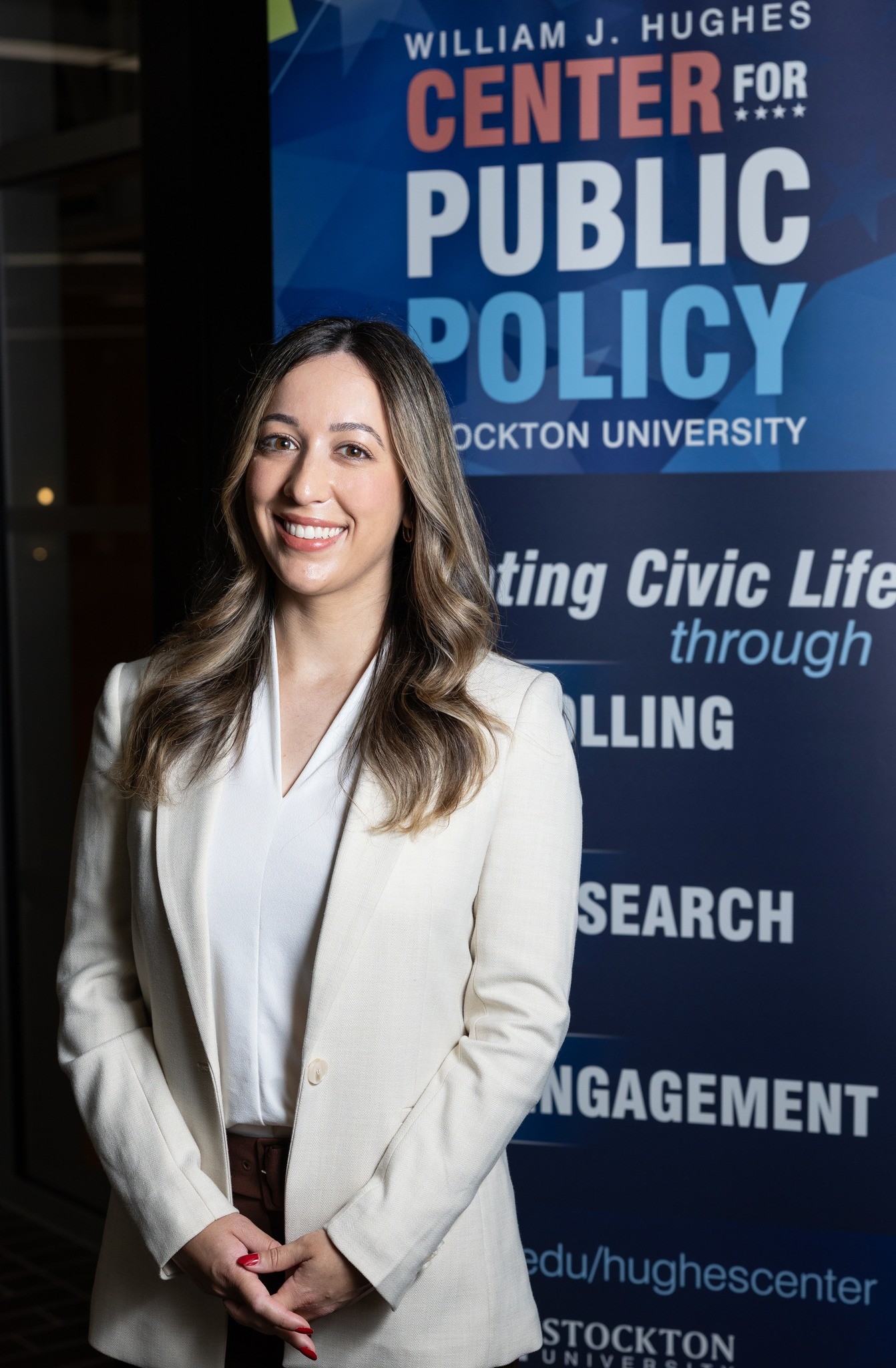
“Polling sits right at that intersection. It combines the rigor of social science with the real-time relevance of journalism, and it plays a critical role in helping the public and policymakers make sense of complex issues,” she shared. “The data that we collect helps inform the narrative around elections, policy debates and public priorities. That blend of analytical work and public-facing impact is what pulled me in and continues to motivate my work today.”
Maurice has been selected to serve as president of the Pennsylvania and New Jersey chapter of the American Association for Public Opinion Research (AAPOR), a role she is deeply passionate about. Below, she discusses her expectations for the position, her background and the challenges facing public opinion research in an evolving political landscape.
What does it mean to you to serve as president of the Pennsylvania and New Jersey chapter of AAPOR?
It’s such an exciting opportunity. This chapter is made up of a really diverse community of practitioners across academia, government, and private industry who are all committed to advancing high-quality research. For me, it’s an opportunity to help foster collaboration, elevate best practices, and support the next generation of researchers. I also see it as a chance to strengthen regional connections and ensure that our work continues to inform public understanding and decision-making in meaningful ways.
How has the process of polling and public opinion research evolved in recent years?
It’s been a challenging time for the industry for a couple of reasons. For one thing, the way people communicate has changed pretty rapidly. Fewer people are answering unknown numbers, so the industry has had to adapt by expanding beyond traditional methods and using a mix of approaches like text-to-web or online panels. At the same time, trust in institutions continues to plummet and polling has been no exception. That makes it harder to get people to participate and trust the results. So aside from the methodological changes, we’re also working to overcome that skepticism we’re facing from the public.
In a time when public trust in polling and research can fluctuate, what do you think is most important for researchers to keep in mind?
Maintaining public trust starts with transparency and clarity. Researchers have a responsibility to clearly communicate how data was collected, what the limitations are, and how findings should be interpreted. We also have to present this information in plain language and in a way that’s accessible without sacrificing accuracy. We have to engage with the public and help people understand what polling can and cannot tell us. Building that trust is essential if we want this industry to thrive. I also always tell people that polling may be imperfect, but it’s still the best tool we have to understand the will of the people. It’s crucial for our democracy that people have a voice. Polling gives voters a seat at the table in the decision-making process.
I always tell people that polling may be imperfect, but it’s still the best tool we have to understand the will of the people. It’s crucial for our democracy that people have a voice. Polling gives voters a seat at the table in the decision-making process.Alyssa Maurice
What are your goals for the chapter during your term?
I’m hoping to strengthen our engagement efforts, foster collaboration across sectors,
and expand professional development opportunities. We’ll be hosting several events
throughout the year to discuss emerging challenges in the field, bringing professionals
together to share insights and network.
This year, we’ll start recording our Lunch and Learn series to post on YouTube so that we can serve as a resource for others in the industry. We have a fantastic, highly engaged Executive Council that works hard to highlight the innovative work being done within the region.
Our upcoming April event, hosted at Temple University, will feature Emily Jennings of SSRS discussing her work surveying immigrants in the current political climate. We hope to create more opportunities for members to connect and learn from one another.
From polling to the mic 🎙️
Before I took my first public policy course and ultimately changed paths, I wanted to work in broadcast journalism. So, it’s been fun and rewarding to get to apply some of those skills in my work here at Stockton moderating live election debates for the Hughes Center or engaging public audiences to talk about our research.
Supporting students is also a big priority, so all of our events are free for students. In addition, every year our chapter co-sponsors a Young Public Opinion Scholars competition with the New York chapter of AAPOR, where students and early-career professionals in Pennsylvania, New Jersey or New York can submit their work for cash prizes.
How does this leadership role connect to your Hughes Center work at Stockton?
The mission of the Hughes Center is to provide a forum for the discussion of important policy issues that impact New Jerseyans, whether it’s through our research, public events, or student programming. Polling is such a big part of that effort to encourage broader civic engagement. We want New Jerseyans to feel included in these policy discussions.
In my role at the Hughes Center leading the Stockton Polling Institute, I’m always looking to improve and innovate. I learn so much through AAPOR and I’m able to bring those insights back to the Stockton community in my work with faculty, students, and on our own independent projects.
Reported by Mandee McCullough
Photo submitted