Panelists: Entertainment and Conventions Drive Atlantic City’s Future
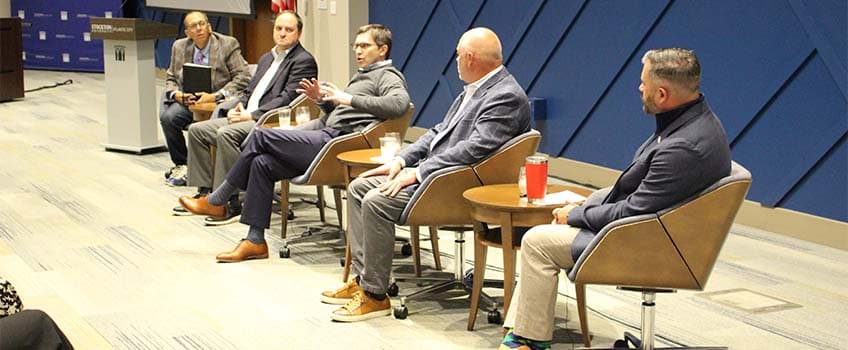
The seventh annual Jersey Shoreview took place at Stockton University’s Atlantic City campus on Oct. 8. From left, radio show host Scott Cronick moderated the discussion with Michael Chait, public information officer for the Casino Reinvestment Development Authority; Oliver Cooke, associate professor of Economics at Stockton; Jim McDonald, general manager of Jim Whelan Boardwalk Hall; and Anthony Molino, vice president of sales for Visit Atlantic City.
Atlantic City, N.J. — The city’s entertainment industry is thriving, attracting thousands of visitors to major concerts, festivals and sporting events. But beneath that success, there are signs that the resort's economy is facing challenges.
That's the assessment of tourism and economic experts who discussed the state of Atlantic City's economy during the seventh annual Jersey Shoreview panel discussion at Stockton University’s Atlantic City campus on Oct. 8. The event was co-hosted by Stockton’s Lloyd D. Levenson Institute of Gaming, Hospitality and Tourism (LIGHT) and Visit Atlantic City.
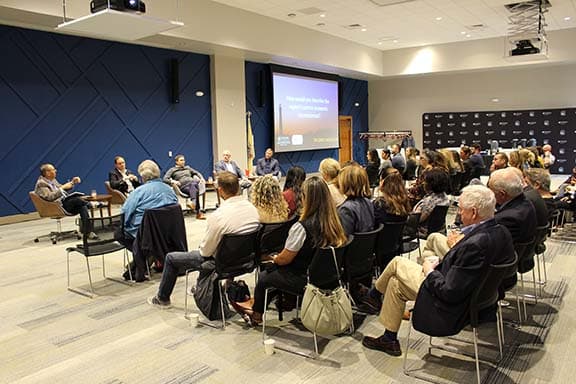
The panel at the seventh annual Jersey Shoreview discusses how the summer was economically for Atlantic City on Oct. 8 at Stockton's Atlantic City campus.
While representatives of the city's entertainment and convention industries described a successful summer and an encouraging outlook for the coming year, Stockton Associate Professor of Economics Oliver Cooke offered a more cautious assessment.
"I think that my theme for the summer was that it was kind of a very cautious summer," Cooke said.
Cooke pointed to employment data showing that summer employment was approximately 3% lower than the previous year, representing about 5,500 fewer jobs. Total casino employment in the summer was down 1.1%, while employment in restaurants and bars declined approximately 6%.
Although July was relatively strong, Cooke described June as somewhat soft and August as disappointing.
"I think there was a little bit of caution on the part of employers to hire," he said, adding that consumers also appeared more hesitant about spending.
Cooke said the economic uncertainty reflects broader national trends, including inflation, high gas prices, low consumer confidence and an economy in which wealthier consumers continue to spend while others are more cautious.
"The top end of the consumer market continues to fly along very well," he said. "Everyone else is kind of much more cautious."
But those concerns haven't stopped visitors from spending money on entertainment in Atlantic City.
Panelists pointed to an impressive lineup of events this summer, including concerts by Shakira and Phish and WWE wrestling at Jim Whelan Boardwalk Hall, the Rufus Du Sol beach concert and the Atlantic City Airshow.
Jim McDonald, Boardwalk Hall’s general manager, said the city's entertainment business has been particularly strong, with major events drawing visitors from well outside the region.
He said approximately 95% of Boardwalk Hall attendees travel from more than 60 miles away, while 65% of those attending the recent three-day Phish concerts traveled more than 150 miles.
Those visitors provide an economic boost that extends beyond ticket sales, filling hotel rooms, restaurants and businesses throughout the city.
"We are a destination entertainment location," he said.
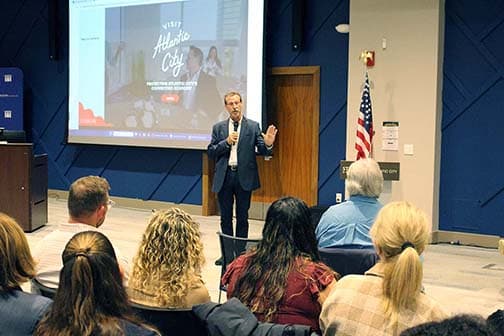
Gary Musich, the president and CEO of Visit Atlantic City, talks to the Jersey Shoreview audience about the challenges the city's convention business faces.
Michael Chait, the public information officer for the Casino Reinvestment Development Authority, said consumers continue to prioritize entertainment experiences even as they become more selective with other purchases.
"People want that experience. They want to create that memory," he said.
The panelists also emphasized the importance of expanding Atlantic City's appeal beyond its traditional summer tourism season. Representatives of Visit Atlantic City said convention business is particularly important during the offseason when leisure tourism typically slows.
Anthony Molino, vice president of sales with Visit Atlantic City, said the convention center is pretty full through the rest of this year.
“I would say (convention business) is resilient, but I think it’s still highly competitive,” he said. “We’re still seeing the demand and conventions coming in, especially with new casinos opening all over the place.”
But Gary Musich, the president and CEO of Visit Atlantic City, warned that the uncertain future of the Sheraton Atlantic City Convention Center Hotel represents a significant challenge. The owner of the hotel has said that if it doesn’t secure $100 million in state tax credits it may have to close in December.
The hotel's proximity to the convention center makes it especially valuable to meeting planners, exhibitors and event organizers who need convenient access to their accommodations, Musich said losing those rooms could prevent Atlantic City from competing for major conventions that require an adjoining hotel.
“We need to reinvest in our city and reinvest in our properties and infrastructure here,” Molino said.
Looking ahead, the panelists identified several other challenges, including rising operating costs, competition from potential new casinos in New York and uncertainty surrounding consumers' disposable income.
Cooke said the prospect of additional casino competition reinforces the importance of strengthening Atlantic City's convention and entertainment industries.
Chait agreed that the city's future will depend partly on whether consumers can continue spending on travel and entertainment.
"My biggest concern going forward is what's going to happen with the economy and disposable income," he said.