Constitution Day Speaker Explores Rights of Immigrants
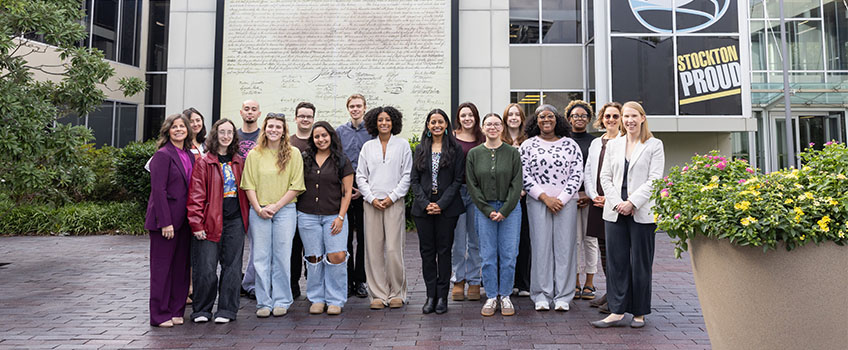
Immigration law scholar Alina Das met with Political Science students ahead of her keynote address at Stockton University's Constituion Day on Sept. 29.
Galloway, N.J. – Constitutional rights can provide critical protections for immigrants facing detention and deportation, but those protections depend on people willing to affirm and defend them, immigration law scholar Alina Das told a Stockton University audience Sept. 29.
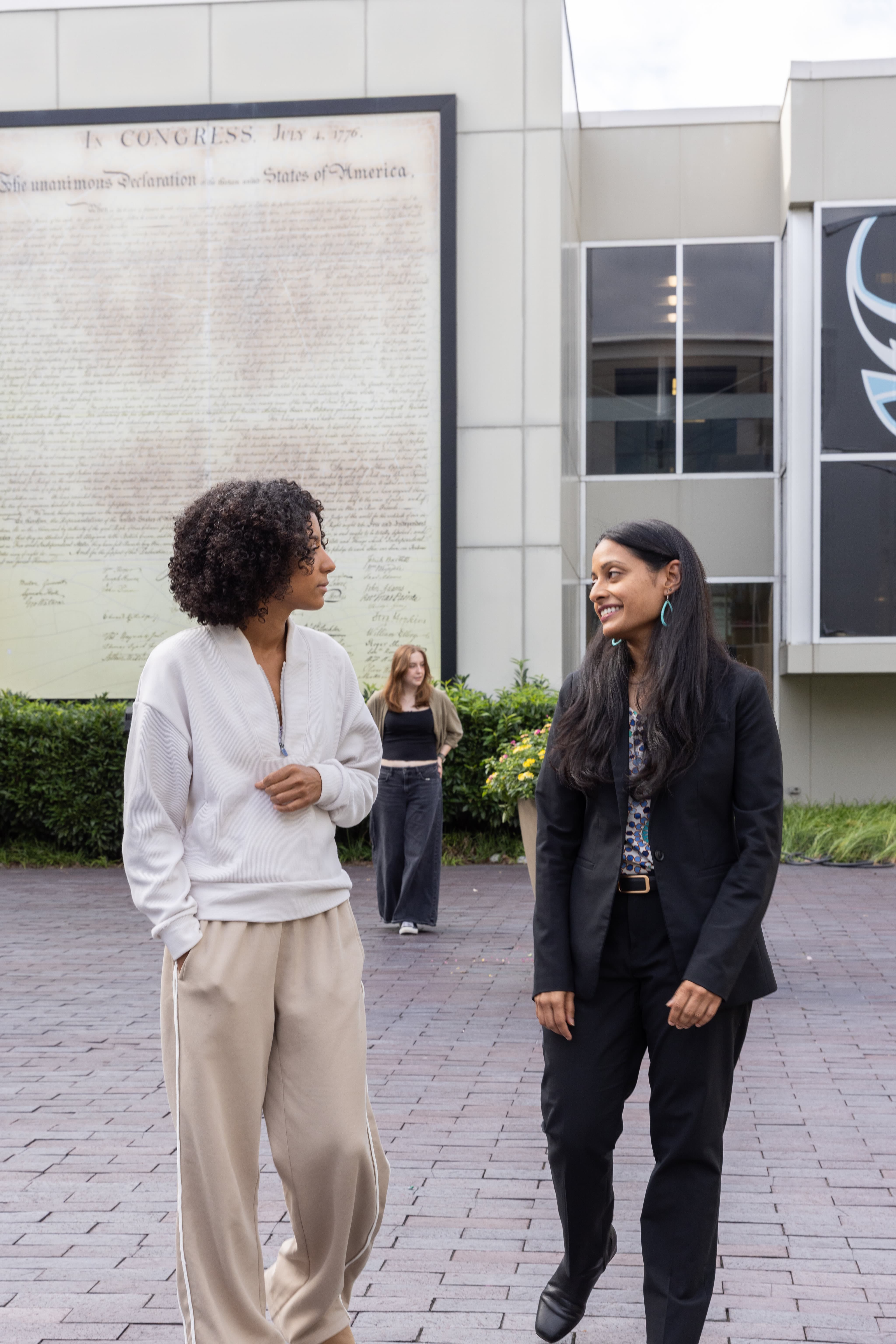
Das delivered Stockton’s annual Constitution Day lecture, “Rights, Resistance, and the Deportation Machine. She is a Professor of Law and James Weldon Johnson Professor at NYU School of Law, where she is co-director of the Immigrant Rights Clinic.
“Constitution Day gives us an opportunity to do something universities should do especially well: ask difficult questions, examine ideas carefully, listen to different perspectives, and deepen our understanding of the rights and responsibilities that shape our democracy,” said Joe Bertolino, Stockton University president.
 “Tonight’s conversation takes us directly into questions that have been part of the
American constitutional story for generations: questions about immigration, citizenship,
government authority, individual rights, due process and the meaning of equal protection
under the law,” Bertolino said. “These are legal questions. They are constitutional
questions. But they are also deeply human questions because laws and policies ultimately
affect people, families and communities.”
“Tonight’s conversation takes us directly into questions that have been part of the
American constitutional story for generations: questions about immigration, citizenship,
government authority, individual rights, due process and the meaning of equal protection
under the law,” Bertolino said. “These are legal questions. They are constitutional
questions. But they are also deeply human questions because laws and policies ultimately
affect people, families and communities.”
Das has defended immigrants facing detention and deportation, including movement leaders. Her work focuses on the intersection of immigration and criminal law through litigation and advocacy. A widely published scholar cited by the U.S. Supreme Court, she is also the author of "No Justice in the Shadows: How America Criminalizes Immigrants " (2020).
Das used the story of her longtime client and immigrant rights advocate Ravi Ragbir to illustrate how constitutional protections intersect with immigration enforcement. Ragbir, a lawful permanent resident who had served a sentence for a federal fraud conviction, later spent nearly two years in immigration detention while fighting deportation. After his release, he became an advocate for other immigrants facing detention and deportation.
Das represented Ragbir through continued attempts at deportation after he was detained again by immigration authorities in 2018. His legal team argued the government had targeted him because of his outspoken advocacy for immigrant rights, raising First Amendment questions about the government’s power to punish speech.
“No matter what the speech is, our government should not have the power to weaponize the immigration system in order to censor viewpoints or to control public debate,” Das said. “The beauty of the First Amendment is it protects not only our right to speak, but our right to listen. For the public to hear all sides of the debate and decide for ourselves what we believe is right or wrong.”
Ragbir’s case ultimately involved another power established by the Constitution: the presidential pardon. President Joe Biden granted Ragbir a full and unconditional pardon in January 2025, removing the criminal conviction that was the basis of his deportation proceedings.
Das urged the audience to view constitutional rights not simply as principles contained in a document, but as protections that depend on people asserting and defending them. “The Constitution holds great promise for immigrants in this country. But it is ultimately up to all of us to protect and advance those rights,” she said.
For two decades, Stockton has commemorated the signing of the United States Constitution with a keynote address each fall featuring prominent legal scholars, practitioners or journalists.
Prior to the keynote lecture, Das met with Political Science students for a question-and-answer session on the Constitution and immigration policy.
Stockton’s event is sponsored by the William J. Hughes Center for Public Policy, the Stockton University Foundation, University Advancement and the Office of the Provost.
View a recording of the 2026 Constitution Day lecture.
--Story by Stacey Clapp; Photos by Abbigail Erbacher