Building Better Health Together | Stockton and AtlantiCare unite to transform healthcare education

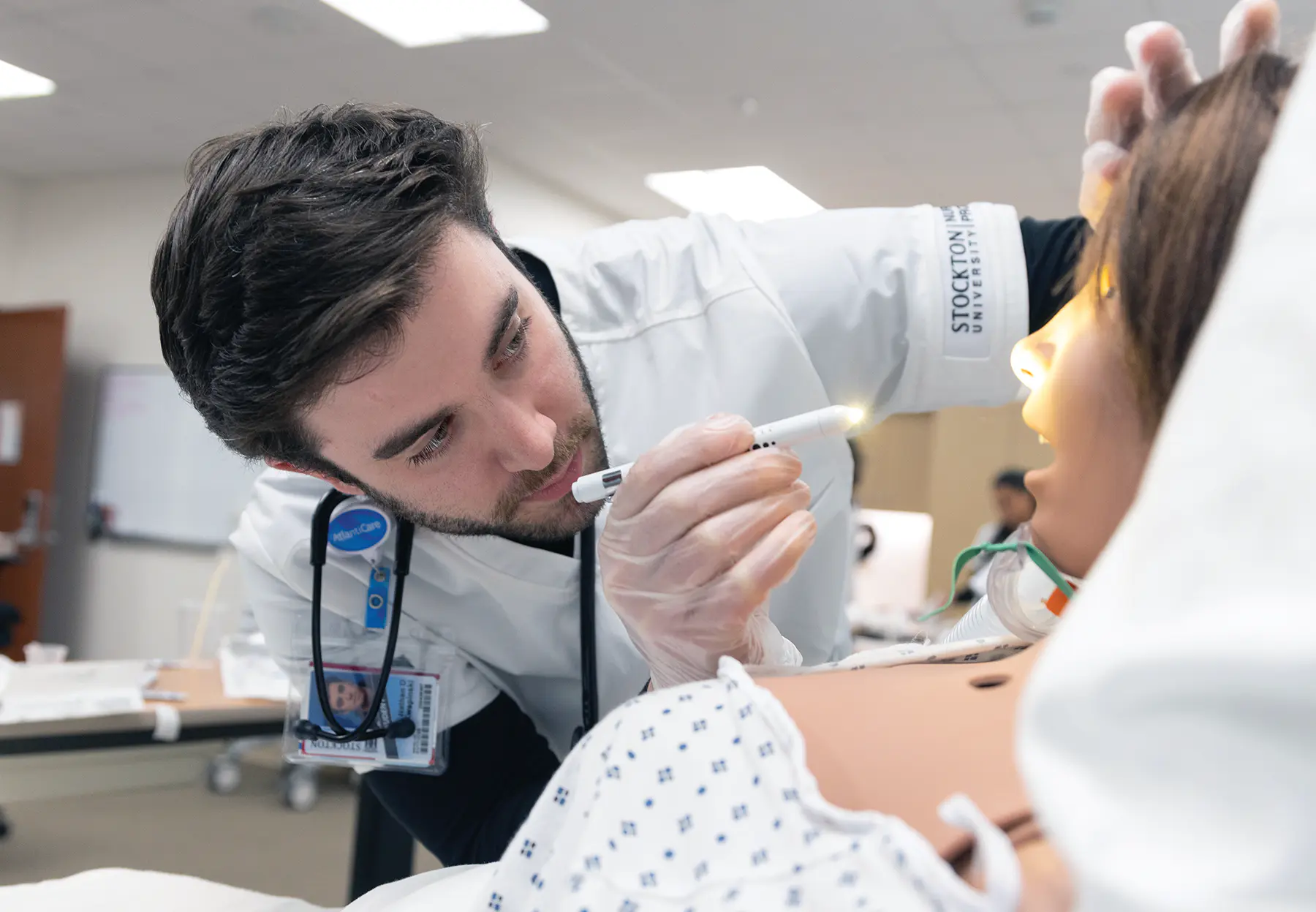
Stockton nursing students gain handson clinical experience in the University’s Simulation Center, practicing patient care in realistic healthcare scenarios under the guidance of faculty mentors.
Stockton University and AtlantiCare announced a new strategic alliance to establish the Stockton-AtlantiCare College of Community Health, a long-term partnership designed to expand healthcare education, strengthen the regional workforce and improve community health across southeastern New Jersey.
Supported by an initial investment from AtlantiCare, the College will build on decades of collaboration between the two institutions while creating new opportunities for students and working professionals. It will expand Stockton’s existing programs in nursing, health sciences, social work and public health, with plans to develop additional programs aligned with the region’s evolving healthcare needs.
The College also reinforces Atlantic City’s growing role as a center for healthcare, education and workforce development, creating stronger connections between the classroom and clinical practice while helping address critical shortages across South Jersey.
Provost and Vice President for Academic Affairs Michael Palladino shares how the partnership came together, what it means for students and the region, and why he believes it represents one of the most significant initiatives in Stockton’s history.
Why is now the right time for this expanded partnership with AtlantiCare?
This work aligns with our new Strategic Plan and is a priority we have as an Anchor Institution to serve the communities in Atlantic County. South Jersey faces some of the state’s most significant healthcare challenges. When I joined Stockton, I was surprised to learn that, on average, residents of Atlantic, Cumberland and Salem counties have lower healthcare outcomes and life implications than the New Jersey average. As two Anchor Institutions, we share a joint responsibility to help address that gap by expanding access to healthcare education, strengthening the workforce and preparing more professionals to serve our communities. Through this partnership, Stockton expects to graduate more than 200 additional healthcare professionals each year.
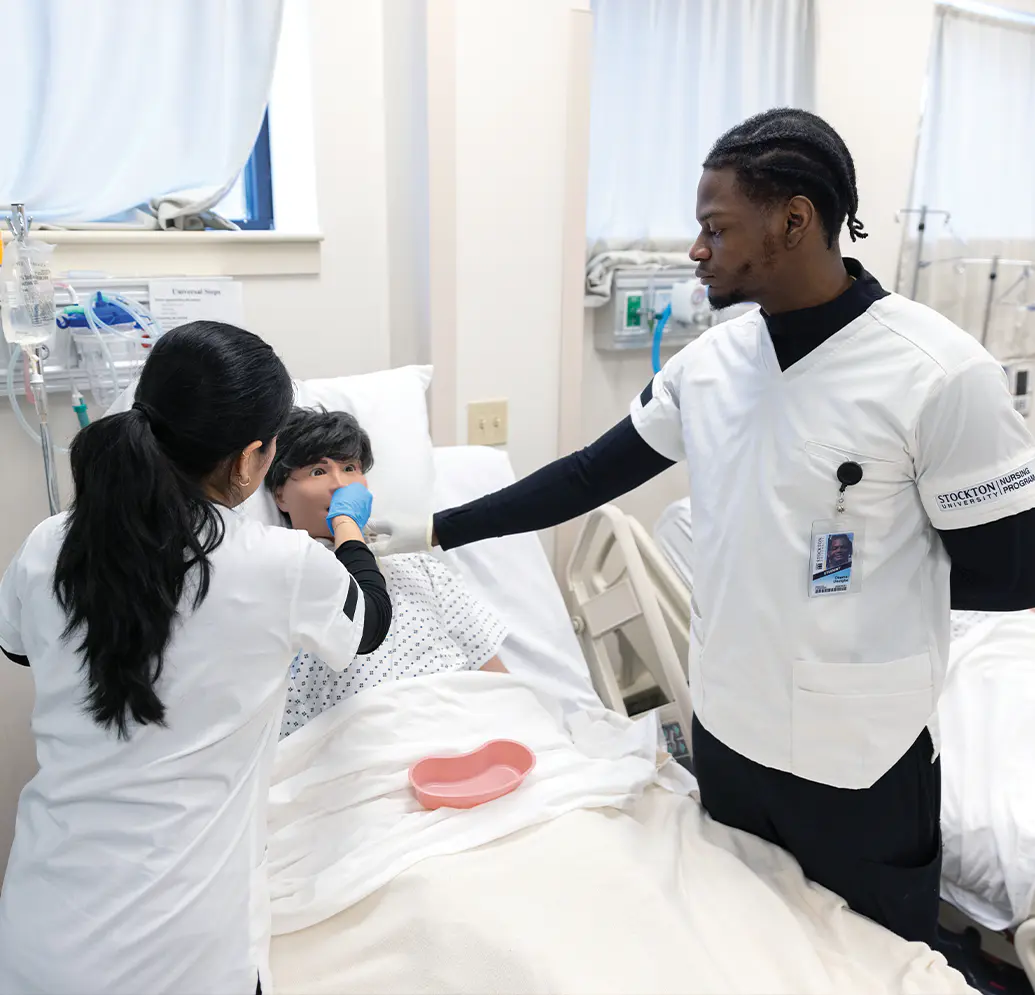
Students build clinical skills and confidence by practicing bedside care on a patient simulator in Stockton’s Simulation Center.
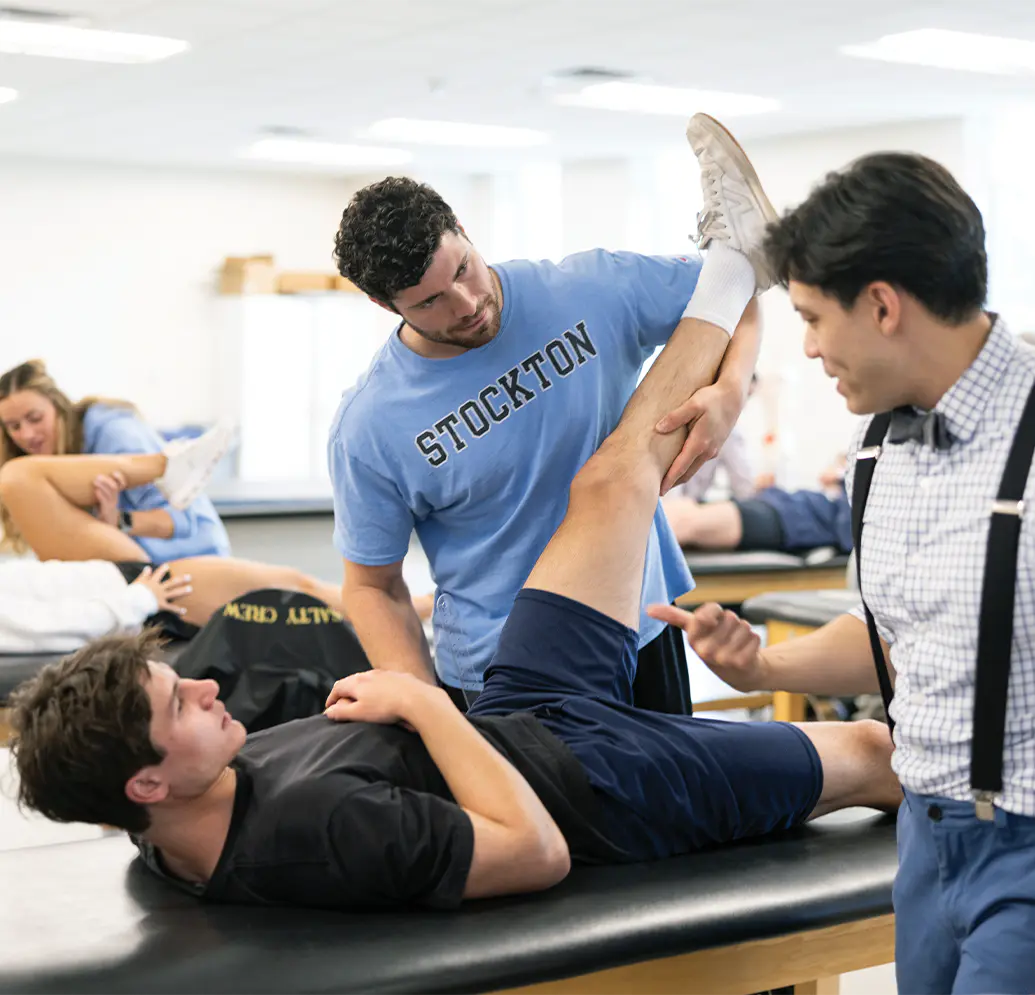
A hands-on lab brings lessons in human movement into practice as students learn to assess leg mobility.
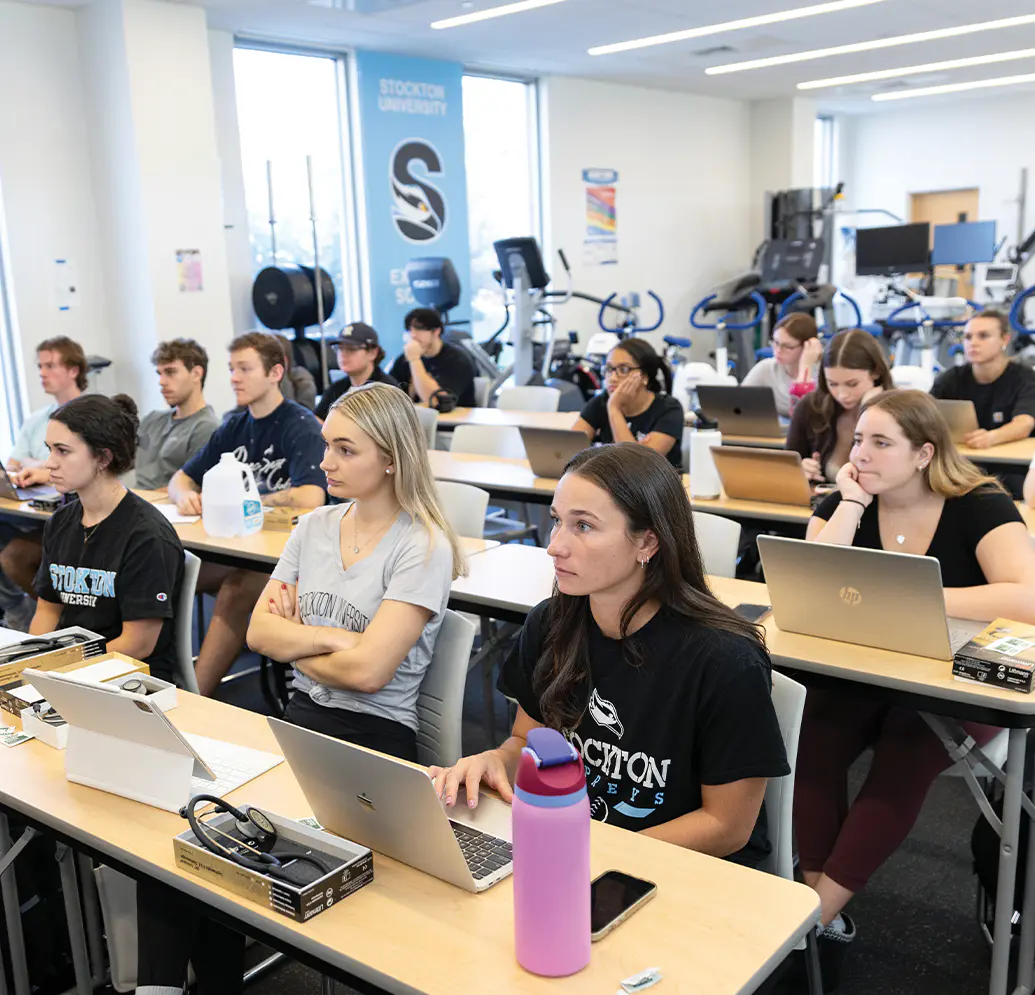
Classroom instruction and fitness assessment equipment help students connect exercise science concepts with physical performance.
How does the new College of Community Health build on Stockton’s existing health science programs?
Healthy communities mean a lot of things. The College of Community Health will serve as the structural organization to incorporate programs and activities from different parts of the University, including the schools of Health Sciences, Social and Behavioral Sciences, Business and others.
What new academic programs are planned?
Our initial priorities reflect regional workforce needs. We plan to expand nursing programs, including RN-to-BSN pathways, while launching a new degree in respiratory therapy. Over time, we expect to add programs in other high-demand health science fields in response to community needs and evolving healthcare demands.
How will students benefit from this alliance?
Students will benefit from expanded clinical experiences, stronger connections to healthcare employers and clearer pathways from the classroom to rewarding careers. Many students will complete clinical placements at AtlantiCare, often leading directly to employment, and the partnership also will provide scholarship and loan repayment opportunities for students in designated pathway programs.
You said this is the most significant initiative Stockton has undertaken since becoming a university. Can you elaborate on that?
This initiative brings together education, healthcare and workforce development in a way Stockton has never done before. It will expand opportunities for students, help address critical healthcare shortages and establish the Atlantic City campus as the home of the College of Community Health. Most importantly, it positions Stockton to make a lasting impact on the health and economic vitality of the region.
Previous:
Digging Deeper
Next:
Stockton: Then & Now
Stockton is the official magazine of Stockton University and is published by the Division of University Advancement.
The magazine is produced through the collaborative efforts of our editors, designers, writers, photographers, and advancement leadership.
Stay connected with Stockton. Update your alumni information to make sure you receive future issues of Stockton magazine and other university news.