First-Year Studies (FRST) Program
First-Year Studies (FRST) is a program within the William T. Daly School of General Studies that provides first-year students with skills to help them succeed in college. The program supports students in their transition to college by offering small class sections taught by specialized faculty committed to helping students improve their academic skills.
The curriculum includes courses in critical thinking, writing, and mathematics especially suited to the academic needs of First-Year students, including students with anxiety in math and writing.
For questions concerning First-Year Writing, Math, or Critical Thinking classes, please contact:
Emily Ryan
Program Chair of First-Year Studies

The First-Year Studies curriculum includes courses associated with the University’s competency requirement as well as other courses in writing and mathematics especially suited to the academic needs of First-Year students. Nearly all First-Year students will take FRST courses in writing, mathematics and/or critical thinking. In addition, any First-Year students may take F-designated courses. F-designated courses are program and General Studies courses which are particularly appropriate for First-Year students. Faculty teaching F-designated courses opted into special training to teach these courses in ways that are appropriate for any student but that also especially support students transitioning into college.
Always Check DegreeWorks!
Competency Requirement (Math, Writing, Critical Thinking/Reading)
All newly admitted undergraduate students must demonstrate competency in math, writing, and critical thinking/reading. Competency in each category may be met by one of the following:
-
Prior College Credit (16+ credits)
Students who transfer 16 or more college credits completed before their first matriculated semester satisfy all three competencies.
-
Prior College Credit (individual courses)
Alternatively, a transferred 100-level or higher course may satisfy the corresponding area(s):
Math (Q1)
Writing (W1)
Critical Thinking/Reading -
AP Exam Scores
Students who earn qualifying scores on AP Exams are eligible to apply transfer credits to meet individual Math (Q1) and Writing (W1) competencies or the 16+ college transfer credit threshold.
-
Placement
Earning qualifying placement scores for the relevant category (per current University placement standards).
-
Successful Completion of FRST Courses
Students without earned college credit eligible for transfer or qualifying placement scores will satisfy First-Year competency requirements by registering for FRST courses. The sequence of FRST courses are determined by placement scores.
FRST Courses:
FRST 1102: Mathematical Thinking and/or FRST 1103: Quantitative Reasoning (math)FRST 1101: College Writing (writing)
FRST 1002: Critical Thinking and Reading
Students who need to satisfy the competency requirement by taking one or more of these classes are required to enroll in them in their first matriculated semester. If students are required to take FRST 1102, they must take that in their first semester and FRST 1103 in the following semester. They need to pass the classes with a C or better within two attempts, including withdrawals.
If a student does not pass one of these classes with a C or better, they are required to repeat the class the next semester. Failure to pass each class with a C or better within two attempts will result in dismissal from the University.
FACULTY

Daniel Al-Daqa (2022)
Harman Aryal (2022)

Robert J. Blaskiewicz (2015)
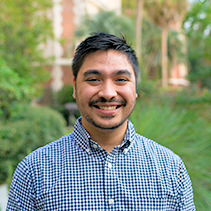
Joseph Cirio (2018)

Emari DiGiorgio (2006)

Lauren M. Fonseca (2015)
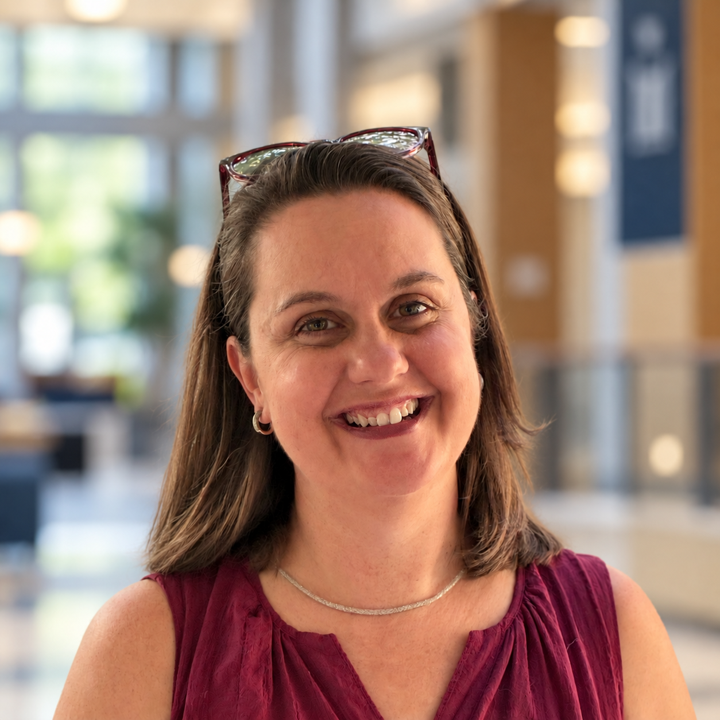
Alysia Goyer (2023)

Geoffrey W. Gust (2014)
Jimmy Hamill (2023)
Eddie Horan (2017)

Aleksondra Hultquist (2017)
Mariam Hussein (2018)

Marcy R. Isabella (2015)
Lauren Mamolite (2023, 2025)
Heather McGovern (2002)
Betsy McShea (2001)
Willmaria Miranda (2023)
Francis Nzuki (2008)

John O’Hara (2013)

Luis E. Peña (2004)

Nancy Reddy (2015)
Margarita Rivera-Santiago (2022)
Emily Ryan (2018)

Christopher Roman (2025)
Thierry Saintine (2018)
Siobahn Suppa (2018)

Emily Van Duyne (2014)
Lisa Youngblood (2018)
ASSOCIATED FACULTY
Pamela G. Kennedy Cross (1986)
Anne F. Pomeroy (1999)
John M. Quinn (1990)
PROFESSORS EMERITI

Frank A. Cerreto (1976)
Young Doo (Peter) Cho (2013)

Jack Connor (1984)
Judith Copeland (2005)

Penelope A. Dugan (1976)

Carra Leah Hood (2005)
G. T. Lenard (1984)
University Academic Schools
Each of Stockton's seven academic schools oversees the curriculum and program management of majors. Many schools also offer dynamic events and experiences, as well as extra student support. Find your school in the list and start exploring!
Math & Science Tutoring
The Math Center provides peer tutoring to current Stockton students enrolled in mathematics and other math-related subjects from schools across the University.
The Writing Center
The Writing Center offers current Stockton students peer feedback in writing, plus tips for studying.
Learning Access & Disability Services
The Learning Access Program reviews students' documentation and collaborates with students, faculty and staff to arrange reasonable accommodations that support students' individual needs.
Counseling & Psychological Services
Education, outreach, and counseling services are provided by clinically licensed (or license-eligible) social workers and professional counselors, as well as clinical supervised graduate level interns. Their services are provided in a confidential environment in which you may explore and resolve issues of concern. Options include Individual Counseling, Group Counseling, and Psychiatric Services.
Student Health Services
The Office of Student Health Services is an acute care clinic on the Galloway Campus open to currently enrolled students with no fees or insurance required for the services rendered.
Academic Advising
The staff in Academic Advising meets with current and prospective students to discuss Stockton's curriculum, prepare for registration, and credit-related issues.
Office of the Registrar
The Student Records/Registrar's Office safeguards the accuracy and integrity of student records, the facilitation of registration, as well as scheduling, and the upkeep of the Stockton University Bulletin. Students that need help accessing transcripts, registering for courses, completing graduation forms, or taking a leave of absence should contact the Registrar.
Office of Financial Aid
The Office of Financial Aid helps students make sense of their financial aid options, and staff are available to assist students with all aspects of the financial aid process.
Bursar's Office
The Bursar's Office is the primary manager of student financial information and provides centralized billing for the university. Questions about your bill and payment options should be addressed with the Bursar.
Residential Life
The Office of Residential Life oversees housing placement for students, as well as the cultivation of meaningful residential living and educational experiences.
Blackboard Support & Tutorials
Stockton uses Blackboard Learn 9.1 as our main Learning Management System (LMS). This site offers both instructors and students on-demand tutorials in the form of videos and documents that will demonstrate how to use the most common aspects of the system.
ITS Help Desk
Students can visit the ITS Help Desk in D-121 for assistance with any technology related issues, including computer access, internet/wifi connection, GoPortal/email support.
Campus Bookstore
Shop the campus bookstore for university apparel and classroom material.
Richard E. Bjork Library
The Richard E. Bjork Library at Stockton University supports a collaborative and inclusive learning community of students, staff, and faculty by advancing curiosity, technology, and research skills, through expert curation and access to authoritative resources, innovative instruction for information literacy, and welcoming spaces for all.
Stockton Dining Services
Stockton Dining: Where Ospreys Eat!
Career Education & Development
Career Education & Development equips Stockton students with comprehensive knowledge of career readiness competencies that cultivate professional judgment to achieve postgraduation success.
Veteran & Military-Connected Student Success
Veteran & Military-Connected Student Success serves as the hub for support assistance to our men in women in uniform. Students on active duty, veterans, or military-affiliated dependents are welcome to utilize the center's services, along with a student lounge.
Women's, Gender and Sexuality Center
The Women's, Gender & Sexuality Center empowers students who identify as women and all genders who identify as LGBTQIA+, victims of power-based personal violence, and community allies. WGSC promotes equality and justice, ensuring access to opportunities, and providing services through education and advocacy.
Educational Opportunity Fund
EOF assists low-income New Jersey residents who are highly motivated and capable but lack adequate preparation and/or the financial means for college. EOF contributes to the development of a college-educated public that reflects the diversity of New Jersey.
Dean of Students
The Dean of Student's Office creates meaningful student-centered approaches that attempt to further a student’s overall academic, personal and social growth and learning. Their office oversees important resources such as the Food Assistance Program, the Student Relief Fund, and the Emergency Loan Program.
Stockton Cares
Stockton Cares connects students to resources both on and off campus, advocating for students as they navigate crisis, emergencies, personal difficulties and unforeseen circumstances.
The Office of Student Conduct
The Office of Student Conduct is responsible for administering the Campus Conduct Code and overseeing the Campus Hearing Board process, which addresses alleged violations and promotes a fair and educational resolution process for students. The office also leads the Mediation & Problem Solving Program (MAPS), which offers voluntary, student-centered conflict resolution services designed to help individuals navigate interpersonal challenges respectfully and constructively.
Multicultural Center
The Stockton University Multicultural Center is a welcoming hub for the entire Stockton community, providing a home-away-from-home and offer enriching educational opportunities for students, faculty, staff, alumni, and campus visitors.
Academic Achievement Programs
The mission of the Office of Academic Achievement Programs is to bridge equity gaps in student engagement in high impact practices to promote inclusive student success for all Stockton students. Their office oversees First Ospreys, TogethHER, Sankofa, the CHAMPS (Success Scholars) Program, and the Board of Trustees Fellowships for Distinguished Students.
Office of Student Development
The Office of Student Development oversees more than 250 ways to get involved at Stockton University, including student organizations, fraternities, sororities, and Student Senate. The Office of Student Development also coordinates several campus events, including Get Involved Fairs, University Weekend, Annual Student, Faculty, and Staff Dinner, Leadership Lunch Series, Story Space, and more!
Athletics & Recreation
Stockton University is a Division III member of the National Collegiate Athletic Association and competes in the New Jersey Athletic Conference. Students not dedicated athletes but still want to be involved can join club sports, intramurals, or recreation activities.
Foundation Scholarships
The Stockton University Foundation maintains a robust merit-based award program comprised of approximately 200 scholarships. These scholarships are made possible thanks to the generous donations of alumni, friends of the university, organizations and businesses.
Stockton University Lost and Found
As a courtesy and service to the Stockton University community there is a centralized lost and found system for the Galloway and Atlantic City campuses.
Campus Police
Stockton University Police Department is dedicated to developing partnerships with the community they serve, including students, staff, and faculty in order to enhance the goal of providing quality higher education in a safe and secure atmosphere.If you are experiencing an emergency, please call campus police from your cell phone at 609-652-4390 or pick up any campus phone and dial 4390.
How do I know which first-year writing class I need to take?
Stockton offers two writing courses designed for first-year college students: FRST 1101: College Writing and FRST 2120: Rhetoric and Composition. Specific placement scores needed can be found here.
How do I know which first-year seminar to take?
Stockton offers two types of first-year seminars: General Studies First-Year Seminars and Critical Thinking and Reading Seminars. You can see which one you place into here. You can find course descriptions by clicking on the links for each seminar type. These lists are updated each semester.
How do I know which first-year math class to take?
There are a variety of math classes you can take in your first semester at Stockton. Placement is based on a variety of factors, including test scores, transfer courses (dual-credit and AP credit count!), and major. You can find more information about which math class to take here.
How many classes should I take in my first semester?
We recommend taking 4 classes (16-17 credits) per semester to stay on track to graduate in 4 years. This is a general guideline and many students opt to take 12 or fewer credits (3 or fewer classes) if they have a lot of obligations outside of school or they prefer a different pace. Other students opt to go the other way and take 20 credits in order to speed up their progress or catch up in some cases. Most courses at Stockton are worth 4 credits.
What should I do if I need to miss class?
Attendance needs to be prioritized in college classes. Each professor maintains their own policies around attendance and you can find them in their syllabus. If you need to miss class, you should contact your professor right away to let them know. If you need to miss several classes, you can try to work something out with your professor but many times students end up needing to withdraw from classes if they do not attend the great majority of classes.
If you will be out of class for more than five consecutive business days, you can request a notice of ansence through Stockton Cares here. If completing the form, you must include supporting documentation for your absences.
Remember, faculty notices sent from the Cares Office are for informational purposes only to assist students with communicating extenuating circumstances they may be facing, in which they cannot communicate with their professor(s). This notice does not require faculty to provide an excused absence, change course modality, grant extensions, or incompletes.
What should I do if I have a hold on my account and I can’t register, drop, or withdraw from classes?
It’s important to take care of holds right away. Reach out to the office that placed the hold in order to come up with a plan for how to address it. Do not wait until it is time to make adjustments to your schedule; the hold will not disappear and you will not be able to make changes.
What happens if I don’t pass my FRST 1000-level course?
If you don’t pass FRST 1002: Critical Thinking and Reading, FRST 1101: College Writing, FRST 1102: Mathematical Thinking, FRST 1103: Quantitative Reasoning on your first attempt, you will be required to repeat the course in your next semester at Stockton. If you don’t pass the class on your second attempt, you will be dismissed (suspended) from Stockton.
Can I wait to take or repeat a FRST 1000-level course?
No, students are required to take FRST 1000-level classes in their first semester at Stockton. This means, FRST 1002: Critical Thinking and Reading, FRST 1101: College Writing, FRST 1102: Mathematical Thinking and FRST 1103: Quantitative Reasoning, need to be taken in a student’s first very first semester. In cases where a student is required to take FRST 1102: Mathematical Thinking, they will take that course their first semester and then they will be required to take FRST 1103: Quantitative Reasoning in the semester directly following when they pass the class. If students need to repeat FRST classes, they are required to retake the classes in their next semester.