Charting the Future of the Coast with Hands-On Science | Students become part of the crew in coastal research projects

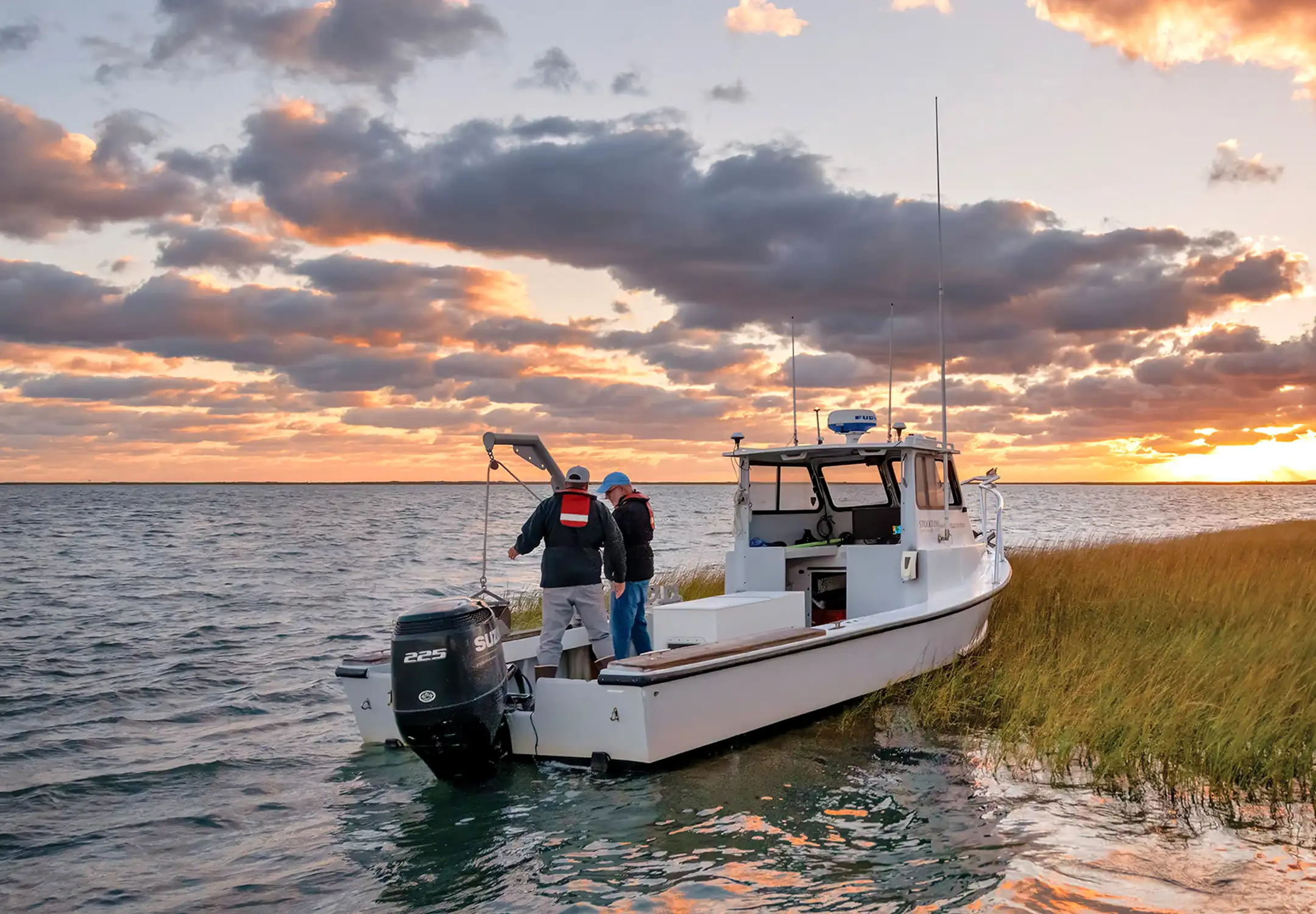
The first flurries of the season are falling, the ocean temp just dipped below 50 degrees, and the sandy beaches are empty, but not for long.
A team of students working for the Stockton University Coastal Research Center (CRC) is suiting up in thick rubber wetsuits, booties and gloves to go swimming for scientific data collection.
The swimmers work in coordination with a land-based survey crew, using laser technology to capture the beach profile. The R/V Osprey will be deploying single-beam sonar to capture a picture of the seafloor further offshore.
The CRC is in its 39th year monitoring New Jersey’s coastline along the Atlantic Ocean, Delaware Bay and Raritan Bay at 171 beach sites.
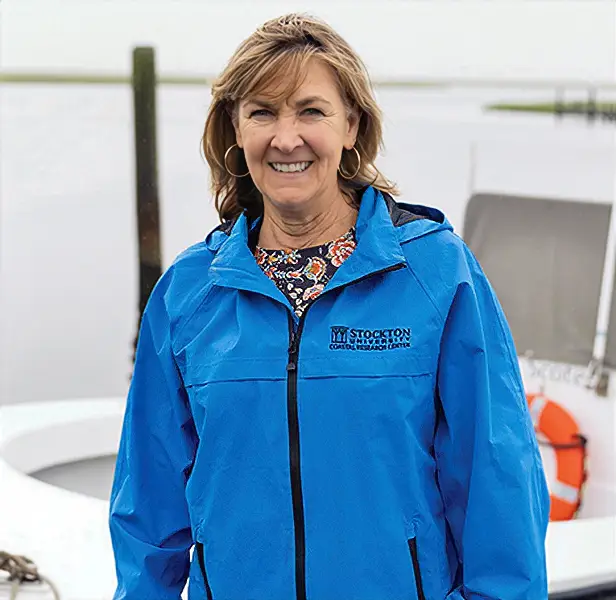
Kimberly McKenna, interim director of the Coastal Research Center
“What we’ve found through our monitoring, surveys and looking at annual changes is that sea level has risen about half a foot, and beach nourishment projects that are federally and state funded have helped the shoreline ever since they started on the ocean side,” said Kimberly McKenna, interim director of the CRC.
On the bay side, they’ve found that nuisance flooding is tied to low-pressure systems sitting offshore rather than being storm related.
“A low-pressure system turns into a nor’easter and pushes water into an inlet and because there is more water coming into the inlet, it can’t drain the water fast enough,” she explained.
Even as funding for beach nourishment evolves, the CRC will continue to monitor the shoreline and measure the impact of not adding sand.
“Data is our main focus, and we want to inspire students to think about why things are changing and why we are losing wetlands, which is a huge loss of habitat,” McKenna continued.
At the Marine Field Station (MFS), located in Port Republic next to the CRC, staff recently conducted two surveys — one to find ghost crab pots for future removal from the bay with funding from the National Oceanic and Atmospheric Administration (NOAA), and another to map the Mullica River Great Bay seafloor to determine where to plant oyster shells for restoration with funding from the New Jersey Department of Environmental Protection.
Even when classes aren’t in session, research continues. Students who choose to get involved in faculty projects receive high-impact experiences that prepare them for coastal science careers.
Steve Evert, director of the Marine Field Station, has been at Stockton for almost 30 years, but the last 15 have seen major growth in the scope and complexity of the field station’s support of research and academics, based on technological advancements.
“Keeping pace with technology is exciting, challenging and rewarding,” said Evert.
The Marine Science, Coastal Zone Management and Environmental Science programs utilize technology acquired through grants from the National Science Foundation and NOAA.
The CRC and MFS provide students with opportunities to gain hands-on field experience
with this technology.
Some students are first-time boat passengers when they arrive at the field station.
Evert and his team are also field instructors and guide them into becoming confident
members of the boat crew.
“There are boat cleats everywhere before the students even get to the dock,” said Evert.
They learn to tie lines and have plenty of places to practice.
“You’re not just a passenger sitting on the gunwale and holding on. We want you to be able to help when we get back to the dock. We want you to set an anchor, take a line, undo a shackle and rig something up or grab a tool,” he added.
Employers hiring graduates have noted that the hands-on vocational skills set Stockton students apart.
Previous:
Built for What's Next
Next:
Capital Beginnings
Stockton is the official magazine of Stockton University and is published by the Division of University Advancement.
The magazine is produced through the collaborative efforts of our editors, designers, writers, photographers, and advancement leadership.

Stay connected with Stockton. Update your contact information to make sure you receive future issues of Stockton magazine and other university news.