Fall 2026 Issue
The Power of Saying "YES"!
How Embracing Opportunity Shaped One Student’s Journey
Written by Adriane Sicknick, M.A. '19
In the 2008 Jim Carrey movie Yes Man, we saw how the power of saying ‘yes’ to unexpected opportunities and experiences transformed Carl Allen’s life. The same could be said about marine science alumna Mackenzie Briggs ’24 academic journey. Although it was more thoughtfully planned out than his, her story has a similar truth: growth begins by saying ‘Yes'!
Briggs used her time at Stockton to consistently chose to step out of her comfort zone and get involved and pursue every hands-on opportunity she could. She explained that although it was uncomfortable at first, she made it her “philosophy to apply to everything that was of interest, because the worst they could do is say no.”
Her first “yes” opportunity came while taking the Endangered Species Observer course with marine science adjunct professor Jaclyn Toth. The course sparked a deeper curiosity for Mackenzie. Wanting to explore it further, she approached Toth about research opportunities on her harbor seal project in the Great Bay. This simple question led to Briggs getting a research position on Toth’s team for three years, assisting with collecting and analyzing seal population data while developing her skills and confidence.
“She always asked questions. Year after year she would incorporate recommendations on how to do something, who to talk to about a topic, or articles to read, and would see it through to fruition. That’s how she became so successful. She kept building,” said Toth of Briggs’ drive to learn.
Video courtesy of Courtesy of NCCOS | National Centers for Coastal Ocean Science https://coastalscience.noaa.gov/multimedia/tour-nancy-foster/
The research experience not only strengthened her technical skills but also helped her grow professionally. Through her participation in Toth’s project, Briggs presented her research at the Marine Science Symposium in Cape May, where she received Best Undergraduate Oral Presentation honors in May 2025.
Over the course of her academic career at Stockton, she expanded her knowledge into new areas of marine science. The most exciting “yes” opportunity came in the spring 2024 when she heard about the inaugural cruise hosted by NOAA National Oceanic and Atmospheric Administration’s Office of Coast Survey (OS) and Center of Excellence for Ocean and Great Lake Mapping. Stockton was one of five colleges partnering with NOAA on a one-week leg aboard the R/V Nancy Foster, designed to give undergraduates the hands-on training in hydrography. One month later, her "yes" approach was rewarded with an acceptance letter for the second leg of the voyage.
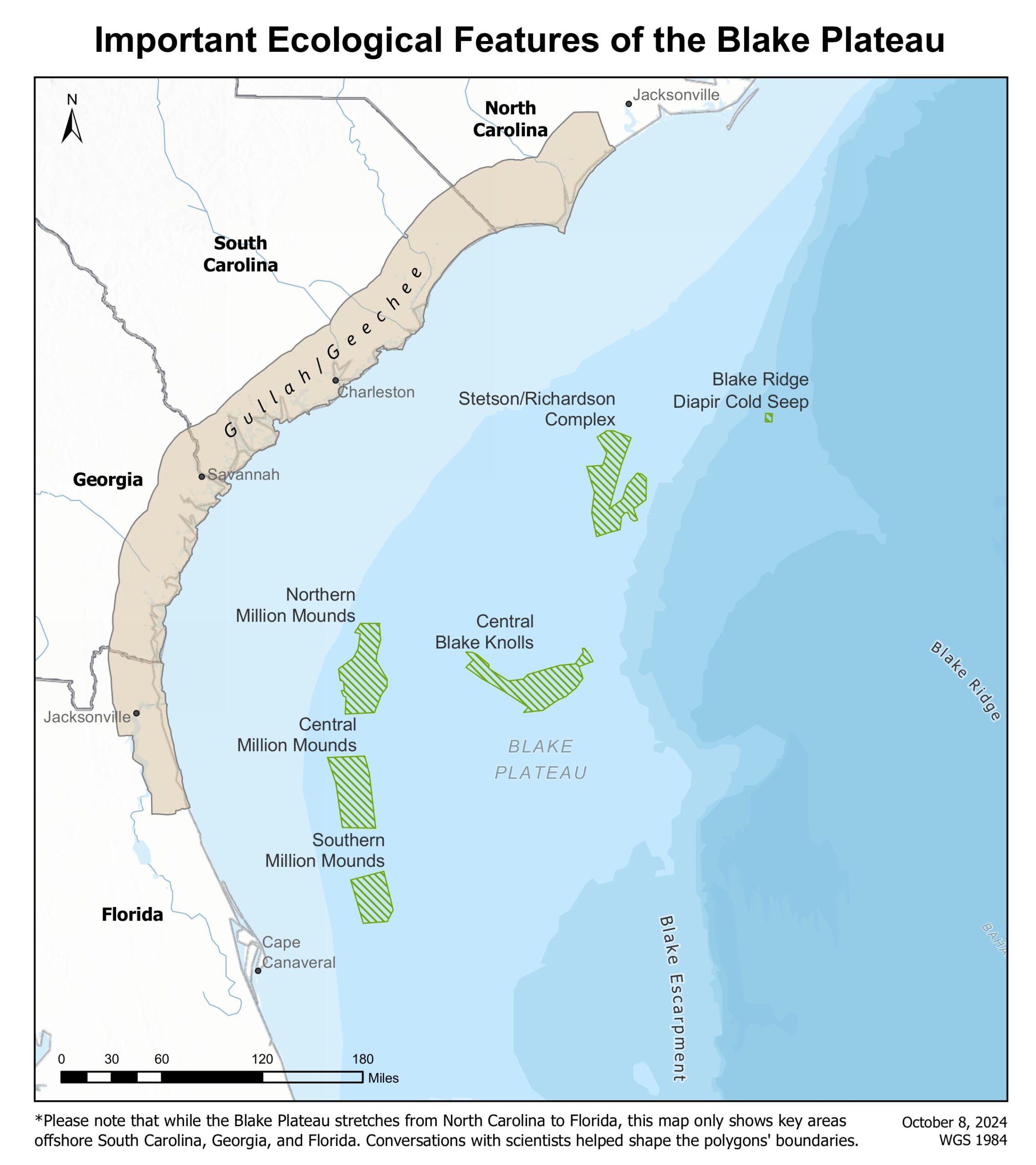
Briggs and the crew traveled approximately 100 miles off of Charleston, South Carolina, near the Blake Plateau which is known for its deep sea coral ecosystems. During the cruise, students worked alongside NOAA professionals learning hydrography, seafloor mapping, survey technology, and ship operations while conducting research offshore.
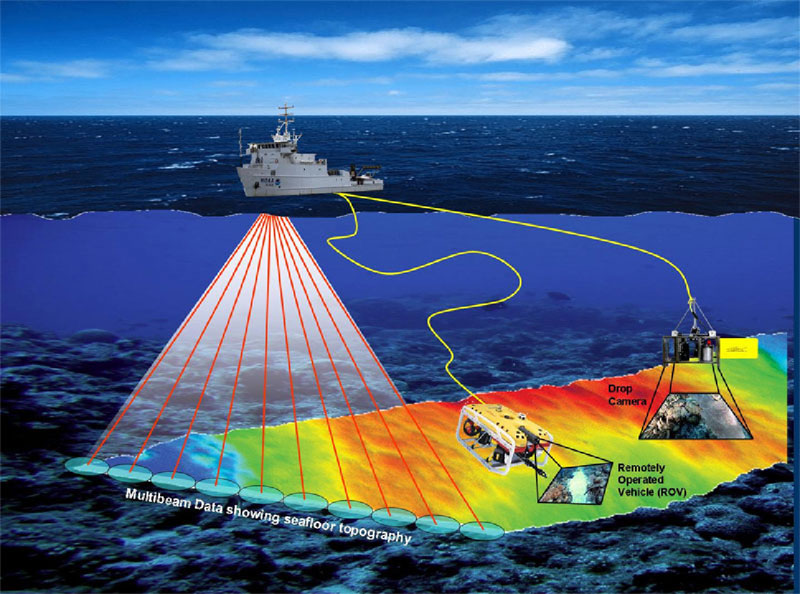
She explained the program was very student-centered, “We would hang out in the survey tech lab to get a better understanding of hydrography and basic multibeam theory [Multibeam sonar is a type of active sonar system used to map the seafloor and detect objects in the water column or along the seafloor. NOAA Ocean Exploration, 2023], as they actively mapped and collected the data. We would then work with the two senior survey tech who would explain the whole process of how to deploy and retrieve an underway CTD [CTD Is a package of electronic instruments that measure conductivity, temperature, and depth. NOAA Exploration, 2013]. We each got a chance to deploy it off the back of the boat where it was towed to collect data.”
Beyond the technical experience, the cruise provided Briggs with the professional network that would launch her career. Shortly after returning to shore, she received an email from the cruise's Chief of Party notifying the students of open NOAA positions. Encouraged by the relationships she had built on the ship, Briggs applied with guidance from the Chief of Party, securing a full-time position.
“I remember your resume got pooled if they were interested, and then referred to HR. I had my initial interview which covered why I was interested, past experiences, and geographic preference, because NOAA has an office in the Pacific and the Atlantic for different fleet,” Briggs said as she recalled the steps of the hiring process.
Although her initial job offer was ultimately rescinded in 2024 due to the government shutdown, she did not allow the setback to discourage her. Instead, she continued building experience by working with the Cape May Whale Watch and Research Center, as well as in a seasonal position with the New Jersey Department of Environmental Protection’s Fish and Wildlife (NJDEP) division while waiting for NOAA hiring to reopen.
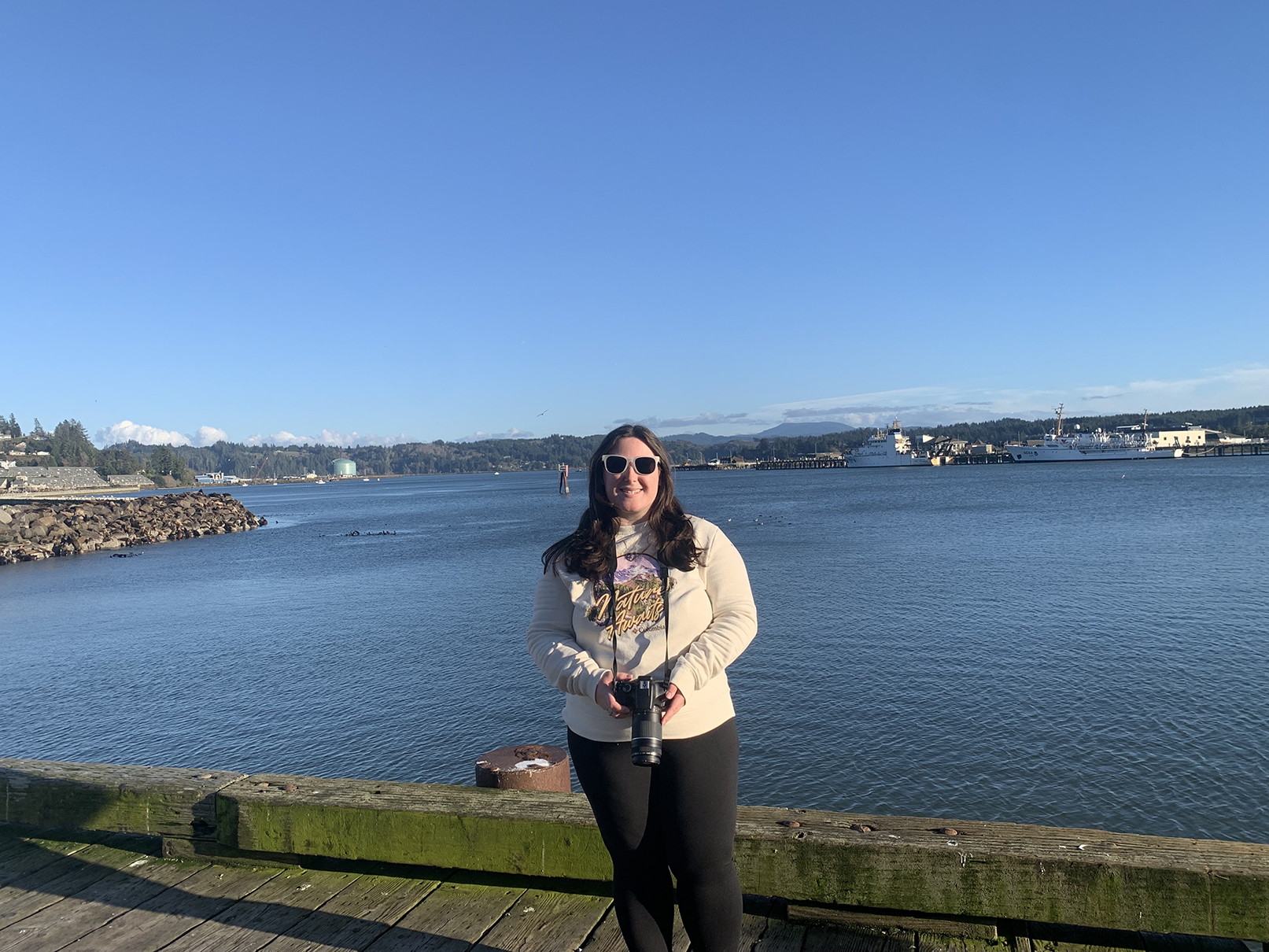
In the summer of 2025, Briggs received an email from NOAA advising hiring was reopened. After a round of interviews with different ships in the Pacific, she was hired as a Hydrographic Survey Technician aboard the NOAA Ship Rainier. Rainier primarily operates in Alaska and Pacific Northwest and is responsible for logging the data received from the cartographers to create and update our nation’s nautical charts. In addition, the crew also supports marine ecosystem studies and fisheries habit mapping from the data collected from the survey ships. She will be with seafloor mapping and hydrographic survey operations along the West Coast and Pacific regions.
Briggs credits her experience on the R/V Nancy Foster for helping her get this position.
I wouldn’t be where I am today if I hadn’t gone on the Nancy Foster cruise. I feel I learned a lot during that cruise. It helped open my eyes to how ships work in terms of different crew members and their responsibilities… I got a little bit of a taste of what it’s like to work on a research ship and be out to sea.”
Toth believes Briggs’ success reflects not only her persistence, but also her willingness to continuously pursue opportunities and challenge herself.
“Anytime you have an experience like that, it just brings in different people, equipment, and ways to do research… it’s part of the process. What is amazing about Mackenzie is she took all of her prior education here at Stockton and put it all together and was able to move to the next level,” she explained.
Looking back, that decision to step out of her comfort zone and onto the deck of the Nancy Foster was her ultimate "Yes Man" moment. It took her from the safety of the classroom straight into the deep end of real-world research, shifting her career trajectory. She wouldn't be where she is today if she hadn't embraced all the unexpected opportunities given to her, which is a powerful reminder that sometimes the best career plan is simply having the courage to say "yes" and jump in.
Check out her Instagram m.b_nature_photography to see Mackenzie's nature photography, and read some of her blogs on Cape May Whale Watch's website.