
Fall 2026 Issue
Decoding How We Study Stars
A Student Research Story
Written by Kayla Caputo ' 25, M.B.A. ‘25
For one Stockton University physics student
Maxim Wunder '27, research is less about choosing one path, and more about exploring
as many as possible. From analyzing stars using NASA data to developing new materials
in a lab, his work reflects a deep curiosity about how systems, both massive and microscopic,
behave. His recent astronomy project, in particular, highlights how data and coding
can be used to better understand the universe. The project focused on studying stars
using publicly available data from the Kepler Space Telescope. By analyzing a star’s
“light curve,” or how its brightness changes over time, researchers can uncover key
details about how that star behaves.
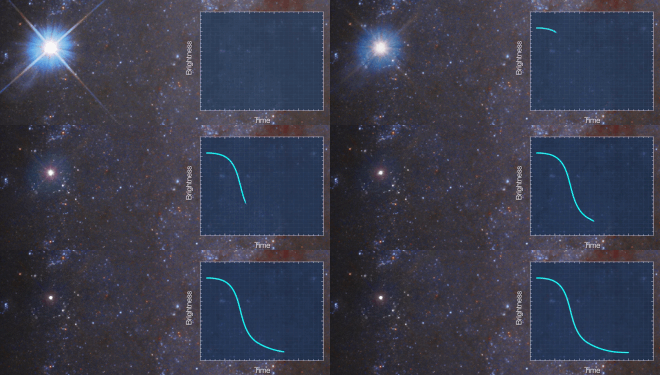
To do this, he used computational methods to break down the data. One technique identifies the dominant light frequencies a star emits, while another shows how those signals change over time. Together, they provide a clearer picture of what’s happening within the star, whether it remains steady, pulses, or interacts with other objects. “These methods let us see if a star is getting brighter or dimmer and at what point in time that happens,” he explained. His role in the project involved more than just analysis. He also rewrote the original research code, previously written in a more complex programming language, into Python, making it easier to use and more efficient for data processing.
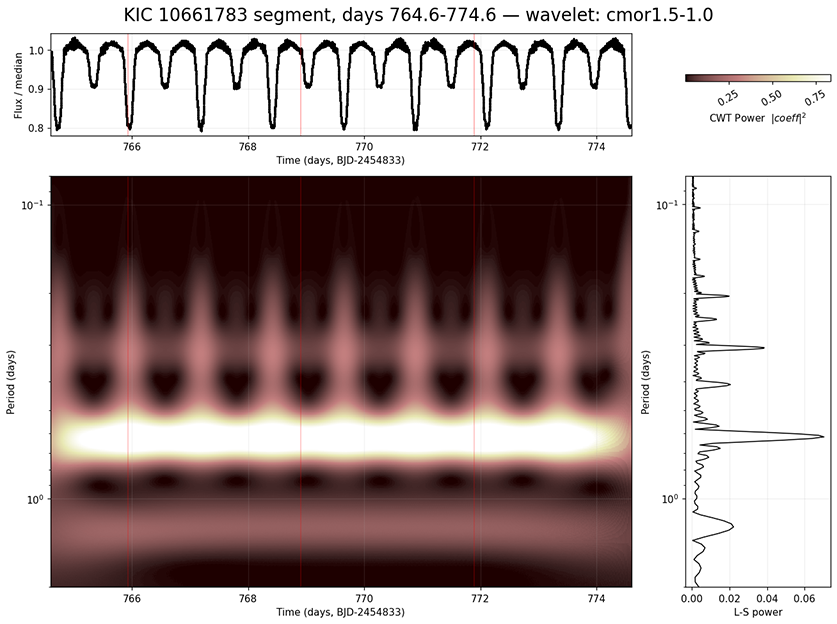
KIC 5768203 Segment
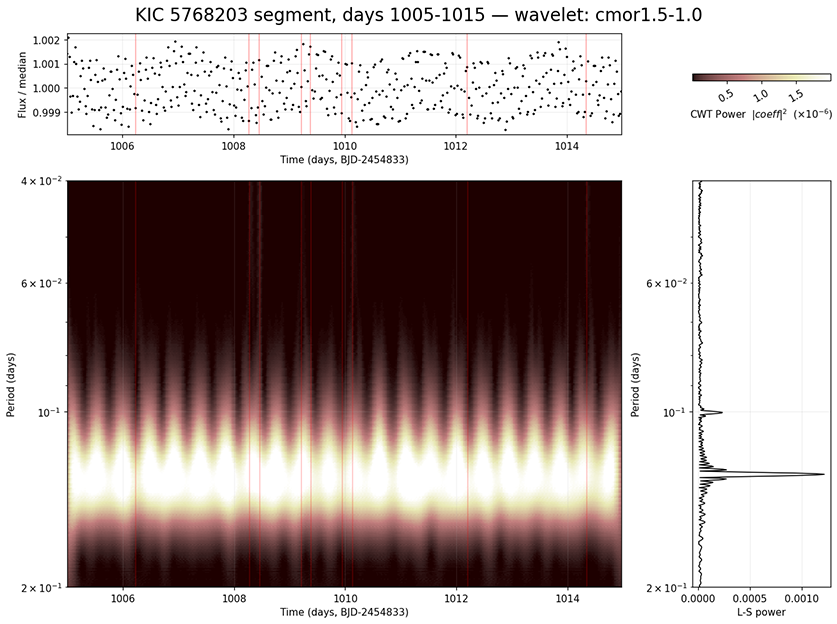
KIC 5768203 segment
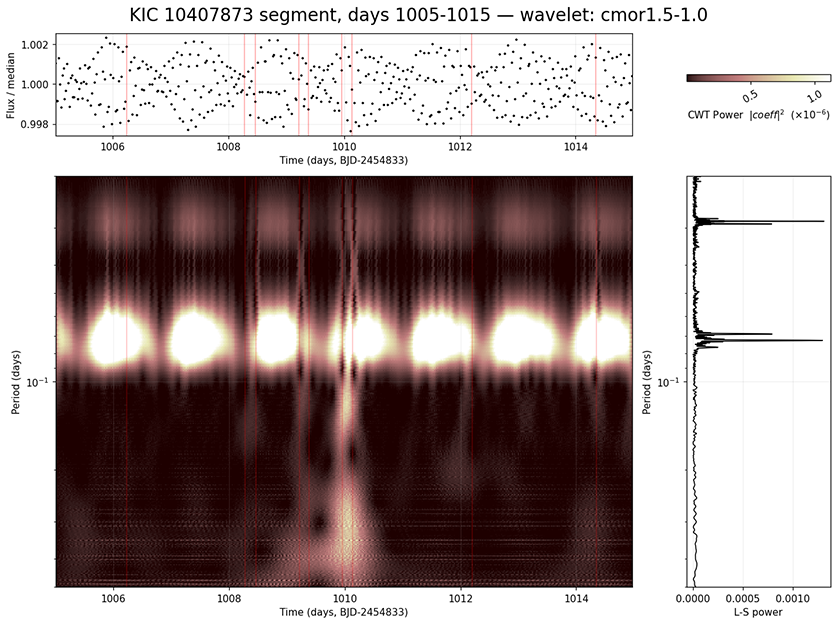
KIC 10407875 Segment
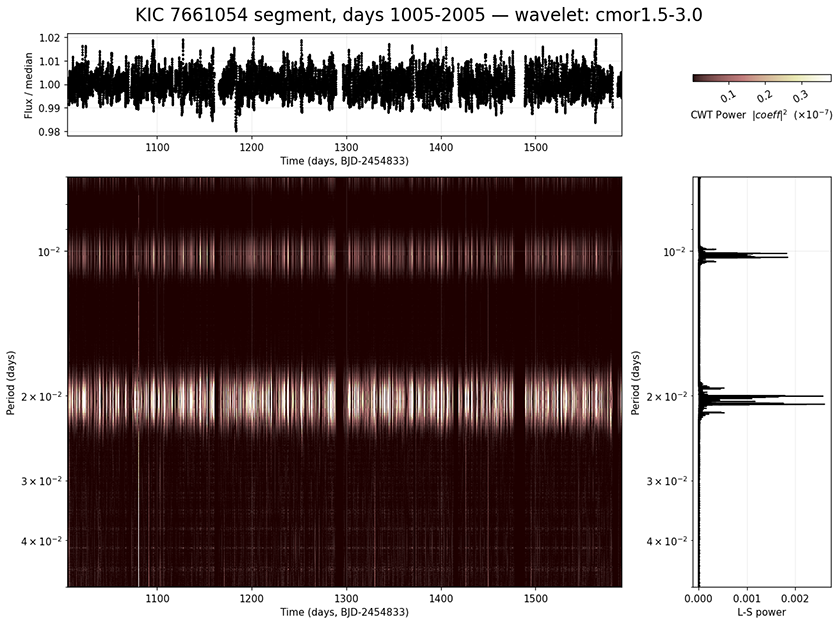
KIC 7661054 Segment
Samples of light curves from various stars taken over an extended period of time. Credit: Maxim Wunder.
With the updated system, users can input a star’s name and automatically generate visual outputs, including graphs and heat maps that illustrate how the star’s light changes. These visuals can even hint at hidden phenomena, such as nearby planets or binary star systems affecting the light signal. While the project itself served as a proof of concept, it opens the door for future work at Stockton. With upgraded observatory equipment, students may soon be able to collect their own data and apply these same techniques to stars observed directly from campus. But astronomy is only one part of his research experience.
Throughout his time at Stockton, he has worked across multiple disciplines, including
marine science, environmental chemistry, and materials science. In one project, he
helped process ocean data for research on sediment movement. In another, he developed
a material that can detect harmful chemicals in water by lighting up when contamination
is present.
I’ve done a lot of coding and data processing, and I’ve been able to apply those skills in different areas,” Wunder explained about his coding skills.
His long-term plan is to pursue graduate study and continue research in semiconductor and materials science, combining computational analysis with hands-on experimentation.
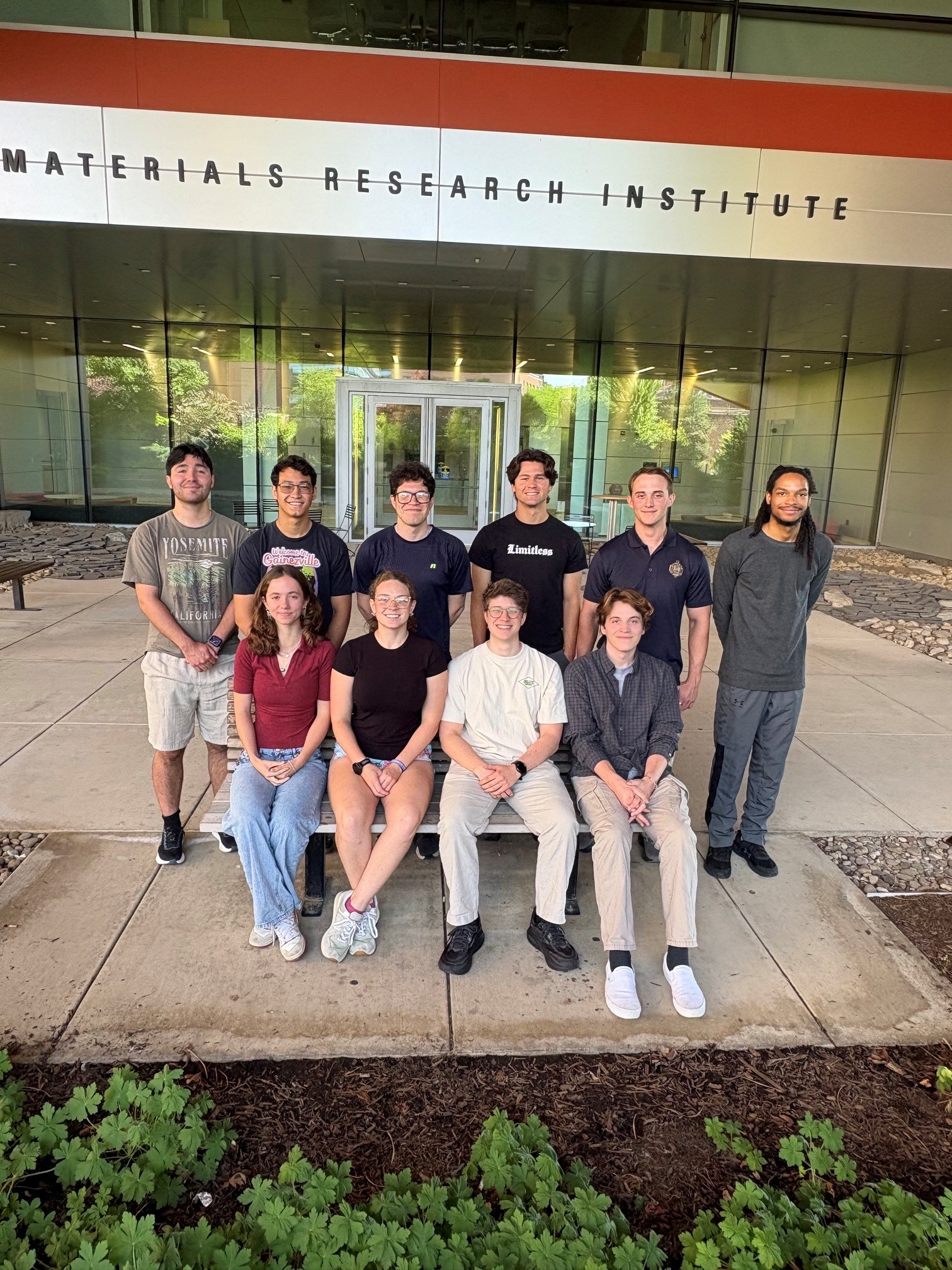
This summer, he took another step towards his goal by participating in an REU at Penn State in Dr. Stephanie Law’s research group. The group was focused toward the molecular beam epitaxy production of new thin films and heterostructures for novel optical and electrical applications. His project investigated selective-area growth of Bi2Se3 on patterned sapphire surfaces, exploring why the material prefers to grow in certain areas.
With all of the academic achievements Wunder has attained, it is interesting that his path into science wasn’t always clear. He didn’t initially enjoy math and entered college exploring engineering. Over time, through hands-on research and mentorship from faculty, he discovered a passion for physics and problem-solving. That willingness to explore and to simply ask for opportunities has shaped his experience. “I didn’t really have a set plan,” he shared. “I just wanted to try things, and the opportunities followed.” His story reflects one of the key strengths of Stockton’s research community: students are encouraged to take initiative, explore different fields, and build their own path. And in this case, that path just happens to stretch from the ocean floor to outer space.