Toolkit for Career Champions
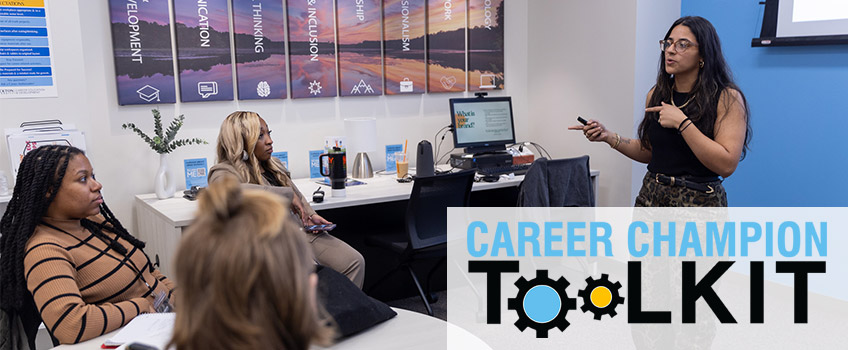
This Career Champion Toolkit provides practical strategies for integrating career-connected learning into courses and student-facing programs, helping students connect their academic and co-curricular experiences to the expectations of employers and graduate programs.
Grounded in institutional commitments to student success and career readiness, the Toolkit centers on partnership with your Career Education and Development liaison, the First-Year Experience, NACE career readiness competencies, and first-destination outcomes.
Beyond these resources, we welcome collaboration through classroom presentations, assignment design support, Career Champions workshops, and curriculum mapping to ensure career readiness is intentionally and seamlessly embedded throughout the student experience.
Request for liaison consultation and support:
Syllabus Integration
The National Association of Colleges and Employers (NACE) has identified (8) eight career competencies that reflect student readiness for post-graduate success.
We encourage you to highlight the relevant NACE competencies in your syllabus and note how they are developed in your course. You may also include a brief statement directing students to Career Education resources for additional support.
Sample Syllabus Statement
This course integrates the National Association of Colleges and Employers (NACE) Career Readiness Competencies to support students’ academic, professional, and career development. Through course activities, assignments, and discussions, students will engage with and strengthen competencies including career and self-development, communication, critical thinking, equity and inclusion, leadership, professionalism, teamwork, and technology. These competencies encourage students to connect course learning with professional expectations, experiential learning opportunities, and industry-relevant skills. Students may also utilize Career Education and Development (CED) resources to translate course-based experiences into career-ready language for resumes, professional networking platforms, and future employment opportunities.
Sample Campus Resource Statement for CED
Career Education & Development assists with exploring majors or careers, searching for jobs and internships, applying to graduate and professional schools, and connecting with employers and alumni.
NACE Career Competencies
Career readiness goes beyond earning a degree. The National Association of Colleges and Employers (NACE) defines career readiness as developing and demonstrating the competencies needed to successfully transition into the workplace. Employers seek graduates who can apply both disciplinary knowledge and transferable skills such as communication, critical thinking, teamwork, professionalism, and leadership in real-world settings.
Research shows many employers believe students need stronger preparation in these areas. By intentionally integrating career competencies into your teaching, you help students connect academic learning to workplace success.
Below is a list of the eight NACE career competencies that contribute to career readiness:
Career & Self-Development
Leadership
Communication
Professionalism
Critical Thinking
Teamwork
Equity & Inclusion
Technology
Suggested Action: Make explicit which class sessions/assignments/projects link to building particular competencies. (Discuss it during class and include them on your syllabus)
First-Year Experience & Career Exploration
Early exposure to career exploration helps students develop clarity, confidence, and motivation, while strengthening persistence and academic engagement. Career Champions play a critical role in normalizing career conversations and helping students connect interests, strengths, and coursework to possible pathways. Career Champions can support their first-year and career-curious students by recommending the following activities or incorporating them into their courses, where appropriate:
Normalize Career Exploration early in the First Year
Introduce Self-Assessment & Reflection (FOCUS 2)
Connect Exploration to Academic Pathways
Facilitate Career Development Outside the Classroom
Tour Career Education & Development
Attend Career and Internship FairRecommend Campus Events, Clubs, Organizations, etc.
Advising & Student Conversations
Career conversations are not limited to Career Education and Development -- they are part of the shared responsibility of all who support students throughout their academic journey. Whether discussing coursework, co-curricular involvement, or post-graduation plans, every interaction is an opportunity to normalize exploration and connect learning to future possibilities. These guides are designed to equip Career Champions with practical conversation tools that make career dialogue feel natural, supportive, and integrated into everyday student interactions.
Career Platforms: Career Champions User Guides
This section focuses on how Career Champions can use the following platforms to support students' career readiness through integration into courses or progamming.
Handshake
- Assign Profile Development
- Use Real Job & Internship Postings in Class
- Incorporate Event Participation
- Connect Assignments to Career Exploration
Focus 2
- Assign Early
- Use Results for Reflection Assignments
- Facilitate Class Discussions on Themes
- Connect Assessment to Career Exploration
- Link to Career Services Resources
Forage
- Assign Simulations Aligned with Course Content
- Facilitate Skill Reflection
- Connect Simulation Experience to Career Development
- Incorporate Group or Class Discussions
- Track and Share Outcomes
Best Practices & Research
Career development is most effective when it is integrated throughout the academic experience. Research shows that when Career Champions incorporate career reflection, skill development, and industry exposure into coursework, students are better able to connect their academic learning with future career pathways. Even small classroom activities such as discussing transferable skills, inviting alumni speakers, or encouraging career exploration can significantly strengthen students’ career readiness and confidence.
The resources below highlight national research, frameworks, and best practices from leading career development organizations to support career champions in integrating career readiness into the student experience.
Research & Professional Resources
- NACE Career Readiness Competencies
- NACE Career Readiness Defined
- NACE Faculty Guide to Career Readiness
- NACE Job Outlook & Employer Expectations
- NCDA Career Development Guidelines Framework
NCDA Career Development Resources - AAC&U VALUE Rubrics (Workforce Skills)
- Gallup Alumni Survey: Great Jobs, Great Lives