Leader Interview

Leader Interview: Dennis Yu, PhD
Dean - School of Business, Stockton University
Sarah Grady (SG): Hello, and welcome. This is the leader Interview for the Summer 2026 issue of Lights On. I am Sarah Grady, the Assistant Director of the Lloyd D. Levenson Institute of Gaming, Hospitality, and Tourism at Stockton University.
And I'm joined today by the newly appointed Dean of the School of Business, Dr. Dennis Yu. Pleasure to have you with us today, Dr. Yu.
Just to begin this session, we like to give our guests an opportunity to introduce themselves. So, who is Dr. Dennis Yu? Can you tell us a little bit about the path that led you here to the School of Business at Stockton?
Dennis Yu (DY): Hello, everybody. Hi, Sarah. Thank you for having me. So, let me talk a little bit about myself.
First of all, I believe I'm an educator.
I'm a firm believer of higher education. I believe higher education has the power to transform lives, and this belief actually helped me along all of the stages of my career thus far.
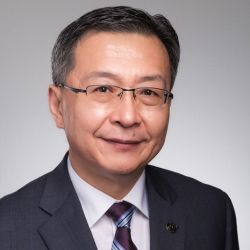
Dennis Yu, PhD
Dean - School of Business, Stockton University
I started as a faculty [member], and my academic background is operations research and supply chain management. And then, I have been fortunate, actually, to get the opportunity to develop my education leadership. I assumed a number of leadership roles at Clarkson University's Reh School of Business. So, from Associate Dean of Graduate Programs and Research, and the later Associate Dean of Graduate and Professional Programs, and before I joined Stockton, I was the Director of Assessment and Accreditation.
These leadership roles equipped me to manage programs, grow enrollment, and also develop innovative curriculum. Meanwhile, it also helped me to develop the capability of operation and fundraising, and certainly that helped me to make my transition in my career to be an administrator at higher education [institutions], and obviously, joining Stockton University is a very natural next step.
Stockton University has a very solid foundation to support the area and the community in South Jersey.
And to me, I see a tremendous opportunity at Stockton, particularly the School of Business, to actually build a modern higher education in business, to develop the business school to be a premier institution for the region, and also to prepare the students for the opportunity and to have impact in this area and the business community.
So that pretty much summarizes what I actually have here, how I come to Stockton.
Thus far, I feel so fortunate to be part of the Stockton community, and I believe I made the right decision.
SG: Of course, of course. And as you settle into this role what would you say is a current challenge or a success that you're experiencing now?
DY: I always believe a challenge is also an opportunity. I believe at this point, the challenge to many institutions in higher education, particularly for business schools, is to position the institution for the future.
So, I would like to actually have this opportunity, particularly for Stockton School of Business, to be future-ready.
Talking about the readiness for the future. I think it's important to recognize also the challenge, about the technology that transforms all aspects of our lives and also the business world.
how we actually integrate the technology in higher education, particularly in our business education at the business school, is a big challenge, or a great opportunity."
So how we actually integrate the technology in higher education, particularly in our business education at the business school, is a big challenge, or a great opportunity.
That's what I feel about the challenge and opportunity part for the School of Business.
Meanwhile, I do want to share a success thus far.
You know, I'm still in my first month.
I have met with, faculty, students alumni, and also, the business community and the members of the advisory boards. The success to me is already feeling the passion from everybody. And it's a pleasant surprise to see how much everybody is committed to this community. I think this is already a success, I can tell.
SG: That answers so many of the questions that we had lined up, but maybe if I can jump forward a little bit?
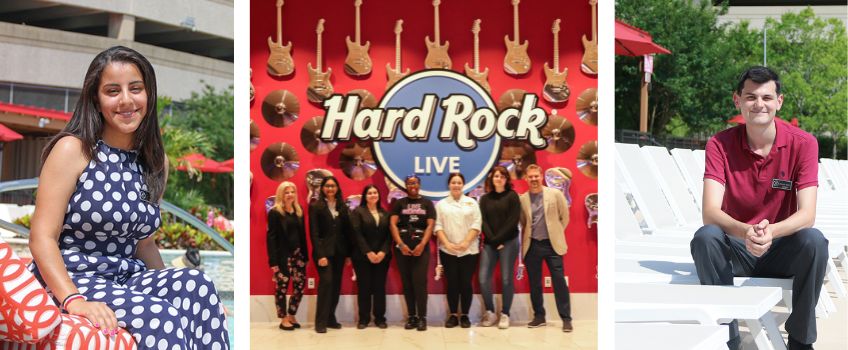
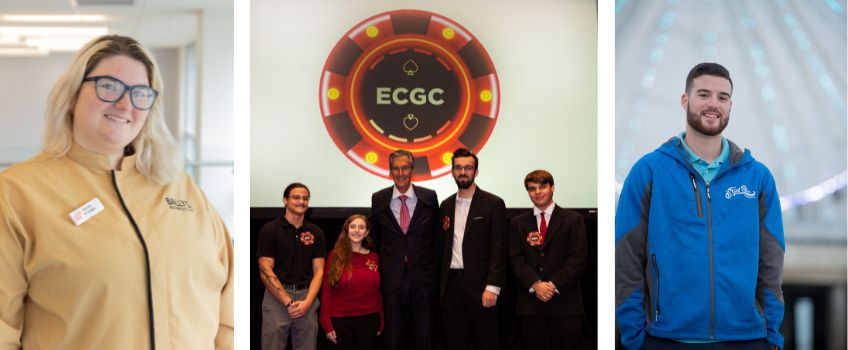

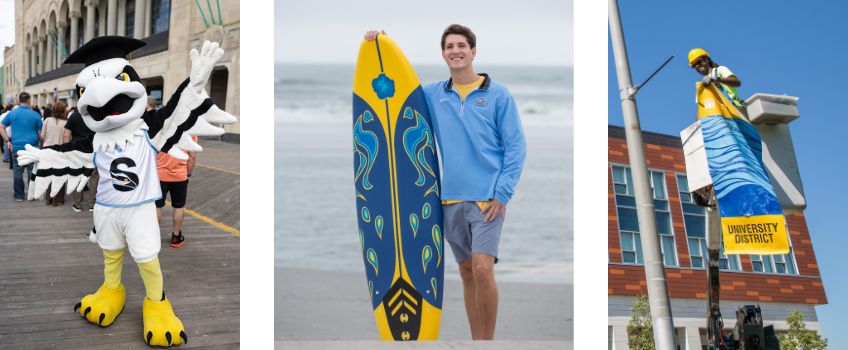
What role do you see the School of Business playing in, for example, the future of Atlantic City, or just the greater Atlantic City Galloway region?
DY: I believe the business school can be a great business partner in this community, and also a great institution to provide graduates [the opportunity] to be successful in this business community. Going forward, I think the great opportunity for the business school is to actually look at the future-readiness for our students.
Particularly, once we look at this location, Atlantic City is still one of the premier tourism locations and destinations in the United States. And, I believe that's a tremendous opportunity for us to actually develop the premier, business education at [Stockton's] School of Business.
I believe, we should work with all of the business partners and alumni, and also the business community, to develop the opportunity for our students, to help them to be successful in this region.
In particular, I think our business partners in Atlantic City, and particularly, the business partners in tourism, and casino resorts actually can produce a lot of opportunity for our students in terms of internships, mentoring and, also, practical projects to help them gain necessary experiential learning experience.
I think that's basically an element for a successful career for our graduates, and if they pursue their career in this region.
SG: Because a lot of our leader interviews are interviews of people that are on LIGHT's advisory board, and who have a chance to know LIGHT, and, acknowledging that you're still in early days of your role here at Stockton, we usually ask, what role do you see LIGHT playing in this vision of the future that you have? Or maybe if we can phrase it a little differently, how can LIGHT help you advance some of the things that you've articulated just now?
DY: Yes, absolutely. What I can tell is - I believe the academic institutions cannot be alone, and particularly in this case, in this area, for Stockton School of Business, I believe LIGHT is a bridge between our campus and the business community. And LIGHT connects the corporate partners, business community, and the government lawmakers, and also our, business chambers [of commerce] in this area, to our campus.
This is such a great channel for our students to access, to get access to the business world.
This is such a great channel for our students to access, to get access to the business world."
I mean, I talk about the internship opportunity, the way how actually a student gains the experiential learning experience. I think these are the necessary elements, and that can be provided via LIGHT.
I think LIGHT can also be a great channel for us to understand what really the business world needs. So, for example, I really want our business school to be the first destination, or the choice for our business partners if they think about any opportunity for their employees' professional development, and also anyone in this area, interested actually to pursue further their business career.
LIGHT actually is such an important bridge for us to actually connect as a business community.
SG: And it's wonderful to be able to be in that environment and be that bridge, as you say. So, it's exciting for me here on the LIGHT side as well. To close our time together, I usually invite our guests to comment on anything else that you'd like to highlight from what we've discussed, or something else altogether, to give you the floor to anything else you'd like to add?
DY: Yes, Sarah, and I do want to add one thing. I think this is something, for anyone in higher education, particularly for administrators, in higher education to think about.
I believe our business school provides a program to help our students or graduates to be career ready, and they may actually get their first job in their career after graduation.
However, if you think about the jobs, actually, our graduates are going to take 10 years from now.
Most likely, these roles don't even exist at this point.
So, if you really think about the challenge and also the opportunity for higher education, particularly, business education thus far, we may actually think about how we prepare our students to be future-ready. And my understanding is we have to build our core competencies to make our school ready for the future. In other words, our students graduate with the necessary competencies, such as, critical thinking, leadership, communication and technology fluency - to be ready for any possible future career challenges.
our students graduate with the necessary competencies, such as, critical thinking, leadership, communication, and technology fluency - to be ready for any possible future career challenges."
So, that's actually something I want to put a lot of [thought into] and also help our business school to build such a vision for a future-ready business school.
SG: “Future-Ready Business School” - sounds wonderful. Sounds like exactly what the area needs.
I want to thank you again, Dean Yu, for joining us today, and for taking some time out of your busy day for this interview. And I want to also thank our guests for joining us for this interview as well. And again, this has been the Leader Interview for the Summer 2026 issue of LIGHTs On, published by the Lloyd D. Levenson Institute of Gaming, Hospitality, and Tourism at Stockton University. We're part of the School of Business.
Sometimes we go by LIGHT, just to make it easier. Alright, thank you so much, and have a great day. Bye.
DY: Thank you, Sarah. You have a great day, too.