Tourism-Driven Revitalization and Its Impact on Community Nonprofits: Insights from Atlantic City

Noel Criscione-Naylor
ABSTRACT
Tourism is incredibly beneficial in stimulating economic growth and traffic to a destination. While this is the driving force behind many destinations' adoption of such models, there is a lack of understanding regarding its impact on the community development of nonprofit organizations. More specifically, how applying a tourism-focused model for urban revitalization can influence and shape funding, spending, and programming. Research in this field is especially important as most research dedicated to tourism is centralized in for-profit companies. Additionally, both community development corporations (CDCs) and government nonprofits emphasize uplifting the local community. There is a gap in research on residents’ perspectives on tourism-based city development in alignment with residential necessities. This industry commentary article seeks to understand how Atlantic City, New Jersey’s centralization impacts funding, engagement, and program priorities of community development nonprofit organizations concerning residents' perspectives and needs.
Keywords
Tourism, revitalization, nonprofits, community development
INTRODUCTION
Atlantic City describes itself as “a shining coastal destination as well as home to America’s oldest boardwalk and the birthplace of glittering East Coast gaming action” (Visit NJ - Atlantic City, n.d.). By 1852, the first railroad was established (History of Atlantic City, n.d.), which fated Atlantic City to become a tourism destination for the summer months. Once known as “America’s Playground” (Levi, 2016), Atlantic City saw stages as a leader in the tourism industry due to the boardwalk (History of Atlantic City, n.d.), gaming properties (History of Atlantic City, n.d.), and shopping (DO/AC, n.d.). However, cycles of rebuilding and rebranding have been consistent as the city struggles to maintain itself as an attractive destination. Over the past few years, more than $1.7 billion in investments has boosted Atlantic City’s allure (ACNJ, n.d.) featuring nine world-class casino resorts, iconic hotels, renowned restaurants with celebrated chefs, unique attractions, top-tier entertainment, luxurious spas, championship golf courses, elite shopping, and much more attracting 27 million customers annually (ACNJ, n.d.).
However, due to the declining appearance of the destination, a reputation for ‘clean and safe’ challenges, and economic insecurity, there is difficulty in sustaining positive tourism growth. The latest focus in Atlantic City revitalization efforts centers on community and economic development to stimulate further investment in the city and address some of the concerns of safety and cleanliness. The establishment of nonprofits, such as the Chelsea Economic Development Corporation (EDC) in 2019 and later Community Development Corporations (CDC), took place as an attempt to reinforce the sentiments of the government, businesses, and residents. With problems identified by these nonprofit groups, the CDC produces points of importance and focus for each nonprofit. Each CDC promises to revitalize Atlantic City with its commitment to safety, housing opportunities, and beautification. Individually, their neighborhoods offer unique accomplished tourist destinations that can be advantaged to stimulate the city and drive business. Also, each division has residents of varied socioeconomic circumstances.
As a result of Atlantic City’s challenges, this industry commentary article aims to give a better understanding of the impact of tourism on Atlantic City locals, particularly through the efforts of CDCs and government initiative nonprofits. Ideally, nonprofits and locals can reach a balance in priorities and perception of tourism influence. The Ducktown CDC, Inlet CDC, Midtown CDC, and Chelsea EDC share a common goal to revitalize Atlantic City through grants, community outreach, and beautification – each with its respective neighborhood providing diverse tourist destinations, as well as residents in diverse socioeconomic circumstances. Additionally, throughout Atlantic City, many experience drug addiction, crime, and housing insecurity, which has hindered attempts to rebuild a reputation. The attempt to drive tourism is heavily influenced by this, and addressing residents’ needs will create a positive change in reputation. This commentary article research is guided by the following questions: How does Atlantic City’s centralization of tourism impact funding, engagement, and program priorities of community development nonprofit organizations? How do residential needs and perspectives align with those initiatives of the nonprofit sector? What is the residents’ perspective regarding the tourism focus of Atlantic City?
INDUSTRY CONTEXT
Atlantic City as a Tourism-Centric Economy
With the beginning construction of the boardwalk in 1870, Atlantic City “between 1890 and 1920 displayed the optimistic, expansive spirit of America” (Rubenstein, 1984, p. 62). However, by the 1930s, “illusions of success and social mobility began to fade in Atlantic City as did the American Dream” (Rubenstein, 1984, p. 62). The “Rolling Adjustment” recession of 1960 birthed economic and social distress in Atlantic City: “The city was beset with the economic and social problems common to many urban centers at the time. With an economy entirely dependent on tourists who were now shunning the decaying resort, the city reached its nadir [lowest point]” (History of Atlantic City, n.d., para. 6). With Atlantic City in a state of decline and possible danger of obscurity as a tourist destination, the city faced a time of much-needed revitalization.
“By the 1960s, the physical decline of the City’s infrastructure and its private facilities led to proposals that casino gambling be allowed as a tool to revive the resort,” (Linky, 2020, p. 3). As a response, in 1976, the city allowed gaming, and the Resorts International casino was built in 1978. This created a great economic impact for the city and spotlighted Atlantic City as a tourism leader once again. Additionally, this caused the government to develop its first master plan in 1978 as a reference to the referendum passed on casinos. The Casino Control Act (CCA) was narrowly voted into law with the intention of “rehabilitation and redevelopment of existing tourist and convention facilities in Atlantic City,” (NJ Casino Control Commission, n.d., para. 4) and “the fostering and encouragement of new construction and the replacement of lost convention, tourist, entertainment and cultural centers in Atlantic City,” (NJ Casino Control Commission, n.d., para 4). As the base of Atlantic City’s economy was dependent on tourism, economic recessions made the city's stability quite fragile to periods of downturn, therefore, the promise of casinos and their impact on Las Vegas in Nevada offered inspiration for a stable economy.
It is important to note that the implementation of the Casino Control Act explicitly designated restrictions on the issuance of casino licenses with a declaration of protection for local businesses and residents residing in Atlantic City (NJ Casino Control Commission, n.d.). The mission of developing a sustainable economic structure in Atlantic City outside of the casinos was reinforced by Gov. Brendan Byrne, who signed the CCA into law citing acknowledgment and declaration of being vehemently against the monopolization and corruption potential that casinos could pose to Atlantic City (Linky, 2007; NJ Casino Control Commission, n.d.), however being supportive of the revenue the addition of casinos in A.C. would bring to the state of New Jersey. However, seven years later, in 1984, the reevaluation of the CCA prompted a realization that none of the casinos introduced to Atlantic City had paid the expected 2% revenue that was required by the CCA (NJ Casino Control Commission, n.d.), prompting action from N.J. legislators:
“No casino licensee had made the required reinvestments, so legislators created the Casino Reinvestment Development Authority (CRDA) to force the funding. The law gave the casinos a choice: either pay 2.5% of its gaming revenue to the state or reinvest 1.25% of revenue in community projects through Casino Reinvestment Development Authority CRDA. Not surprisingly, all casinos chose reinvestment,” (Mikle, 2013, para. 11).
The CRDA promised to be a program initiative to help enforce casino-funded revitalization of the city, however at the cost of only paying 50% of the originally promised revenue into the CRDA instead of direct revenue funding to the state of New Jersey. The original institution of the CRDA was “required to dedicate 100% of its funds to the rehabilitation or construction of housing facilities for low and middle-income families,” (Burdo et al., 2022, para. 22).
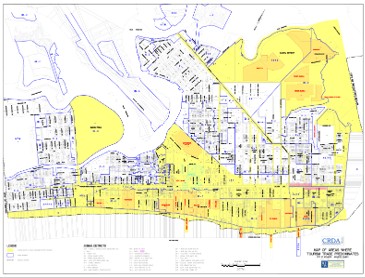
For 30 years, the casinos continued to revitalize the tourism of Atlantic City. “In 2005 the number of tourists visiting Atlantic City reached a maximum of 34.9 million and in 2006 the city's casinos-hotels earned the highest total income – 5.2 billion dollars.” (Matuszewska 2016, [Abstract]). In 2011, the state designated parts of Atlantic City as a tourism district and authorized the CRDA to manage and regulate land use within that district (CRDA Tourism Master Plan, 2012, p. 23, section 2-8). Additionally, boundaries of the tourism district were established (See Figure 1).
Figure 1
Atlantic City Tourism Districts
Subsequently, the 2012 Tourism District Master Plan was the foundation and influence for future redevelopment and revitalization plans: Chelsea CDC Revitalization Plan (ACDEVCO & CEDC, 2020), Inlet Revitalization Plan (ACCC & Inlet CDC, 2022), Green Zone Redevelopment Plan (CRDA, 2022), 2016 A.C. Master Plan Re-Examination (Roberts et al., 2016), and Atlantic City 2018 Report (Johnson et al., 2018). The CRDA’s plan outlines a 10-year goal and a mission: “the Master Plan for the Tourism District is intended to create a vision for changing perceptions of Atlantic City, repositioning it as a leading resort destination” (CRDA, 2012, p. 12, section 1-2). The main objectives focused on increasing economic stability while vying for new residents. This plan outlined four phases, the first being revitalizing the boardwalk and two main streets. Phase 2 states, “focus redevelopment efforts in 4 key areas: [Gardner’s Basin, South Inlet, Midtown, Down Beach]. (CRDA, 2012, vol. 2-2, p. 2, section 3.1-28). The CRDA’s intention behind outlining four distinct districts is to essentially make Atlantic City more digestible for its visitors; this is best emphasized in the following quote: “These four areas will act as catalysts and encourage future development along the boardwalk,” (CRDA, 2012, vol. 2-2, p. 2, section 3.1-28), essentially introducing temporary retail in between the areas of redevelopment to create a continuous pedestrian experience along the boardwalk (CRDA, 2012, vol. 2-2, p. 25, section 3.1-51). (Please refer to Figure 2.)
Figure 2
Phase 3: Atlantic City Redevelopment
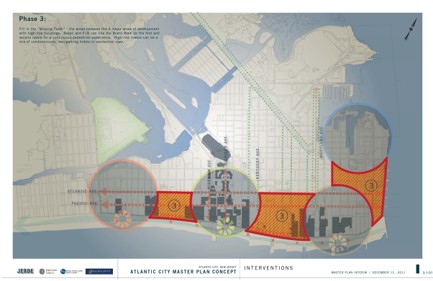
These areas of interest were the primary focus of the plan, hoping to revitalize them as tourism hot spots. The plan hoped this phase would attract new residents and stimulate the housing market. Phase three was described as “fill in the ‘Missing Teeth’. The areas between the four major areas of development with high-rise buildings” (See Figure 2) (CRDA, 2012, vol. 2-2, p. 1-51).
While the city continued looking to expand and capitalize on its tourism potential, this period of revitalization once again faced an end. The economic recession of 2007-2009, devastation from Hurricane Sandy, and four casino closures in 2014 created an economic deficit that plagued the city (CRDA, 2017; Roberts et al., 2016, [2016 Master Plan Re-Examination). “In 2012 the number of its visitors dropped to 27.2 million, while the income of hoteling-entertainment facilities amounted to 4.3 billion dollars,” (Matuszewska 2016, [Abstract]). Despite efforts of new tourism destinations to provide stability to the city, the economic ruin once again required a reanalysis of tourism plans.
In 2017, the federal government introduced Opportunity Zones, which designated “low-income communities and certain neighboring areas, defined by population census tracts” for the purpose of “[spurring] economic growth and job creation in low-income communities while providing tax benefits to investors” (IRS, 2024). With Atlantic City declared, private investors had the opportunity to defer federal tax payments to qualified opportunity funds, which allowed multiple entities, including nonprofits, to gain private funding in an effort to promote economic growth (The State of New Jersey, n.d.). The defined opportunity zone in Atlantic City encompassed the regions needed for the redevelopment cited in the tourism master plan (see Figure 3) (CRDA, n.d.).
Figure 3
‘Opportunity Zone’ Map from CRDA (CRDA, n.d.)
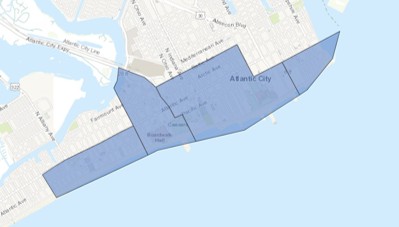
Coincidingly, the CRDA provided an addendum to the Tourism District Master Plan amending zoning districts in Atlantic City. Additionally, foundational work and Tourism District planning maps highlighted four individual neighborhoods overlapping their outlined “Opportunity Zones” in need of revitalization: Chelsea, Ducktown, Midtown, and the Inlets referenced in Figure 4(CRDA, n.d.).
Figure 4
Atlantic City Neighborhoods Map Overlaid with ‘Opportunity Zone’ Map from CRDA’s Engage AC Initiative (CRDA, n.d.)
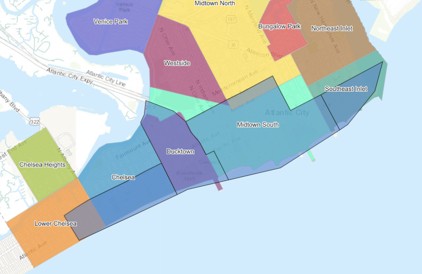
Subsequently, another Tourism District map was released, Figure 5, showing new district divisions within these neighborhoods. (See Figure 5) (CRDA, 2017).
Figure 5
CRDA Tourism District Zones Colored (CRDA, 2017)
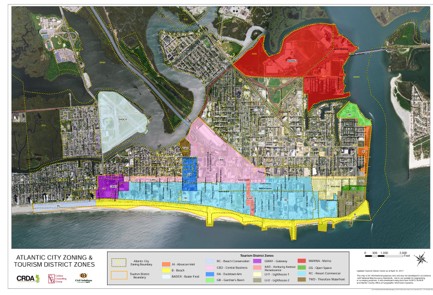
The current effort to revitalize Atlantic City through tourism has a trend focusing on the arts and developing four distinct nodes, to reinforce sentiments of expansion beyond casinos. With the introduction of Stockton University properties, the Atlantic City Arts Foundation’s arts projects, and South Jersey Gas, in the late 2010s, a rise in economic impact from tourists occurred within the Gateway district established in the Chelsea neighborhood, marking the start of the new tourism revitalization phase in Atlantic City. The establishment of Community Development Corporations (CDCs) and Economic Development Corporation (EDC) nonprofits from 2018-2023 – Chelsea EDC, Ducktown CDC, Midtown CDC, and Inlet CDC – has risen with the corresponding boundaries.
Outlining CDC/EDC Districts
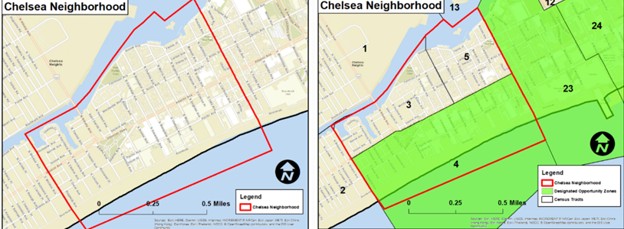
Chelsea EDC gained nonprofit status in 2019. The 0.75-square-mile area extends from Annapolis Avenue to Texas Avenue and stretches from the beach to the bayfront with boundaries following Census Tracts 3, 4, and 5 in Atlantic City (refer to Figure 6).
Figure 6
Chelsea EDC
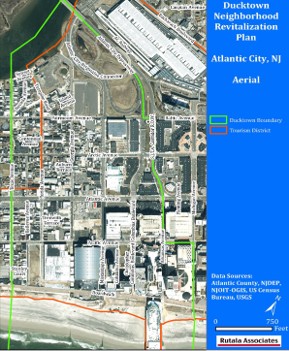
The Ducktown CDC was established as a formal nonprofit in 2020. Its corresponding area extends from Texas Avenue to Missouri Avenue from the beach to the bay (See Figure 7).
Figure 7
Ducktown CDC
The Inlet neighborhood consists of two census tracts (Census Tract 19 and 25). Census Tract 19 is a federally designated Opportunity Zone. The total land area is 0.52 square miles. As of 2023, the total population is 5,251 (See Figure 8).
Figure 8
Inlet CDC
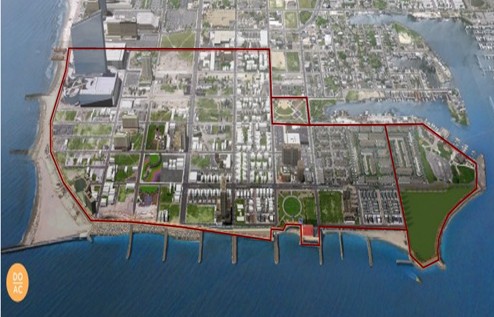
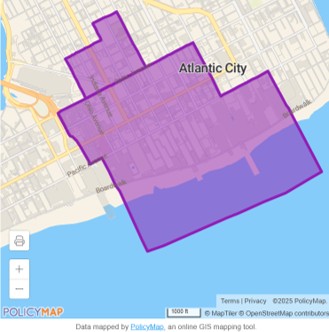
Midtown CDC was established as a nonprofit in 2021. Its corresponding area consists of Census Tracts 11 and 24. This space begins at the end of Tanger Outlets The Walk and ends at the Inlet CDC boundary (See Figure 9).
Figure 9
Midtown CDC – Screenshotted from midtownacnj.org Home Page (Midtown CDC, n.d.)
Nonprofit Exploitation by CRDA & Influence on CDC Planning
After thorough research, the only citing evidence of the CDCs being established has been mentioned within CDC plans themselves; there are no other accessible documents disclosing or citing the inspiring committee (or demanding residents) for the formation of the CDCs. However, one influencing factor of development among their respective neighborhood plans is the introduction of Opportunity Zones – an idea first introduced to Atlantic City by the Master Plan of 2008, which encouraged an economic approach to attracting more outside tourists to the city. Each CDC cites potential improvements through this zoning as a catalyst for economic development. Specifically, the Ducktown and Inlet CDCs write, “The upshot [meaning: eventual expected outcome]… is that investing directly in the neighborhood becomes more desirable for investors” (ACCC & Inlet CDC, 2022, p. 55; Rutala Associates & Ducktown CDC, 2019, 167), which suggests a yearning and prioritization for outsourcing economic support for the city. Additionally, those CDCs cite the 2018 report “Atlantic City: Building a Foundation for a Shared Prosperity” as a state call for the establishment of these nonprofits to allow for resident inclusion in planning and development (ACCC & Inlet CDC, 2022; Rutala Associates & Ducktown CDC, 2019).
This 2018 plan addresses many goals through recommendations, addressing social challenges, and providing a framework for sustainable, shared prosperity (Johnson et al., 2018 p. 1). There is no direct mention of CDCs in this plan, but rather an executive council at the local level consisting of civic associations, anchor institutions, CRDA, city officials, and others. In the list provided, there was no mention of residents or social community members' inclusion on the council. This formation is an effort to provide operational authority for revitalization (Johnson et al., 2018, p. 40). The council is meant to serve as a semi-government, decision-making entity, focused on overarching development. As described by the Ducktown CDC, similar to sentiments by the Inlet CDC, in its plan, “Enhance the City’s strengths by utilizing neighborhood associations, arts organizations, and cultural institutions as well as introducing non-partisan community engagement tools” (Ducktown CDC & Rutala Associates, 2022, p. 12; ACCC & Inlet CDC, 2022, p. 5). This is in reference to the citizen-led efforts, specifically through civic associations and trusts, with the intent to “enable citizens to research and advance practical solutions to better their neighborhoods and communities” (Johnson et al., 2018, p. 36). It can be implied that this consideration of civic trusts as “intermediary democratic institutions” is a recommendation following the discussion of community engagement it suggests borrowing from the Detroit model: “It hired a planner with a national reputation for community engagement and created interdisciplinary teams to better understand the problems and engage in what became hundreds of community forums” (Johnson et al., 2018, p. 20). The borrowing of Detroit’s model for community development and engagement by building a multi-disciplinary team to tackle issues that are prevalent in the city emphasizes plans for building from the ground up. The state plan aims to provide in-depth public communication as an effort to better understand the problems of locals. Additionally, it highlights the perspective of building the community led by local government departments and an outside consultant; in the case of Detroit’s model, the National Urban League was consulted on Detroit’s revitalization.
CDCs were made with the intention of community development and resident economic resilience at the forefront. Previous literary reviews of community development plans in Atlantic City, such as the 2008 Master Plan, reveal an intention to use CDCs for their nonprofit status to “procure grants, federal funding, private fundraising, etc. to construct affordable/workforce housing throughout the City” (City of Atlantic City et al., 2008, p. 7) in their revitalization efforts. The specific phrasing of these plans suggests an exploitation of nonprofit status to facilitate affordable housing in the city.
In relation to recent investigations of community development organizations, such as the CRDA, contributing to Community Land Trusts – previously established to gather affordable housing for its communities – in order to sell and help casino investments, CDC operations in CLTs come into question. With the CDCs’ heavy inspiration from CRDA plans and directives to bolster tourism-based revitalization and their investments in Opportunity Zones, the CDCs’ intention to redistribute properties back to their communities becomes questionable. Interestingly, the 2016 re-examination of the Master Plan made no specific mention of the strategy, but rather, an opportunity found in the reexamination, where it suggests “establishing a variety of districts throughout the City and ‘brand’ them,” (Roberts et al., 2016, p. 30). This is notable in the possible evolution of distancing language surrounding CDCs. Therefore, with no specific citing of nonprofit development, but rather a government council to produce decision-making in planning and development, in tandem with the introduction of these teams, it is pertinent to establish the founding guidelines of CDCs.
Mapping Intentions and Appropriate Applications for CDCs
Historically, Community Development Corporations (CDCs) have been entwined with social challenges, giving empowerment to those who are affected. The idea arose as a response to the civil rights movement (Perry, 1971). With a rising number of middle-class Black Americans came a call for an economic system that centralized a group's economic rise (Perry, 1971). CDCs were proposed to the federal government in the early 1960s as a poverty combatant and later evolved as a result of Robert F. Kennedy’s tour of Bedford-Stuyvesant, New York. Led by two local Black residents, over one hundred organizations consisting of similar individuals were represented during this tour, and the impact led to the development of a restoration initiative focused on improving housing conditions. This became the first cornerstone of Kennedy’s eventual development of Community Development Corporations. During a time of civil and political unrest, CDCs were implemented as an effort to give space to Black activism, on the belief that “cultivating a new urban black leadership, Kennedy reasoned, could only be achieved by giving black communities a degree of control in shaping their own destiny” (Davies, 2013, p. 741). From its inception, the intent of the CDC on a federal level has been to elevate the voices of the low-income, minority community to a position of influence and economic growth. Additionally, he urged the effect of private business investment as a tool to reduce costs and limit inefficiencies of government bureaucracy (Davies, 2013). They emphasize the role of the business sector as a support rather than the main driver of the CDCs.
In accordance with the University of Alabama Center for Economics (UACE) Community Development Corporation (CDC) Information guide, CDCs can be defined as “non-profit organizations that originate locally from the efforts of residents who are determined to revitalize their neighborhoods and/or towns,” (UA Center for Economic Development). In elaboration of this definition, Kate Lao Shaffner, a journalist and lead producer on public affairs and economic articles for WHYY, includes CDCs as more especially instituted in neighborhoods that are impoverished or struggling (Shaffner, 2014), and Angely Mercado adds that origins of CDCs include their establishment particular to neighborhoods that have been “disinvested from” (Mercado, 2024). These examinations and elaborations become particularly relevant when recalling the divestment of years’ worth of revenue from casinos that created the institution of the CRDA, as previously described. Community Development Corporations’ prime operative can be summed up in one word: revitalization. In this information guide, the UACE describes revitalization efforts as including (1) the development of affordable housing to entice homeownership in their neighborhoods, (2) the initiation of economic development, and (3) the development of social services (The University of Alabama Center for Economic Development, n.d., p. 3).
The Community Organizing Process Guidebook is a tool developed for the use of the Department of Interior and Local Government (DILG) and all its existing structures (national to municipal level) which are tasked to oversee community development work and for the local community organizers who shall be mobilized by the non-government organizations (Department of Interior and Local Government, 2001, p. 5). On a simpler note, UACE states that “CDCs bring people together, reinforce the social fabric, and bolster community institutions from churches to little leagues” (UA Center for Economic Development, p. 2). In their collaborative efforts, CDCs can be expected to use Community Land Trusts (CLT) to aid in the development of affordable housing for their neighborhoods. David M. Greenberg, national director of research for the Local Initiatives Support Corporation (LISC), notes in his qualitative research publication Community Land Trusts & Community Development: Partners Against Displacement, that CDCs and CLTs are positive and advantageous partners (Greenberg, 2019). Greenberg finds that CDCs’ application of CLTs can help better promote and facilitate greater community control of affordable housing, as well as “preserve permanent affordability” (Greenberg, 2019, p. 3) within publicly subsidized housing programs. The establishment of Community Land Trusts also helps place restrictions on property resale prices, such as capping them within the defined quartiles of the owner’s income (ex. percent within the owner's income) to prevent inflation of affordable housing, thereby keeping housing affordable for the community (Butler et al., 2021; Greenberg, 2019). A positive and appropriate relationship between CDCs and CLTs is also found to encourage positive effects for their communities, such as encouraging local homeownership and community-driven investment efforts that directly oppose gentrification efforts that might threaten the affordability of a neighborhood (Greenberg, 2019).
The qualitative research by LISC (Greenberg, 2019, p. 7) also found that this relationship aided efforts against redlining, a discriminatory practice that excludes certain groups and identities from homeownership. While also discriminatory, redlining aids in the debilitation of local communities’ economics as it prioritizes revenue for private real estate companies or private landowners, which becomes ineffective in a community concentrated in redlined areas. In relation to Atlantic City, its history of segregation and redlining against Black residents directly perpetuates the citywide economic struggle of its residents (Jackson, 2019); with prejudicial displacement practices directly affecting Black and brown residents (who make up a majority of the demographic of A.C. residents). Housing displacement of these groups aided in the widespread abandonment of these properties (houses and businesses) through eminent domain and deteriorated the capacity of one of the largest local demographics, making them unable to afford houses or support their local businesses or communities (Jackson, 2019; NCRC, 2019).
Shelterforce, an organization that provides reporting and research on national affordable housing crises, states regarding Atlantic City, “structural racism’s effects carry over to residents’ children and grandchildren. Having parents who have not owned their own home lessens their ability to buy a home themselves or have help from their parents to cover down payment costs,” (Jackson, 2019, para. 6). Atlantic City is a city where almost 60% of residents are Black, Hispanic, or Latino and only 30% of residential units are owner-occupied, contributing to a lack of economic resilience among its historically redlined groups (US Census, 2024). Jackson’s (2019) article on Atlantic City redlining and segregation states in regard to Atlantic City’s housing crisis that “segregated housing has led to underfunded schools, and less access to quality amenities and neighborhood networks, affecting job prospects, earnings, and wealth accumulation” (Jackson, 2019, para 6). This identifies a need for direct improved economic accessibility for disenfranchised and displaced groups in Atlantic City, making Community Development Corporations’ relationships and use of Community Land Trusts imperative to promoting a collective of economically resilient members in its neighborhoods.
DISCUSSION
Analyzing CDC Plans
Steering committees, focus studies, and surveys all work together in deciding priorities. These pillars have defined the CDCs’ revitalization goals, establishing the framework for development, programs, and grant opportunities (ACDEVCO & CEDC, 2020; ACCC & Inlet CDC, 2022; Rutala Associates & Ducktown CDC, 2019). Generally, the pillars include livability, economic development, cleanliness and safety, housing, and arts and culture. Chelsea EDC works heavily in tandem with the CDCs, and the nonprofits’ plans share many overlaps. For the sake of brevity, when referencing CDCs, Chelsea EDC will be included unless specified. Each neighborhood CDC proclaims that from an initial stage, businesses, stakeholders, and residents have been fundamental to the planning process of the nonprofits’ initiatives and pillars. Steering committees, focus studies, and surveys all work together to decide priorities. Additionally, no strategic plan for Midtown CDC is disclosed publicly; subsequently, the remaining nonprofits will be the focus of this analysis.
Chelsea EDC
The first established CDC, Chelsea says the recent Gateway project [Stockton University] “kicked off the next phase of the Chelsea Neighborhood’s evolution” (ACDEVCO & CEDC, 2020, p. 25). Additionally, it recognizes, “While the trend of housing costs increasing in the neighborhood predates the development… gentrification and displacement could be unintended byproducts that begin to adversely affect residents and business owners in the years to come” (p. 29). It declares its plans intend to strengthen homeownership, support existing businesses, and foster a vibrant community. Despite claims of community economic growth as a result of the Gateway development, “The majority of local small business owners and residents have not [2020] yet experienced positive economic impacts as a result” (ACDEVCO & CEDC, 2020, p. 26). However, since 2015, the neighborhood has experienced a spike in private investment. This reinforces the sentiment of the EDC being a response to tourism. It could be argued this is due to the recent private investment incentives, the founding of the EDC, or a response to the supposed revitalization of locals through business sector development.
In 2019 ACDEVCO, accredited for the development of Stockton University, applied for the Neighborhood Revitalization Tax Credit (NRTC) grant on behalf of the EDC. As the planning process states, “to ensure the planning process directed attention to each focus area equally, Chelsea EDC formed a formal plan steering committee on April 30th, 2020 made up of 13 representatives” (ACDEVCO & CEDC, 2020, p. 65). The committee is represented by two city councilmen, one civic association member, four cultural community members, two Stockton representatives, and four residents with affiliations. A survey was conducted in three languages, through digital and paper formats, with approximately 170 responses received. Additionally, two meetings were held with an attendance of 100 and 90 participants, respectively. Sentiments were categorized then discussed by focus groups of 20-30 residents and stakeholders. No information has been released regarding survey demographic or statistical results, other than the resulting pillars: strengthen community, safety and resident wellness, youth and recreation, housing, and economic development (ACDEVCO & CEDC, 2020, p. 46, 68-70). The plan cited 10,433 residents, meaning, not taking into account repeat attendants, 2.88% of the Chelsea residential population was represented in this survey. Chelsea EDC mentions the 2012 Tourism District Master Plan (TDMP), highlighting each recommendation found for the Chelsea neighborhood and corresponding districts, yet there is no mention of influence or attributions. It is unclear why any plan was cited as the section is labeled, “Description of Other Plans”(ACDEVCO & CEDC, 2020, p. 31) and non-disclosed.
Ducktown CDC
The Ducktown CDC began early stages of planning in 2018 and was officially recognized as a nonprofit in 2020. Ducktown’s first revitalization strategy was written in 2019, before its status as a nonprofit. “The plan was spearheaded by the Ocean Community Economic Action Now, Inc. (O.C.E.A.N., Inc.) and a committed Steering Committee composed of local stakeholders, service providers, and residents” (Rutala Associates & Ducktown CDC, 2019, p. 2). Although a Ducktown Revitalization Planning Team of Rutala Associates was listed, the only mention of their contribution was land survey volunteers. The steering committee consisted of 10 members: one civic association member, one Borgata casino manager and resident, two anchor institution affiliations, and five residents were cited, three with no affiliations.
In 2018, a resident survey, referenced in the 2019 Neighborhood Revitalization Plan, cites the need to survey 290 housing units for a representative sample. Yet, as a cited result of non-responsiveness, the total number of survey responses was 132. The results reported opportunities for improvement with the results focusing on increased homeownership factors and beautification. Additionally, the plan reports positive neighborhood indicators such as reasonings and satisfaction of living in Ducktown. Attempts to create awareness of Ducktown efforts and three public meetings were then held with a focus on cleanliness and safety, economic development tools of home renovations, code enforcement, education opportunities, and prioritization of funds. The plan cites 2,557 residents, meaning the survey sample size was 5.16% of the Ducktown residential population.
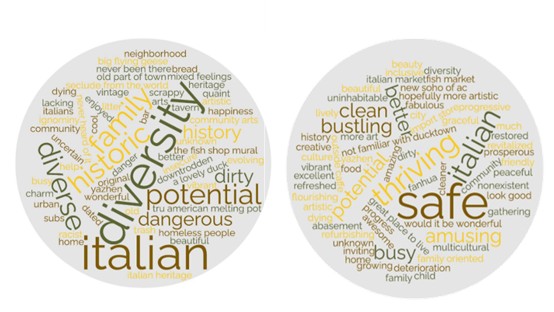
The 2022 Neighborhood Preservation Plan (NPP) is a reference to grant funding with different designation options, with the CDC seemingly showing a prioritization of marketing. A survey was conducted yielding 187 respondents, with methods unreported. Additionally, 12% consisted of Ducktown residents and 52% had any affiliation with Ducktown. Twenty-two residents were represented in the most recent plan, i.e. now with nonprofit status and a chance to see their effect, they interviewed a small population. Individual statistics were shown, such as, “what image best captures the ‘feel’ you would like Ducktown to have in the future?” “Artsy & Trendy” received the highest percentage, with over 38% of the Ducktown residents selecting this theme (Ducktown CDC & Rutala Associates, 2022, p, 31). This means eight residents voiced support for the induction of arts, yet there is a large emphasis as an alleged point of pride for the neighborhood and a strong influence on the expression of the Ducktown neighborhood. The plan offers overall encompassing word clouds, highlighting “the one word that comes to mind when thinking about Ducktown now and in the future. Please refer to Image 1 (Ducktown CDC & Rutala Associates, 2022, p. 32-33).
Image 1
Ducktown Survey Word Clouds
The results of the stakeholders’ survey consisted of a SWOT analysis as well as ideas. From there, recommendations were given consisting of branding/marketing, local campaigning, mural installation, wayfinding signage, gateway improvements, public relations initiatives, clean environment, facade improvements, and reclaiming underused parking lots.
Inlet CDC
The Inlet CDC’s Neighborhood Action Strategy was written in 2022 with no report of a survey conducted, but rather various interviews, meetings, and focus groups. The plan says “Atlantic Cape Community College spearheaded the Strategy in cooperation with the First Ward Civic Association and a highly active and engaged Inlet Neighborhood Community Advisory Committee composed of local stakeholders, business owners, and residents” (ACCC & Inlet CDC, 2022, p. 2). The 14-person committee consisted of one civic association member, three city officials, three business owners, and 10 residents (four non-affiliated with any organization). Additionally, the plan states, “the Inlet Neighborhood Community Advisory Committee undertook the Inlet Revitalization Action Strategy in conjunction with consultants Rutala Associates” (ACCC & Inlet CDC, 2022, p. 2). The firm conducted interviews with 40 stakeholders of various backgrounds, including three CRDA executives, four Main Street New Jersey Program representatives, seven city officials, two residents, and representatives of engineering real estate developers (ACCC & Inlet CDC, 2022, p. 28). The results of the interviews are unpublished. Additionally, two public meetings were held during the drafting of the plan to “discuss the NRTC process and review the draft strategy” (ACCC & Inlet CDC, 2022, p. 28). There is no record of attendance or meeting agendas; however, the sentiments from the meetings are referenced throughout the plan. One public meeting was held in the early planning process and one in early June(ACCC & Inlet CDC, 2022, p. 28). Interestingly, the plan was submitted on June 24, suggesting these meetings were held not comprehensively, but rather as an initial pitch and plan proposal. Yet, the plan repeatedly suggests the sentiments of the community meetings, for example, “during the community meetings, there was consensus that the Inlet residents themselves are their own greatest asset, and residents expressed a desire to use the energy and momentum built by the planning process and direct it into action. This occurred as the neighborhood committee began campaigning to have the properties that are detractors in the neighborhood demolished and to increase code enforcement” (ACCC & Inlet CDC, 2022,p. 48).
The Inlet CDC names the 2021 Atlantic City: Restart and Recovery Working Group plan as a factor in the nonprofit’s decision-making process. The plan details recommendations for development and includes the aforementioned organizations’ contributions – Inlet CDC, Rutala Associates, and Atlantic Cape Community College – in the subcommittees of economic diversification, workforce development, and community outreach. This plan was a huge collaborative effort; however, the lack of resident contribution is a glaring issue
Mission Statements
Chelsea EDC
The closest understanding of the foundation's proposed purpose stems from the NRTC application plan:
To perform activities fostering revitalization … emphasis on Atlantic City, New Jersey, so as to enhance the quality of life for its diverse residents, combat community deterioration, improve the quality of housing and increase home ownership, the lessening of burdens of government and increase opportunities available for those that reside or work there (ACDEVCO & CEDC, 2020, p. 17).
The mission statement given is, “The Chelsea Economic Development Corporation [Chelsea EDC / CEDC] is partnering with residents, businesses, and community organizations to activate projects which expand economic opportunity and improve the quality of life in the Chelsea Neighborhood of Atlantic City” (ACDEVCO & CEDC, 2020, p. 17).
Chelsea EDC Plan and Mission Statement Analysis
Despite listing programs such as grants for local businesses (Chelsea EDC, 2020, [Economic Opportunity]), in the Chelsea neighborhood, Chelsea EDC’s statement on “expanding economic opportunity” to improve the quality of living in Chelsea suggests a program driven by improving opportunity and comfort for tourists. This can be supported by a statement flyer attached to its website in its “Beautify Chelsea” tab, where a “Bluestone Services” statement releases details of predatory verbiage against the individuals experiencing homelessness in Atlantic City (Chelsea EDC, 2020, [Bluestone Services]). The public statement itself vaguely references “outreach initiatives” in which “respondents to these initiatives consistently report pervasive homelessness … an impediment to economic development for businesses within CEDC district” (Chelsea EDC, 2023, [Bluestone Services], para 1). A consistent pattern among CDC/EDC plans reports surveys or “initiatives” in which the methodologies, sample demographics and information, and overall research findings, are not reported along with these references.
This is reaffirmed in the provision of source materials the Chelsea EDC uses in its statement, such as NIH studies and articles that appear linked but are inaccessible as the statement was attached as an image, instead of as a downloadable document as other statements on their website are. Upon further investigation of source materials, Chelsea EDC misrepresents quotes taken from its sources; for example, when quoting a business opinion forum held by an Arizona municipal government branch, Chelsea EDC states, “Neighborhoods that are frequented by people experiencing homelessness are perceived as dangerous, dirty areas to avoid, which can hurt businesses in the area,” (Arizona Business Forum, 2021, p. 2) at face value, which places a blame on disadvantaged homeless individuals for the failure of local businesses, which is contrary to the rest of the forum’s reportings, which indicates the problem lies within the public’s perception of homelessness, specifically the discriminatory attitudes toward them (Arizona Business Forum on Regional Homelessness, 2021). In fact, the forum document attributes homelessness to a lack of affordable housing (Arizona Business Forum on Regional Homelessness, 2021, p. 2), specifically workers actively participating in the local workforce, unable to find affordable housing options in the area. The forum document calls for the implementation of affordable housing initiatives, initiatives to help counteract public discriminatory attitudes toward homelessness and deconstruction of barriers that prevent homeless individuals from participating in society.
However, Chelsea EDC misrepresents the previous quote in paragraph 4 of page 2 as being supportive of displacing homeless individuals in the city. This is similarly done when its reference to an “NIH study” states: “Despite the pervasive presence of such issues, they often remain implicit or poorly [theorized] in tourism analyses,” (Chelsea EDC Website, 2023, [Bluestone Services Tab], para 3). When further investigating the NIH study referenced, this quote is found in a corresponding NIH article titled “COVID-19 and a justice framework to guide tourism recovery” published in the Annals of Tourism Research journal, which further calls for increased awareness of systems that perpetuate injustice toward disadvantaged groups (a category in which the article includes “people experiencing homelessness and individuals of a lower socio-economic status”) (Rastegar, 2021). Instead, Chelsea’s statement suggests further research that correlates homelessness to the “loss of tourism revenue” and suggests addressing homelessness as an inhibitor to the economic success of the Chelsea neighborhood, rather than a product of low affordability and other systemic factors that have created homelessness. It is important to recognize Atlantic City’s history of homelessness and mass casino layoffs that have led a significant population of workers to become displaced and no longer able to afford housing (Greenburg, 2022; Bryan, 2014; Cutter, 2014; Danzis, 2021). Chelsea EDC’s verbiage that highlights the impact on tourism revenue, rather than “[increasing] opportunities available for those that reside or work there” suggests a prioritization of tourists and business revenue, rather than increasing affordable housing and opportunities for those struggling to find housing in the city – a detail emphasized heavily in its cited Arizona Business Forum source.
Ducktown CDC
There is no mission statement provided in the 2019 Revitalization Plan, but it states, “This resident-driven plan is focused on improving on the quality of life for residents and planting the seeds for a broader transformation of local parks, schools, housing, and businesses” (Ducktown CDC & Rutala Associates, 2019, pg. 7).
The mission statement of the Neighborhood Preservation Plan written in 2022 reads, “The goal of this Plan is to enhance the visual and aesthetic appeal of Ducktown and to make this area a must-see destination” (Ducktown CDC & Rutala Associates, 2022, p. 5). It is important to note the most recent mission statement from the website aligns more strongly with the goals of the 2019 original Ducktown Revitalization Plan.
Ducktown CDC’s mission statement follows:
To enhance the quality of life in the Ducktown neighborhood for residents and businesses, plan for the future well-being of its diverse communities; to balance the physical, economic, and social needs of neighborhood residents/businesses through land use planning, environmental management, neighborhood improvement, housing, culture, and community development; and to promote and protect economic vitality and human health of Ducktown (Ducktown CDC, 2022).
Ducktown CDC Plan and Mission Statement Analysis
Similar to Chelsea EDC, while Ducktown CDC has listed initiatives to enhance the quality of life for Ducktown neighborhood residents, further investigation of programs offered currently indicates a prioritization of tourists through Ducktown beautification plans outlined on its program website. Grants provided by Ducktown CDC specifically revolve around design and aesthetic improvements to the neighborhood, where 3/5 of the grants offered and advertised on the website focus on appearance renovation. While design and aesthetic improvements play an integral role in neighborhood revitalization, the question of which demographic these improvements intend to be for is raised. For example, the “Ducktown Neighborhood Façade Improvement Grant Program” is aimed at improving the overall exterior of residential units and businesses in the Ducktown area, which benefits residents, but seems to mainly be geared toward attracting tourists to the neighborhood. Further exploration of Ducktown beautification projects continues to emphasize catering to outside tourists rather than uplifting local communities and demographics in programs that CDCs, such as the Bedford-Stuyvesant CDC, had that focus on job training and the provision of economic stimulus grants to uplift residents’ individual economic disparagement to be able to once again participate in the market.
Inlet CDC
The Inlet CDC’s mission statement is not explicitly stated in the Inlet action strategy but can be inferred to be its labeled Vision Statement: “The purpose of the Strategy is to improve the quality of life in the neighborhood.”(ACCC & Inlet CDC, 2022, p. 30). Additionally, there is a mission or vision statement listed on its website.
Inlet CDC Plan Mission Statement Analysis
TheInlet CDC’s mission statement appears to be the most nondescript mission statement as it does not detail through what methods it will enact the “[improvement] of the quality of life in the neighborhood” and what manners of life it plans on improving. An issue of non-disclosure can be brought up in response to this statement; as Inlet and other CDCs are qualified and designated to be nonprofits serving the public, disclosure of plans, methods, strategies, inspiring source materials, and intentions should be required. Further investigation of the efficacy of CDC methodologies also should be as equally acknowledged on their website as their beautification efforts and programs – programs which do not necessarily end in the improvement of life for residents in the Inlet neighborhood.
Midtown CDC
Midtown CDC’s mission statement is “to empower residents, support local businesses, and build a vibrant, inclusive community through strategic initiatives and collaborative efforts.” (Midtown CDC, n.d.).
Midtown CDC Plan and Mission Statement Analysis
Midtown CDC’s mission statement implies a heavier emphasis on community prosperity than any other CDC as it recognizes the neighborhood as “vibrant” and “inclusive” (Midtown CDC, n.d.).However, the fact that the only three grants provided on its website (a storefront improvement grant, universal business improvement grant, and “streetscaping”/landscaping grant) revolve around aesthetic improvements signifies a heavier emphasis on beautification rather than civic empowerment. Recognizing how gentrification contributes to barriers to the affordability of housing from insights made in the Greenberg study (Greenberg, 2019) makes clear how these programs aid in gentrification through “beautification” projects, which can be considered a measure of gentrification according to a Drexel University article detailing guidelines to measure gentrification in public health studies (Hirsch, 2019).
Beautification and Branding
The plans of the Chelsea EDC, Ducktown CDC, and Inlet CDC share an emphasis on beautification when referencing streetscaping, murals and art installations, and city cleanups. These efforts also consist of wayfinding kiosks, gateway signage, and banners from each CDC, hoping to drive business and visibility for the neighborhood. This is seen as an opportunity to build a “sense of place” for residents, leading to new visitor attractions. Verbiage from the Inlet CDC plan states, “The increased general quality of life in the area will attract new businesses and residents” (ACCC & Inlet CDC, 2022, p. 49). It is reinforced in Ducktown’s revitalization plan, which states, “Improving the quality of life makes it easier to attract new businesses and new residents.” (Ducktown CDC & Rutala Associates, 2019, p. 99). The emphasis on quality of life being a development tool for tourism, rather than a cornerstone of CDC guidelines, suggests a heavy tourism influence. The individuality of these CDCs will be reflected in distinct branding and implemented throughout the neighborhood.
Chelsea EDC proposes that “As the Chelsea Neighborhood becomes a fully-realized ‘University District,’ businesses will need to adapt their marketing, appearance, and/or products (ACDEVCO & CEDC, 2020, p.53). Ducktown CDC comments on the historic and artistic identity of the neighborhood, stating, “The Mississippi Avenue corridor was designated as the Arts District in the CRDA Master Plan, and the concept of an Arts District in Ducktown was publicly supported in the NRTC Master Plan, and this should be reflected in the Ducktown branding” (Ducktown CDC & Rutala Associates, 2022, p. 33). Inlet CDC says it is “The only neighborhood in Atlantic City that is surrounded on three sides by water and the waterfront amenities in this neighborhood should be celebrated and enhanced” (ACCC & Inlet CDC, 2022), p. 36). It is important to note the CDC strategies mentioned above align with the call for “distinct nodes” of the CRDA’s Tourism District Master Plan previously mentioned. These CDC strategies and programs indicate a prioritization of the comfort of incoming tourists, rather than an uplifting of disadvantaged community members. Additionally, the reoccurring promotion of building a sense of place suggests that residential pride is secondary to tourism needs.
Housing
This heavy emphasis on branding and beautification is an attempt to increase tourism, with the prioritization of attracting new residents and investors. As affordable housing is foundational to the services provided, an examination of the CDCs’ housing strategies suggests reinforcement of the idea that current residents are seen as secondary. A SWOT analysis conducted for the Ducktown Neighborhood Preservation Plan cites subsidized housing as a threat (Ducktown CDC & Rutala Associates, 2022, p. 31). Chelsea EDC states, “Investment in the physical condition of the Neighborhood’s housing stock will make Chelsea more attractive to potential homebuyers” (ACDEVCO & CEDC, 2020, p. 50). Inlet CDC states, “Homeownership is central to the revitalization of the Inlet Neighborhood” (ACCC & Inlet CDC, 2022, p. 32). The sentiment of attracting new residents is perpetuated by each CDC recommendation: promote and incentivize homeownership, outreach and education, support more frequent inspections of rental units for code compliance, promote lead abatement, implement the city’s abandoned properties ordinance, create a home repair grants program.
These are not conducive to resident-specific development programs, but rather increase outsourced homeownership. In addition to the housing programs, the proposed cleanliness and safety pillars coincide across the CDC plans to further beautification and tourism efforts. Further, each CDC recommends and supports cameras and lighting infrastructure along Atlantic and Pacific avenues, in conjunction with the CRDA’s initiatives, with no mention of expanding into residential areas. Additional recommendations consist of mobilizing a neighborhood watch group, monitoring negligent property owners to address code violations, streetscape and facade improvements, advocating for redevelopment of abandoned buildings, and designing and implementing the CPTED program (crime prevention through environmental design). The focus on safety, while undoubtedly a resident concern, suggests an emphasis on heavy policing, code enforcement, and condemnation.
Additionally, the repetition of content across plans is important to note. Both the 2019 Ducktown and 2022 Inlet plans make similar statements, such as “Crime in Atlantic City is a third of what it was five years ago, showing that Public Safety’s crime prevention strategies are effective (Ducktown CDC & Rutala Associates, 2019, p. 94; ACCC & Inlet CDC, 2022 p. 32). Further, entire sections or explanations appear verbatim between the two plans, specifically in recommendations and goals. Also, the consistent overlap across all plans in specific programming and initiatives raises questions about the lack of adaption of residents’ needs over time.
CONCLUSION
Atlantic City’s history of tourism is highlighted by cycles of attempted revitalization and economic disruption. Additionally, it is historically the inhabitants who are most affected by home foreclosures, crime and addiction, and redlining. Despite mentions for decades of developments outside the casinos in an effort to stabilize the city, the CRDA’s jurisdiction over the Tourism District seems counterintuitive. Regardless, the newest cycle of tourism focuses on the revitalization of four distinct areas through beautification, new residents, and investments. The introduction of the Chelsea EDC, Ducktown CDC, Midtown CDC, and Inlet CDC appears to be an effort to give control to residents residing within the Tourism District; however, it seems superficial upon an examination of the plans publicly provided. The use of “copy and paste language” and small sampling sizes, in tandem with vague resident support despite little results given, raises concerns of sampling bias. According to the University of Missouri’s Statistics textbook, “If the sample is not representative, then the possibility of sampling bias occurs. Sampling bias means that our conclusions apply only to our sample and are not generalizable to the full population,” (Cote, 2023, p. 19).
Historically, CDCs have been nonprofits dedicated to servicing disadvantaged and impoverished communities. Further, the residents are more than participants, but rather institutional decision-makers supported by community leaders. The Atlantic City Community [Economic] Development Corporations' use of steering committees, stakeholder interviews, and CRDA programming continues the notion that residents' input is little compared to the tourism initiative. The University of Alabama Center for Economics (UACE) provides a comprehensive outline of good faith guidelines of CDCs. While initiatives like home-buying classes and financial literacy courses are listed in the CDC plans, the events calendars and websites suggest sparse and introductory implementations. Further, the heavy emphasis on the beautification of streets, housing, and businesses raises concerns about gentrification (Hirsch & Schinasi, 2019). Also, the adoption of distinct branding and visibility gives merit to the CDCs’ tourism prioritization. According to the Handbook of Research on the Impacts, Challenges, and Policy Responses to Overtourism, tourism gentrification can be described as “A process of changing the personality of a traditional neighborhood through the influx of tourists and tourism-related businesses” (Dominguez-Mujica et al., 2020, p. 24). There is an expectation of transparency and collaboration with CDCs that is not apparent through the examination of their plans and websites. Therefore, these findings serve as a preliminary effort to better understand the touristic influence of CDCs.
Recommendations
The CDCs should update their websites to include more comprehensive information about founding, members, and influences drawing from Detroit and New York CDC websites. Additionally, the CDCs, especially Chelsea, Ducktown, and Midtown, near the mid-mark of their 10-year plans and should conduct another round of surveys to reassess whether residents’ perspectives align. Rather than private firms like ACDEVCO or Rutala Associates, the CDCs should borrow from Detroit and enlist the National Urban League as their consultant firm for revitalization efforts. This civil rights organization is historically effective in resident-first plans and shares an emphasis on minority perspectives. Overall, the CDCs and their plans should be reassessed to further align with residents’ needs and shift away from a tourism focus. Their initiatives should primarily focus on comprehensive services and resources for residential economic development.
Limitations and Future Research
This paper lacks a resident perspective, and future research in this area should focus on collecting data from residents’ perspectives. Future research could address the following: 1) following up with participants of the initial CDC surveys on the implementation of areas of improvement discussed 2) residents’ understanding of the city’s shortcomings and the impact on tourism, or 3) the effects of CDCs on tourism rates. It would be important for the CDCs to conduct another round of research. Additionally, university hospitality programs should have an interest in the ethical use of nonprofits to rebuild tourism within a location.
REFERENCES
ACCC & Inlet CDC. (2022, June 24). Inlet Neighborhood Action Strategy (Rutala Associates, Ed.) [Inlet Revitalization Action Plan] [PDF Document]. AC Inlet. https://acinlet.org/wp-content/uploads/2023/11/inlet-revitalization-action-strategy.pdf
ACDEVCO & CEDC. (2020, July). Chelsea Neighborhood Ten Year Plan 2020-2030 [Chelsea Neighborhood Revitalization Plan]. In CEDC NRTCP. CEDC. https://www.chelseaedc.org/_files/ugd/029ea6_6a976a8d795341aca1dd4ea7bda0404c.pdf
ACNJ. (n.d.). The Official Website of City of Atlantic City, NJ - About Atlantic City. ACNJ. https://www.acnj.gov/page/about-atlantic-city
Arizona Business Forum. (2021, March 11). Business Forum on Regional Homelessness. Maricopa Association of Governments. https://azmag.gov/Portals/0/Documents/Homelessness/Business-Forum-on-Regional-Homelessnes-Report.pdf
Bryan, C. (2014, September 10). Hundreds Of Laid-off Casino Workers Attend Job Fair In Atlantic City. CBS News. https://www.cbsnews.com/philadelphia/news/hundreds-of-laid-off-casino-workers-attend-job-fair-in-atlantic-city/
Burdo, A., The Press of Atlantic City, ProPublica, Bethel, K. J., & Simon, M. (2022, October 14). This New Jersey Agency Prioritizes Tourism Over Housing, Pushing Vulnerable Residents Out of Their Homes. ProPublica. https://www.propublica.org/article/crda-failed-affordable-housing-atlantic-city
Butler, A., Weber, M., Gaynor, J., Leonard, N., Lee, T., & Lowery, L. (2021). COMMUNITY LAND TRUSTS: A Guide for Local Governments. National League of Cities. https://www.nlc.org/wp-content/uploads/2021/08/Community-Land-Trusts_A-Guide-for-Local-Governments_Report-1.pdf
Chelsea EDC. (2020). Economic Opportunity. Chelsea Economic Development Corporation. https://www.chelseaedc.org/economicopportunity
Chelsea EDC. (2023, September 5). Bluestone Services. Chelsea EDC. https://www.chelseaedc.org/bluestoneservices
City of Atlantic City, Atlantic City Planning Board, Atlantic City Zoning Board, City Department Heads and Other Officials, Atlantic City Board of Education, Consultant Planning Team, Levy, R., CRDA, & Chamber of Commerce. (2008). 2008 Atlantic City Master Plan. ACNJ. https://www.acnj.gov/_Content/pdf/Atlantic-City-Master-Plan-2008.pdf
CRDA. (2012). Atlantic City Master Plan Concept. In 2012 Tourism District Master Plan (Vol. 2-2, pp. 1-28). CRDA. https://njcrda.com/wp-content/uploads/documents/2021/06/Tourism-District-Master-Plan-Vol.2-2.pdf
CRDA. (2012). Volume 1: Introduction and Existing Conditions. In New Jersey CRDA Atlantic City Tourism District Master Plan (Vol. 1, pp. 1-190). CRDA. https://njcrda.com/wp-content/uploads/documents/2021/06/Tourism-District-Master-Plan-Vol.1.pdf
CRDA. (2012). Volume 2: Ideation. In New Jersey CRDA Atlantic City Tourism District Master Plan (Vol. 2, p. 29). CRDA. Retrieved online from njcrda.com, from https://njcrda.com/wp-content/uploads/documents/2021/06/Tourism-District-Master-Plan-Vol.2.pdf
CRDA. (2017). Volume 4: Statement Of Objectives, Land Use Elements, Housing Elements. In New Jersey CRDA Atlantic City Tourism District Master Plan (Vol. 4, p. 50). CRDA. https://njcrda.com/wp-content/uploads/documents/2021/06/Tourism-District-Master-Plan-Vol.4-ADOPTED-APRIL-18-2017.pdf
CRDA. (2017, April 11). ATLANTIC CITY ZONING & TOURISM DISTRICT ZONES. NJCRDA. Retrieved online from njcrda.com, from https://njcrda.com/wp-content/uploads/documents/2021/06/CRDA-Tourism-District-Zones-Colored-April-11-2017-Approved-Map.pdf
CRDA. (2022, August). Green Zone Redevelopment Plan [Cannabis Industry Introduction Proposal Plan for Atlantic City]. In Green Zone Redevelopment Plan (FINAL) [PDF Document]. ACNJ. Retrieved online from acnj.gov, from https://www.acnj.gov/_Content/pdf/GREEN-ZONE-REDEVELOPMENT-FINAL-w-Exhibit-082222.pdf
CRDA. (n.d.). CRDA Online GIS Map. Engage AC | NJCRDA. Retrieved online from njcrda.maps.arcgis.com, from https://njcrda.maps.arcgis.com/apps/MapSeries/index.html?appid=3a7470482f52455f81ebbd191926e343
Cote, Linda R.; Gordon, Rupa; Randell, Chrislyn E.; Schmitt, Judy; and Marvin, Helena, “Introduction to Statistics in the Psychological Sciences” (2021). Open Educational Resources Collection. 25. Available at: https://irl.umsl.edu/oer/25 - Version 08/01/2023 (Minor Revision)
Cutter, J. (2014, July 23). Displaced Casino Employees Get Help From Atlantic County. New Jersey 101.5. https://nj1015.com/displaced-casino-employees-get-help-from-atlantic-county/
Danzis, D. (2021, March 31). Mass layoffs begin at Atlantic City casinos. Tucson. https://tucson.com/news/article_2290373b-2cb2-590a-9836-1861fb270b16.html
Davies, T.A. (2013, December). Black Power in Action: The Bedford-Stuyvesant Restoration Corporation, Robert F. Kennedy, and the Politics of the Urban Crisis. The Journal of American History, 100(3), 736-760. JSTOR. https://www.jstor.org/stable/44308761
Department of Interior and Local Government. (2001, November). Community Organizing. RURAL WATER SUPPLY AND SANITATION PROJECT, 5, 1-35. https://www.ircwash.org/sites/default/files/PCWS.ITNF-2001-Organizing.pdf
Detroit Hispanic Development Corporation. (n.d.). Detroit Hispanic Development Corporation | Latino Community in Detroit. Retrieved January 1, 2025, from https://www.dhdc1.org/
DO/AC. (n.d.). Shopping. DO/AC. https://www.atlanticcitynj.com/explore/shopping/
Dominguez-Mujica, J., Parreño-Castellano, J.M., & Moreno-Medina, C. (2020). Vacation Rentals, Tourism, and International Migration: Gentrification in Las Palmas de Gran Canaria (Spain) From a Diachronic Perspective. In Handbook of Research on the Impacts, Challenges, and Policy Responses to Overtourism (p. 24). IGI Global. 10.4018/978-1-7998-2224-0.ch013
Ducktown CDC. (2022). Ducktown Community Development Corporation | Atlantic City. Retrieved January 1, 2025, from https://www.acducktown.com/
Ducktown CDC & Rutala Associates. (2022). Ducktown District Neighborhood Preservation Plan. Ducktown CDC. https://www.acducktown.com/_files/ugd/0462c1_55a8c743a6ed493797fbbd8161247b5a.pdf
Greenberg, D.M. (2019, February). Community Land Trusts & Community Development: Partners Against Displacement. LISC Institute for Community Power, 1-23. https://www.lisc.org/media/filer_public/f0/e0/f0e07be0-1ca5-4720-b78c-3a0d7a0181dd/022519_white_paper_community_land_trusts.pdf
Hirsch, A.J., & Schinasi, H.L. (2019, August). A measure of gentrification for use in longitudinal public health studies based in the United States. Drexel University Urban Health Collaborative. https://drexel.edu/~/media/Files/uhc/briefs/Gentrification_Brief.ashx?la=en
History of Atlantic City. (n.d.). The Atlantic City Free Public Library. Retrieved December 22, 2024, from https://acfpl.org/ac-history-menu/atlantic-city-faq-s/15-heston-archives/147-atlantic-city-history-22.html
Jackson, C. (2019, October 30). In Atlantic City, the Legacy of Segregation and Redlining Endures. Shelterforce. https://shelterforce.org/2019/10/30/in-atlantic-city-the-legacy-of-segregation-and-redlining-endures/
Johnson, J.E., Plummer, B., Brennan, K., Wilson, M., & CRDA. (2018, September 20). Atlantic City: Building A Foundation For A Shared Prosperity [2018 Master Plan Submitted to NJ Governor Phil Murphy] [PDF Document]. NJ CRDA. Retrieved online from njcrda.com, from https://njcrda.com/wp-content/uploads/documents/2021/09/AC-Building-A-Foundation-For-A-Shared-Prosperity-Transition-Report-9-20-18.pdf
Levi, V.G. (2016). An Atlantic City Childhood, Complete with Frank Sinatra and Miss America. Discover NJ History. https://discovernjhistory.org/two-compelling-views-of-americas-favorite-playground-atlantic-city-2/
Linky, D. (2007, May 10). Transcript of Atlantic City Roundtable. In Transcript. Rutgers Eagleton Institute of Politics. https://governors.rutgers.edu/wp-content/uploads/2020/07/AtlanticCityRoundtable_transcript_5-10-07.pdf
Linky, D. (2020). Atlantic City, New Jersey Governors and Casino Gaming. Rutgers University, Eagleton Institute of Politics. https://governors.rutgers.edu/wp-content/uploads/2020/07/AC_CasinoGaming.pdf#page=26
Matuszewska, D. (2016). Determinants and Economic Consequences of the Development of Tourist Traffic in Atlantic City [Abstract]. Ekonomiczne Problemy Turystyki, 35(3), 273-286. Central and Eastern European Online Library. https://www.ceeol.com/search/article-detail?id=511243
Midtown CDC. (n.d.). Midtown Community Development Corporation. Retrieved January 2, 2025, from https://midtownacnj.org/
Midtown CDC. (n.d.). Midtown Map. Midtown CDC. Retrieved online from midtownacnj.com, from https://midtownacnj.org/
Mikle, J. (2013, June 11). Millions spent on casinos didn’t help Atlantic City. USA Today. https://www.usatoday.com/story/news/nation/2013/06/11/atlantic-city-casinos-money-squandered/2412791/
National Community Development Association. (n.d.). - NCDA. National Community Development Association. Retrieved January 2, 2025, from https://ncdaonline.org/
NCRC. (2019, November 18). Medium: In Atlantic City, the Legacy of Segregation and Redlining Endures. NCRC. https://ncrc.org/medium-in-atlantic-city-the-legacy-of-segregation-and-redlining-endures/
NJ Casino Control Commission. (n.d.). NJ CCC – Casino Gaming in New Jersey. NJ.gov. https://www.nj.gov/casinos/law/gamingnj/
Perry, S.E. (1971). National Policy and the Community Development Corporation. Law and Contemporary Problems, 36(2), 297–308. https://doi.org/10.2307/1190986
Rastegar, R., Higgins-Desbiolles, F., & Ruhanen, L. (2021, November). COVID-19 and a justice framework to guide tourism recovery. Annals of tourism research, 91. ScienceDirect. https://doi.org/10.1016/j.annals.2021.103161
Roberts, D., Terenik, E.A., Maser Consulting P.A., City of Atlantic City Planning Board, & AC Master Plan Committee. (2016, April). Master Plan Reexamination Report of 2016 [2016 Reexamination of AC Master Revitalization Plan] [PDF Document]. ACNJ. Retrieved online from acnj.gov, from https://www.acnj.gov/_Content/pdf/AC-MP-RE-EXAM-April2016.pdf
Rubenstein, J. (1984, July). Casino Gambling in Atlantic City: Issues of Development and Redevelopment. The Annals of the American Academy of Political and Social Science, 474, 61-71. JSTOR. https://www.jstor.org/stable/1044364
Rutala Associates & Ducktown CDC. (2019). Revitalize Ducktown: The Ducktown Neighborhood Revitalization Plan. Ducktown CDC. https://www.acducktown.com/_files/ugd/0462c1_83f9b27673de46b288ba1b698c22cbf9.pdf
The State of New Jersey. (n.d.). New Jersey Opportunity Zones. NJ.GOV. Retrieved online from nj.gov, from https://nj.gov/governor/njopportunityzones/
Stonewall Community Development Corporation. (n.d.). https://www.stonewallcdc.org/
The University of Alabama Center for Economic Development. (n.d.). Community Development Corporations Information Guide. CDC Info Guide, 1-6. UA Center for Economic Development. Retrieved online from uaced.ua.edu, from https://www.uaced.ua.edu/uploads/1/9/0/4/19045691/cdc_info_guide.pdf
US Census. (2024, July 1). U.S. Census Bureau QuickFacts: Atlantic City, New Jersey. U.S. Census Bureau. Retrieved online from census.gov, from https://www.census.gov/quickfacts/atlanticcitycitynewjersey
Visit NJ – Atlantic City. (n.d.). Atlantic City. Visit NJ. https://visitnj.org/city/atlantic-city
Zuba, D. (2024, 3 2). Four Atlantic City Community Development Corporations Each Receive $1 Million for Neighborhood Revitalization Efforts. Retrieved December 27, 2024, from https://www.atlanticcape.edu/news/2024%20News/04/atlantic%20city-cdc-funding.php