Bryan Poerner
Bryan Poerner ’00, of Lacey Township, discovered his passion for running in fourth grade when he placed third in the mile run during field day. He didn’t realize it then, but running would become a way of life inspiring creativity, steering career choices, instilling discipline and introducing him to lifelong friends.
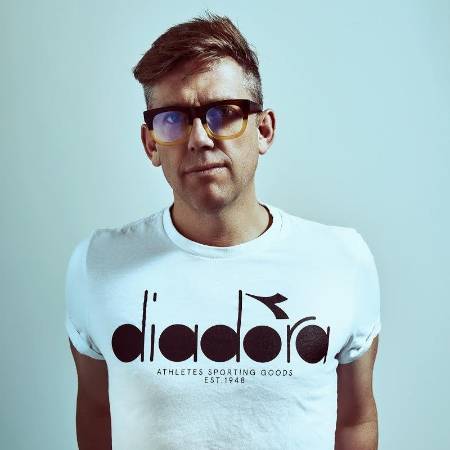
His dedication to running led him to become president and CEO of Diadora US, an Italian performance footwear and sportswear company.
Back on Track
When his college got rid of their cross-country team, he felt a huge void. One of his best friends from Lacey Township High School, Jayson Resch, who is now head coach for Stockton’s men’s track and field and cross-country teams, encouraged him to transfer to Stockton.
He made the move and became a Business Studies major and competitive runner on the men’s track and field and cross-country teams. He helped lead the cross-country team to their best finish ever at the NJAC championships with a second-place finish overall as a team, and he placed second as an individual.
He set the school record for the steeplechase (9:31.0) in 1999.
“I still talk to a bunch of the people from the team today. Athletics was my reason for being, and I looked at the athletic side of what I took out of Stockton as important as the academic side,” he said.
He values his college running experience for teaching him how to set goals and work to reach them.
“Running is really interesting because it's black and white. If you want to run 15:30 in the 5K that's a goal, and you could try to run 15:20. Other sports are more arbitrary, but running is you versus time,” he said.
Running to His Own Beat
When he was in high school, he started his own record label, Track Star Records. He continued to operate his business from his dorm room at Stockton.
“I would press 1,000 records and then distribute them. I'd go to the post office once a week and send out orders,” he explained.
He was also in bands and traveled twice a week to a recording studio in New Brunswick. He sang in Hours of the Star and Yah Mos Def and played the bass in other bands.
His college years were busy with studying business, training as a competitive runner, making his own music, and discovering and helping other musicians by getting their work into the world through his record label company.
Finding a balance between his ventures was a challenge at times, but it also taught him to refocus his priorities when needed.
"He was very competitive and a tough runner, but he balanced that with his other interests and commitment to music. His sense of entrepreneurship and his passion for art and expression is what makes him special," said Resch, who started running with Poerner in seventh grade and later became his college teammate and roommate.
A Career Fit for an Athlete
He laces up his running shoes before the sun comes up to feel the change of seasons or smell the fresh cut grass.
His miles are both personal and professional.
He loves running. He told Dominic Schlueter, host of the Running Effect podcast, that he wants to break 16 minutes in the 5K when he turns 50. But he also noted that the goal has no meaning in the course of his life. “I like the discipline,” he explained.
He’s also doing product research with every mile.
At Diadora, he found something he believes in.
As a runner, he wants to run in a shoe he can trust. As a professional, he wants to lead a team that can design a shoe that top athletes will choose.
“Normalize high mileage” is one of Diadora’s campaigns. And Poerner believes wholeheartedly in the message.
Last summer, he spent time in Flagstaff, Arizona for Diadora’s High Mileage Summer event that brought a pop-up shop to town and united the community for group runs, guest speakers and parties.
In describing his role as a CEO, he emphasized the importance of strategy and aligning all the teams to the company’s vision.
Forbes described Diadora as “running into the future” while “nodding to the past.”
He doesn’t subscribe to some of the traditional marketing views. “I really believe more in the actual thing, but I also believe that thing could have beauty and context, so if I'm making running shoes, I want to show them in the most aspirational way possible,” he explained.
His goal is to put his creative instinct ahead of thinking strictly about sales.
Resch, who wears Diadora, sees Poerner's impact in the shoes.
"Bryan has brought the arts to running and everything about the product is awesome. I love running in the shoes because they feel great and they look amazing. It is funny, because when I see a new design, I can see Bryan’s input on the product and his style being put on display," he said.
For the Love of Running
When asked why he loves running, he admits the question is hard to answer.
“I appreciate the quest even more than competing. I like the process, the training, the repetitiveness and being outside. For me it's running, but I'm sure everybody has that thing,” he said.
Running gives him time to think and time away from everything else going on. He likened it to a meditation with an added physical component.
He doesn’t look at running as something hard. In his eyes, anything that’s worthwhile is going to be hard.
Defining Success
When asked about success, he said he measures it in how much care goes into the work. He also challenges how society measures success.
"I think a big problem we have as we celebrate success in our culture is that we don't celebrate the journey. I'm making this up, but if you're a lawyer with a $100,000 car and a $1 million house down the shore, you're looked at a certain way, but if you live a life where you pay your bills and you volunteer at the animal shelter and you create beautiful work and you add beauty that's not appreciated by our culture," he explained.
At his son's cross-country meet, he spotted Diadoras running around the course.
"The numbers and stuff like how much you grow in percentages and dollar value—that's semantics—but actually the visceral feeling of seeing somebody running around in your pair of shoes, racing in your spikes is amazing," he said.
In giving advice, he thinks about his own two sons. "Get involved as much as you can and be open to different ideas," he said.
He’s not proud of one thing, but rather “the sum of a lot of little things.”
“I never thought about money when I was doing my record label or when I got sponsored by Puma out of college. I ran professionally for a couple years, and I wound up in this profession through just doing what I wanted to do at the time,” he explained.
His path to success was guided by staying true to himself. “Follow your passion,” he said.
"If we have more people thinking about life creatively and passionately, I think we will all be better off," he added.
Story by Susan Allen